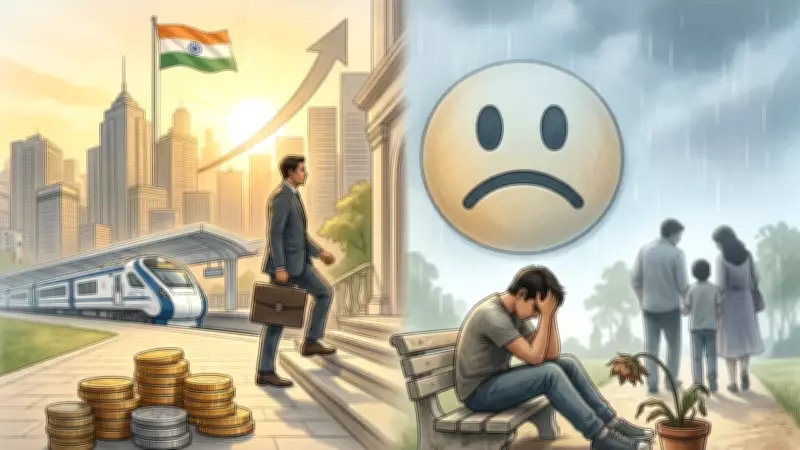
India Ranks 116th in World Happiness Report 2026 Amid Economic Growth
The World Happiness Report 2026 has once again placed India far down the global list, ranking the country 116th out of more than 140 nations. This annual survey evaluates how people perceive their lives based on factors like trust, social support, freedom, and overall well-being, rather than just wealth or economic growth.
Striking Contrast: Economic Progress vs. Low Happiness
India, one of the world's fastest-growing major economies with a young, aspirational population, shows a significant disconnect between material advancement and life satisfaction. Over the past decade, the nation has made strides in digital expansion, infrastructure development, and urban growth, with millions entering the middle class. However, the report indicates that these achievements alone do not translate into a happier society.
Neighbouring countries often rank higher, suggesting that factors beyond income, such as social cohesion and personal security, play crucial roles in shaping well-being. Experts explain that happiness in this context refers to how individuals evaluate their lives holistically, considering support systems, optimism, and long-term security.

Key Factors Behind India's Low Ranking
Several pressures contribute to India's relatively low happiness score:
- Rapid Urbanisation: Cities are expanding, but this brings challenges like rising living costs and job insecurity.
- Widening Inequality: Economic growth has not been evenly distributed, leading to disparities.
- Mental Health Concerns: Young people face intense academic and professional competition, increasing stress levels.
- Evolving Social Structures: Traditional joint families are giving way to nuclear households, reducing everyday community support.
Despite this, India's diversity means happiness varies widely across regions and communities. For many, family bonds, cultural traditions, and resilience remain central to well-being, aspects not fully captured by global surveys.
How Happiness Is Measured: The Cantril Ladder
The World Happiness Report uses a simple yet effective method called the Cantril Ladder. Respondents imagine a ladder with steps from 0 to 10, where the top represents the best possible life and the bottom the worst. They then select the step reflecting their current life evaluation.
This approach allows individuals to define what matters most to them, without directly mentioning happiness or satisfaction, making it easily translatable across cultures. Data is collected via the Gallup World Poll, with over 100,000 participants annually from around 140 countries.
Researchers focus on life evaluations rather than daily emotions to capture broader circumstances like financial stability, health, and trust in institutions. This provides insights into long-term quality of life perceptions.
Top Performers: From Finland to Costa Rica
Nordic countries continue to dominate the rankings, but 2026 saw a surprise with Costa Rica entering the top five for the first time. Key highlights include:
- Finland: Holds the number one spot for nine of the past ten years, thanks to strong social support, low corruption, and reliable safety nets.
- Iceland: Moves to second place, excelling in social support and generosity.
- Denmark: Ranks third with high scores for social support and a strong economy.
- Costa Rica: Rises to fourth due to rising freedom scores and community support, despite lower GDP.
- Sweden: Completes the top five with a balance of urban life, nature access, and low corruption.
The Growth vs. Happiness Paradox in India
India's rapid economic growth has not led to proportional increases in life satisfaction, creating a paradox. Rising aspirations, financial pressures, and competition can foster a sense of constant striving and anxiety. Dr. Saloni Seth Agarwal, a consultant psychiatrist, notes that material advancement alone does not ensure well-being; emotional stability and social support are equally vital.

She explains, "Rising aspirations, constant social comparison, and financial pressures often create a feeling that one must keep achieving more. True well-being depends not just on income, but also on emotional stability, social support, and a sense of balance in life."
What Shapes Happiness for Indians?
Changing family dynamics and community life significantly impact well-being. Urbanisation and migration have led to more nuclear families, reducing everyday social support. Soumili, a 23-year-old corporate worker from Kolkata, shares, "I don’t feel a sense of belonging in my community... This is probably because we live in social bubbles which may feel unfulfilling or superficial."
Financial security remains a baseline for happiness, as noted by Senjuti, a psychology student: "Other things are very important but if financial security is not there then people won't be in a position to want other things." However, a balance with social connections is essential.
Pathways to Improved Well-being
Enhancing happiness in India requires a multifaceted approach beyond economic growth:
- Strengthen Community Ties: Foster meaningful relationships and create spaces for daily interactions.
- Address Mental Health: Increase awareness, access to counselling, and reduce stigma, especially for youth.
- Promote Financial Stability: Implement policies for equitable opportunities and work-life balance.
- Redefine Success: Value emotional health alongside achievement in education and workplaces.
Dr. Saloni concludes, "As a society, we must remember that progress is not only about how fast we grow economically, but also about how well people feel while living their lives." This broader conversation underscores that well-being in a complex society like India involves more than GDP metrics.