

Garter Snakes' Secret: How They Survive Being Frozen Solid for Hours
When you imagine snakes, you likely think of them slithering through warm forests or basking on sunlit rocks. The idea of a snake frozen stiff in a blizzard seems like a certain death sentence. Yet, nature holds surprising exceptions.
One quiet, often underestimated snake has mastered a remarkable trick. It cheats winter itself. While most cold-blooded animals would perish, this species hits pause, waits out the freeze, and lives to see another day. This is nature's sneakiest survival strategy in action.
The Unlikely Cold Warriors: Garter Snakes
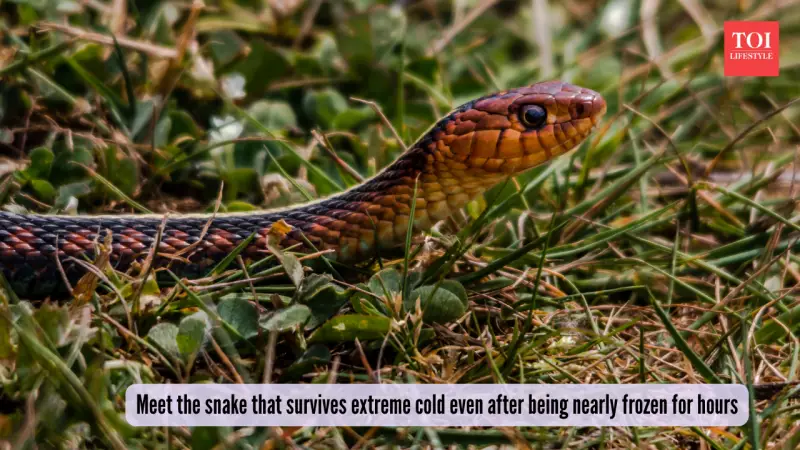
Meet the red-sided garter snake. Normally, these reptiles avoid trouble. As winter approaches, they seek shelter in deep burrows or rock crevices. They enter brumation, a reptilian form of hibernation.

But nature can be unpredictable. Sudden cold snaps sometimes leave snakes with nowhere to hide. Evolution provided a backup plan. Some garter snakes developed a short-term tolerance to freezing conditions.
A study published in the Canadian Journal of Zoology reveals astonishing facts. Red-sided garter snakes can endure temperatures as low as −2.5°C. Even more incredible, they survive when nearly 40% of the water in their bodies turns to ice.
Many snakes recover almost fully after about three hours of being frozen. Push that duration beyond ten hours, however, and survival chances drop rapidly. This ability isn't magic. It's a biological adaptation refined over generations.
How Do They Pull Off This Frozen Feat?
When freezing begins, these snakes don't resist. They shut down their systems completely.
- Blood circulation stops.
- Oxygen delivery grinds to a halt.
- Metabolism slows to a crawl, conserving energy like pausing a video game at the perfect moment.
It's not a graceful process, but it works effectively. They also receive help from cryoprotectants. These are substances like glucose and taurine that protect cells from ice damage.
Unlike wood frogs that flood their bodies with sugar, snakes use a minimal, targeted approach. They apply just enough protection exactly where needed. This strategy allows their cells to survive freezing for crucial hours.
Understanding the Limits
This adaptation isn't superhero-level freeze immunity. Garter snakes face strict limitations.
- They only handle mild subzero temperatures.
- Their tolerance lasts for short periods.
- Extend freezing to 24 hours, and survival drops to zero.
Too much ice formation means no recovery. Compared to wood frogs with more advanced systems, garter snakes operate within tighter reptilian constraints. Their habitat also plays a role.
Deep underground dens in regions like Manitoba protect most populations. Snakes living on habitat edges gamble with survival each winter. Still, for creatures we assume would never withstand cold, surviving even a few frozen hours is extraordinary.
Sometimes, survival isn't about brute strength. It's about knowing precisely when to stop, wait, and let nature run its course. The garter snake exemplifies this wisdom perfectly.






