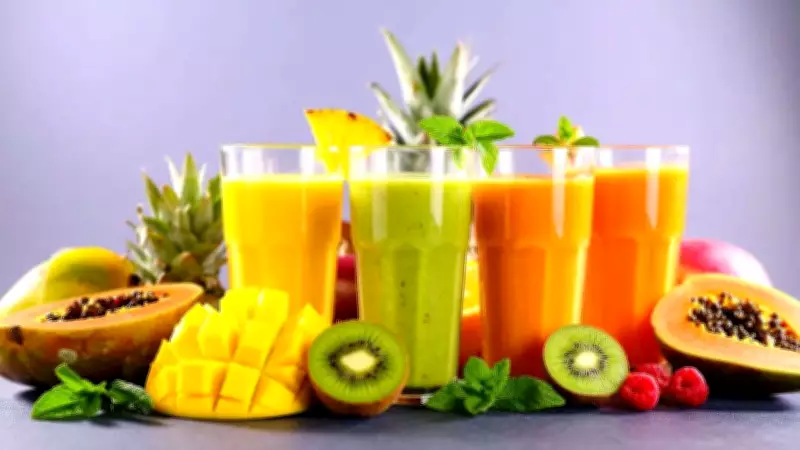
Fruit Juice: A Hidden Risk for Fatty Liver Disease, Experts Warn
A glass of fruit juice often feels like a clean, guilt-free choice. It appears natural, tastes fresh, and carries the comforting label of being "healthy." However, the story inside the body reveals something very different. For individuals dealing with or at risk of Fatty Liver Disease, that innocent glass may quietly be causing more harm than good.
The Problem Is Not Fruit Itself
The issue does not lie with fruit itself. It is what happens when fruit is stripped down into juice. Dr. Amit Prakash Singh explains, "Although fruit juice may look like a healthy drink option, it can actually be a hidden catalyst leading to worsening fatty liver disease." Once fruit is juiced, most of its fiber disappears, leaving behind a concentrated sugar load. One glass can easily match the sugar content of three to four whole fruits, which is not how the body is designed to handle fruit.
The Sugar Surge Your Liver Did Not Ask For
The liver becomes the main processor in this scenario. Fructose, the dominant sugar in fruit juice, is broken down in the liver. When intake exceeds what the body needs, the liver converts that excess into fat. Over time, this fat starts settling inside liver cells. Thus, something that begins as "natural sugar" ends up behaving like a metabolic burden.

Why Whole Fruit Behaves Differently
The difference between biting into an apple and drinking apple juice is not minor; it is metabolic. Whole fruits come packed with fiber, which slows down sugar absorption. This gives the body time to process glucose gradually, preventing sudden spikes in blood sugar and insulin. Juice removes that control system. Dr. Singh clarifies, "The fiber in whole fruits helps to slow down the absorption of sugar into the bloodstream, thereby preventing a spike in your blood sugar after the consumption of your fruit."
Therefore, while both fruit and juice may originate from the same source, their impact on the body is very different. High-sugar fruits like mango, grapes, and pineapple should be avoided in juice form. Packaged juices pose additional risks due to added sugars and preservatives. Moderation is key to protecting liver health.
Fruits That Are Better Not Juiced
Not all fruits behave the same when juiced. Some become especially problematic because of their naturally high sugar content. Here are a few that are better eaten whole, not consumed as juice:
- Mango – already high in natural sugars; juicing concentrates it further
- Grapes – extremely high in fructose, easy to overconsume as juice
- Banana – rarely juiced alone, but in smoothies it adds a heavy sugar load
- Chikoo (sapota) – dense and sugar-rich; juicing removes satiety
- Pineapple – sharp sugar spikes when consumed as juice
- Apple – commonly juiced, but loses most of its fiber advantage
These fruits are not unhealthy in themselves. However, turning them into juice changes how the body processes them.
Packaged Juices: A Bigger Concern Than They Seem
Homemade juice already carries risks when consumed daily. Packaged juices take it a step further. Many commercial options include:
- High-fructose corn syrup
- Added sugars
- Preservatives
- Artificial flavors
Dr. Singh cautions, "You should especially avoid commercially packaged fruit juices because they are often loaded with high-fructose corn syrup, preservatives, and artificial flavors." Regular intake of such drinks does not just strain the liver; it can also affect insulin sensitivity and overall metabolic health.
Moderation and Mindful Consumption
Juice does not need to disappear completely, but it needs to move out of the "daily habit" category. Dr. Singh sums it up well, "The main point is that you should consume whole fruits rather than drinking fruit juice daily. If you must consume juice, then at least consume it occasionally and in moderation." This means:

- Treat juice like a treat, not a routine
- Prefer whole fruits most of the time
- Watch portion size (small glass, not large servings)
- Avoid drinking juice on an empty stomach
A simple shift like this can reduce unnecessary stress on the liver.
Medical Experts Consulted
This article includes expert inputs shared with TOI Health by Dr. Amit Prakash Singh, Consultant - Internal Medicine at the CK Birla Hospital®, Delhi. Inputs were used to explain how seemingly healthy choices like fruit juice can contribute to worsening fatty liver when consumed in excess, and to highlight the importance of mindful intake and medical guidance for better liver health.
About the Author: Aadya Jha is a passionate writer and storyteller who crafts stories that enthrall readers. She explores basic things with a passion for Lifestyle, illuminating the common.