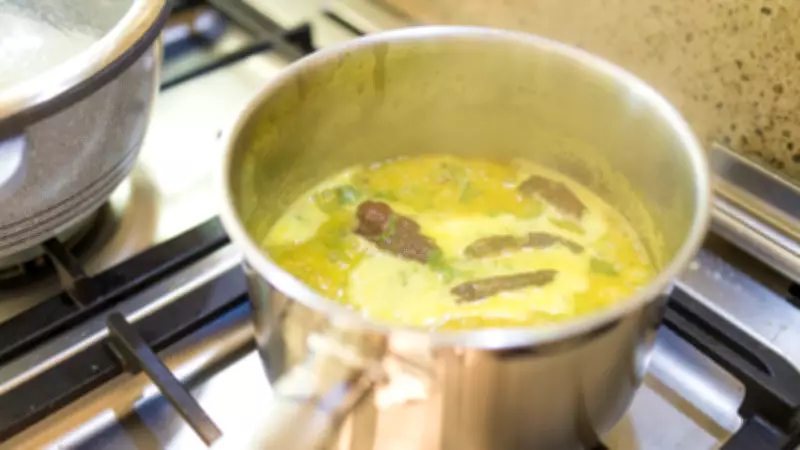
Cooking is a blend of art and science. While getting the right taste and aroma is surely an art, the process of cooking a dish is pure science. From a scientific perspective, certain foods leave a soap-like foam residue when cooked. For instance, when you cook dal in an open pot, a foamy residue often appears on top when it boils. This residue has often been debated regarding its effect on the human body. Let us find out, and also learn a few tips on how to cook dal right for better digestion.
What does the foam contain?
Taking to Instagram, Dr Jayesh Sharma, Raipur-based oncologist with over 25 years of experience, clarified two such concepts: what the foam that forms while boiling dal actually is, and whether cooking dal in a pressure cooker is good for health. According to his post, foam is basically made up of protein, a bit of starch, and a compound called saponin, which is a part of the defence mechanism of plants. When consumed in limited quantities, saponin shows anti-inflammatory and anti-cholesterol properties. In large quantities, however, saponin makes the dal taste bitter and can also damage the gut lining. If a person suffers from irritable bowel syndrome, their gut lining can be disturbed even by normal quantities of saponin.
Should dal be cooked in a pressure cooker?
“Some people worry that when dal is cooked inside a pressure cooker, the foam stays inside and later causes bloating,” stated Dr Sharma. He further clarifies, “Bloating is not caused by the foam. It is caused by some complex sugars in dal, called FODMAPs. They are not digested well by the human body.” “That's why some people may show less or more bloating.” According to the oncologist, the best way to break down FODMAPs is to use a pressure cooker. The higher temperature helps break down not only FODMAPs but also saponins.

What are FODMAPs?
FODMAPs are a group of short-chain carbohydrates that are poorly absorbed in the small intestine. The term stands for: Fermentable, Oligosaccharides, Disaccharides, Monosaccharides (excess fructose), And, Polyols. It is said that when these carbs aren't properly absorbed, they reach the large intestine, and can cause gas, bloating, stomach pain, and discomfort.
Tips to cook dal right for better digestion
Soak before cooking
It is always suggested to soak the dal for at least 30 minutes or more to help break down complex sugars that can cause bloating. It also reduces cooking time and improves nutrient absorption.
Use digestive spices
Adding tadka to dal is not just a matter of taste and visual appeal. There is a basic science behind it. Adding ingredients like cumin, ginger, garlic, asafoetida (hing), and turmeric while cooking reduces the acidic levels of dal and makes it easy to digest. These are widely used in Ayurveda to support gut health and reduce gas and bloating as well.
Cook it well and keep it light
Cooking dal is also a matter of patience. Ensure the dal is fully cooked and mash it well to make it a clear liquid. Remember, soft—undercooked lentils are harder to digest and can cause indigestion and bloating. Also, it is important to avoid making it too thick or oily; a slightly thinner consistency with minimal fat is gentler on the stomach and easy to digest.
Disclaimer: The information provided in this article is intended for general informational purposes only and should not be considered medical advice. Always consult your health practitioner before starting any routine.