

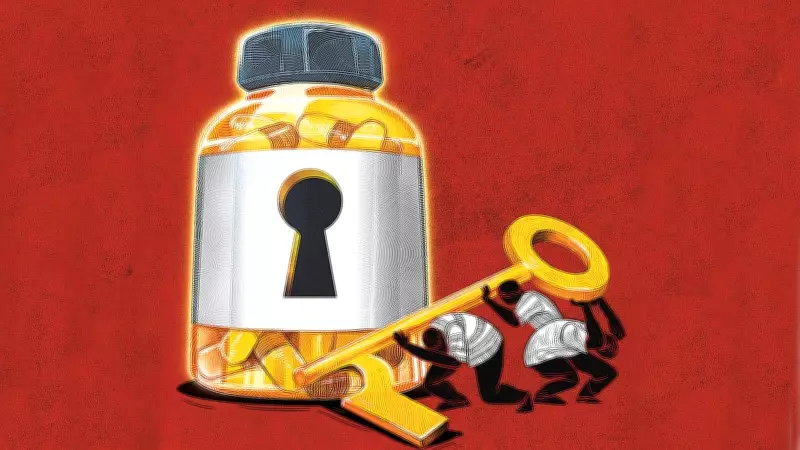
Budget Duty Cuts on Cancer Drugs: A Step Forward, But Not Enough
In a move aimed at enhancing healthcare accessibility, the Union Budget has announced a reduction in custom duties on 17 critical cancer therapies. This decision, unveiled by Union Finance Minister Nirmala Sitharaman, targets drugs used for hematological malignancies and solid tumors, including targeted therapies and immunotherapies. However, despite this governmental push, many patients and their families continue to grapple with exorbitant treatment costs that remain largely out of reach.
The High Cost of Cancer Care
Take the case of Meera Gupta, a 67-year-old from Kanpur diagnosed with stage four Acute Myeloid Leukaemia (AML). Her treatment regimen includes Venetoclax, an oral targeted drug costing approximately Rs 90,000 for a 28-pill supply. When combined with other necessary medications and injections, her monthly medical expenses soar to nearly Rs 3 lakh. For her son Vivek, who has put his fish farming business on hold to manage her care, the financial strain is overwhelming. "I haven't worked for almost a year," he laments, highlighting that medicine prices, not hospitalizations, are the primary burden. "Those prices don't come down just because customs duty is removed."
This sentiment echoes across countless households, where the announcement of duty cuts brings little solace. Vivek estimates savings of only Rs 20,000–Rs 25,000 per month from the exemption, a marginal reduction when facing bills of Rs 3 lakh. "Any saving is welcome, but don't call it relief. Relief would be not having to worry every month whether you can afford to keep your mother alive," he asserts.

Insurance Limitations and Government Schemes
The challenges extend beyond direct costs to inadequate insurance coverage. In India, only about 20% of the population is covered by social health schemes, with another 50% under Ayushman Bharat and state extensions, leaving 30% with no coverage at all. Even for those insured, policies often impose sub-limits or caps on advanced treatments like immunotherapy. Dr. Mohit Saxena, head of medical oncology at Manipal Hospital-Gurugram, notes that such therapies may be capped at 50% of the sum insured or a fixed amount like Rs 2 lakh, despite costs ranging from Rs 2–6 lakh per cycle.
Vivek's experience underscores this issue: his mother's Rs 10 lakh insurance cover was exhausted within months, given her Rs 3 lakh monthly expenses. Government relief funds, such as chief ministerial or prime ministerial schemes, offer little immediate help due to slow and uncertain processes. "We applied in December and were told it could take three to six months. But cancer doesn't wait," he explains.
Expert Insights on Cost and Accessibility
Medical professionals acknowledge the benefits of duty cuts but emphasize their limitations. Dr. Atul Sharma, chairman of medical oncology at Max Hospitals, points out that savings of Rs 20,000–Rs 25,000 per month, while helpful, do not make treatments cheap. "This reduction does not make the therapies easily affordable for most patients," he states. However, over time, cumulative savings can be significant—for instance, a patient on Venetoclax might save Rs 1–1.2 lakh annually, aiding long-term adherence.
Dr. MD Ray, professor of surgical oncology at AIIMS-New Delhi, adds that in a country where 60–70% of healthcare costs are out-of-pocket, such savings could reduce financial stress and improve survival rates by enabling earlier access to life-saving therapies like CDK4/6 inhibitors or CAR-T. Dr. Saxena further explains that many of the exempted drugs are under patent protection, with prices expected to drop dramatically once generics enter the market. For now, practical relief primarily benefits insured patients, as lower drug prices allow their coverage to stretch further, extending treatment durations.

Looking Ahead: The Path to Affordable Care
The government's consistent efforts, including previous duty exemptions on 37 medicines and tax removals on 36 therapies for cancer and rare diseases, signal a commitment to healthcare affordability. Yet, as families like the Guptas demonstrate, systemic issues persist. High costs, limited insurance, and bureaucratic delays in aid programs continue to hinder access. While duty cuts are a positive step, comprehensive solutions—such as expanding insurance coverage, accelerating generic drug availability, and streamlining relief funds—are essential to transform marginal savings into genuine relief for cancer patients across India.





