

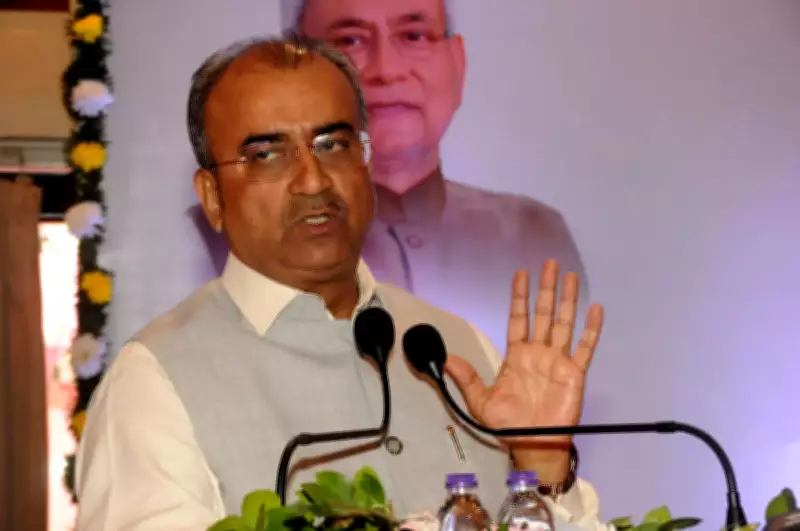
Bihar Government Announces Major Health Sector Recruitment and Budget Approval
In a significant development for Bihar's healthcare infrastructure, State Health Minister Mangal Pandey informed the legislative assembly on Monday that the government is poised to appoint 14,060 auxiliary nurse midwives (ANMs) within the next 15 days. These appointments will be distributed across various hospitals throughout the state, marking a substantial boost to frontline medical staff.
Recruitment Drive and Budgetary Allocation
Minister Pandey provided detailed insights during his reply to the House debate on the health department's budgetary demand for the 2026-27 fiscal year, which amounts to Rs 21,270.41 crore. This sum includes committed expenditure of Rs 11,237.64 crore and scheme expenditure of Rs 10,032.77 crore. The budget was subsequently passed by voice vote, albeit amid a walkout by opposition members.
Highlighting previous recruitment efforts, Pandey noted that 7,468 ANMs had already been appointed on a regular basis during the 2025-26 financial year. The upcoming recruitment of 14,060 ANMs will comprise 9,054 regular positions and 5,006 positions under the National Health Mission, ensuring comprehensive coverage and support for maternal and child health services.

Expansion of Medical Infrastructure
The assembly was further informed about the expansion of government medical colleges and hospitals. Currently, 18 such facilities are operational, with nine more under construction. Minister Pandey projected that within the next three years, the total number would rise to 46, significantly enhancing medical education and tertiary care availability in the state.
Under the Saat Nischay-3 programme for 2025-30, the government plans to upgrade primary health centres at the block level into specialty hospitals and transform district sadar hospitals into super specialty facilities. This initiative aims to decentralize advanced healthcare and make it more accessible to rural populations.
Progress on Health Indicators and SDGs
Minister Pandey detailed Bihar's achievements in meeting the Sustainable Development Goals (SDGs) as defined under the UN charter. Key improvements include:
- Infant mortality rate reduced to 18 per 1,000 live births.
- Under-five child mortality rate lowered to 27.
- A significant decline in the maternal mortality rate.
He emphasized that on many parameters, Bihar has either surpassed the national average or closely matched the performance of the top four states in India. Notably, the state's fertility rate has dropped from 4.2 in 2005 to 2.8 currently, contributing to population stabilization.
Recognition and Future Initiatives
Pandey highlighted that the Central government has recognized Bihar as the number one state in timely medicine supply to hospitals and among the top three states in vaccination coverage. Unique initiatives include:
- Bihar is the only state vaccinating girls and women against cervical cancer.
- The paediatric intensive care unit at Shri Krishna Medical College Hospital, Muzaffarpur, is acknowledged as a world-class facility.
- The mental hospital at Koilwar operates at a national level standard.
Looking ahead, the government is working on introducing health services under a Public-Private Partnership (PPP) mode. Additionally, a policy is being framed to ban private practice by government doctors and increase salaries for doctors serving in remote rural areas, aiming to improve retention and service quality in underserved regions.
Minister Pandey credited these advancements to the leadership of Chief Minister Nitish Kumar over the past two decades, asserting that continued efforts will further improve health outcomes by 2030 in alignment with UN SDG targets.






