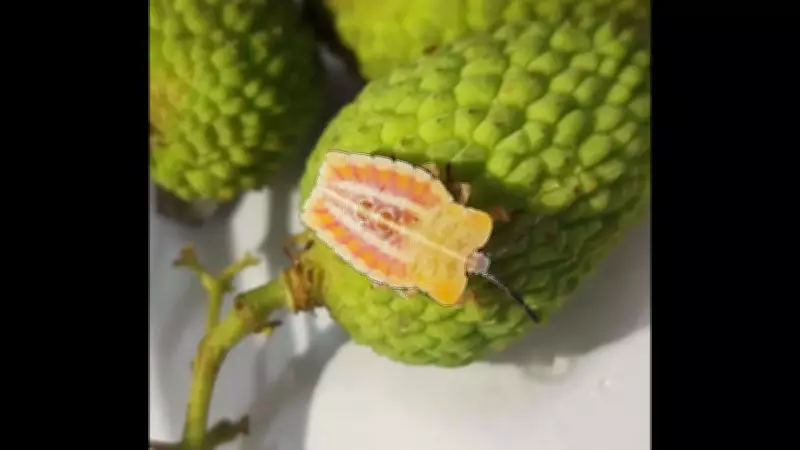
Bhagalpur: In response to the potential threat to litchi production following the detection of the invasive litchi stink bug (Tessaratoma javanica) in Bihar, a multi-institutional technical task force has been established. This team includes scientists from the ICAR-National Research Centre on Litchi, Bihar Agricultural University (BAU), and Rajendra Prasad Central Agricultural University. Their mandate involves systematic surveillance, geo-referenced monitoring, and the development of integrated pest management (IPM) strategies.
Serious Threat to Litchi Growing Regions
Scientists at BAU have described the invasive litchi stink bug as a serious threat to litchi-growing regions and growers in the state. The pest attacks tender vegetative flushes, floral panicles, and developing fruits. Both nymphs and adult insects feed by extracting sap, leading to drying of young shoots, panicle blight, premature fruit drop, and substantial deterioration in fruit yield and market quality.
Phytosanitary Measures Required
The detection of this invasive pest in litchi orchards necessitates phytosanitary measures under prescribed rules and guidelines. These measures aim to protect native agriculture and ecosystems and prevent the spread of dangerous agricultural pests, weeds, and plant diseases.

Field Surveys Conducted
Earlier, under the guidance of BAU Director A K Singh and scientist Kiran Kumari, intensive field surveys and pest surveillance were conducted by BAU scientist Goswami, a member of the expert task force, along with other associates. The surveys covered major litchi-growing pockets of Bhagalpur district, including the BAU Sabour campus, Kahalgaon, Pannuchhak, Mamalakha, Tintanga, Ganganagar, Budhuchak, and Shanti Colony.
The surveys revealed localized occurrence of litchi stink bug nymphs in the horticulture garden at BAU's Sabour campus, while all other surveyed orchards were found free from infestation. This indicates limited pest incidence at present.
Monitoring and IPM Implementation
BAU Vice-Chancellor D R Singh stated on Friday that scientists and experts at the university are closely monitoring pest dynamics in coordination with national research institutions and state horticulture agencies. He emphasized that scientific surveillance, rapid diagnostic assessment, farmer sensitization, and timely implementation of IPM interventions are essential for safeguarding the sustainability and export competitiveness of Bihar's litchi industry.