From the food we consume to the cosmetics we apply, and even the dust particles within our homes, numerous everyday elements are now recognized as significant contributors to the alarming rise of dry eye disease. This condition has emerged as one of the most pressing ophthalmological public health concerns globally, according to experts speaking at the inaugural International Conference of the Dry Eye and Ocular Surface Society (DEOSS). The landmark event was hosted by Narayana Nethralaya in Bengaluru this Saturday.
A Global Gathering Highlights Widespread Concern
The conference attracted participation from representatives of 38 different countries, underscoring the truly international scale of this growing health issue. This diverse assembly of medical professionals and researchers came together to share insights, discuss emerging trends, and collaborate on solutions for a condition that is increasingly affecting populations worldwide.
Demographic Shift: No Longer Just an Adult Problem
Dr. Rohit Shetty, director of Narayana Nethralaya, presented startling observations about the changing patient profile. "Out of every ten patients who visit our clinic, at least six exhibit symptoms of dry eye disease," he revealed. "Previously, we associated this condition primarily with adults aged 25 to 30 years and older. However, today we are witnessing children as young as 11 or 12 years old presenting with clear symptoms."

Dr. Shetty identified several lifestyle transformations as major contributing factors to this worrying trend:
- Increased Screen Time: Children now begin using digital devices at much earlier ages than previous generations.
- Dietary Changes: Modern eating habits often lack the nutritional balance necessary for optimal eye health.
- Gut-Eye Connection: Emerging research indicates a strong link between gut microbiome health and ocular surface wellness.
"Consuming unhealthy, processed foods can negatively impact the ocular surface and exacerbate dry eye symptoms," Dr. Shetty emphasized, highlighting the interconnected nature of bodily systems.
Cosmetic Practices and Eyelid Hygiene
Dr. Ananth Bhandary, consultant and head of ophthalmology at Ramaiah Memorial Hospital and president of the Karnataka Ophthalmic Society, focused on another critical aspect: cosmetic use and removal. He stressed that proper makeup removal is essential for preventing eye infections and inflammation, practices often overlooked by many.
"Many individuals rely on tissue paper to remove eye makeup, which is fundamentally ineffective," Dr. Bhandary explained. "Tissue paper fails to completely eliminate inflammatory debris. Maintaining proper eyelid hygiene is crucial, and this is where medicated lid wipes become particularly important."
He further cautioned that inflammatory markers tend to accumulate on eyelids and the ocular surface. When cosmetics are not thoroughly cleansed, these markers persist and can significantly worsen dry eye conditions. Dr. Bhandary issued a clear warning: "One should never sleep with eye makeup or contact lenses on, as this dramatically increases risk."
The Inflammation Connection and Diagnostic Challenges
While comprehensive long-term epidemiological data remains limited, clinicians participating in panel discussions noted an increase in cases of so-called "idiopathic" dry eye—cases without an immediately identifiable cause. This trend suggests strong external pro-inflammatory influences are at play in modern environments.
Inflammation has emerged as the common biological link connecting several eye conditions:
- Allergic reactions
- Dry eye disease
- Meibomian Gland Dysfunction (MGD)—a disorder affecting the oil-producing glands in eyelids
Experts emphasized that identifying and treating underlying allergies first is often a crucial step toward effective management of dry eye symptoms, highlighting the need for comprehensive diagnostic approaches.

Understanding Dry Eye Disease
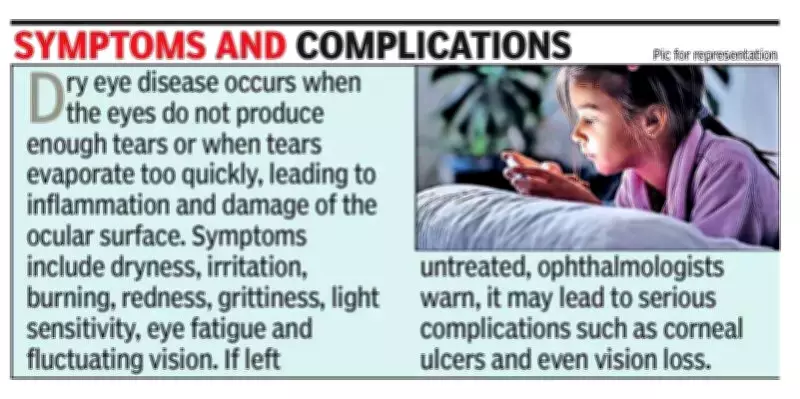
Dry eye disease occurs when eyes either fail to produce sufficient tears or when tears evaporate too rapidly. This imbalance leads to inflammation and potential damage of the delicate ocular surface. Common symptoms include:
- Persistent dryness and irritation
- Burning sensations and redness
- Grittiness or feeling of foreign particles in eyes
- Increased sensitivity to light
- Eye fatigue and strained vision
- Fluctuating visual clarity
Ophthalmologists warn that if left untreated, dry eye disease can progress to serious complications including corneal ulcers and, in severe cases, permanent vision loss.
The three-day International Conference of the Dry Eye and Ocular Surface Society began on January 30 and will conclude on February 1, providing an important platform for advancing understanding and treatment of this widespread condition.