

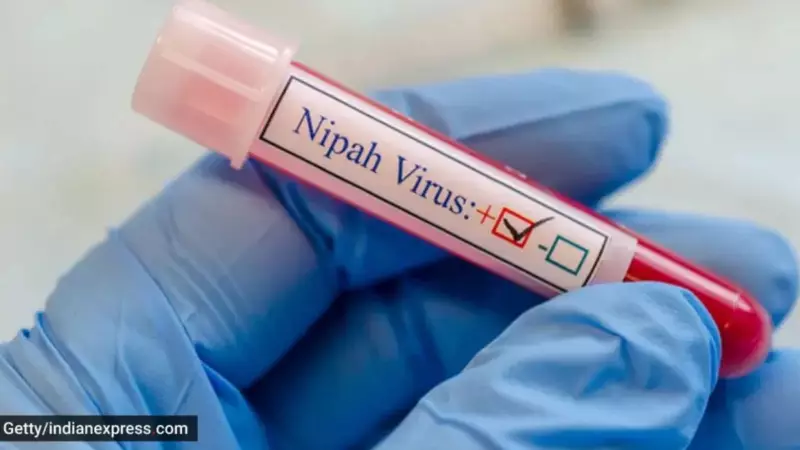
How AIIMS Kalyani's Midnight Response and Swift Action Averted a Nipah Outbreak in West Bengal
In a remarkable display of medical preparedness and rapid response, AIIMS Kalyani successfully contained a potential Nipah virus outbreak in West Bengal, preventing what could have been a devastating public health crisis. This incident highlights the critical importance of swift action, advanced testing capabilities, and strict containment protocols in managing high-consequence pathogens.
The Midnight Call That Triggered an Emergency Response
On the night of January 10, Dr. Sayantan Banerjee, additional professor of microbiology and in-charge of Infectious Diseases at AIIMS Kalyani, received an urgent call about two young nurses at Narayana Multispeciality Hospital in Barasat, North 24 Parganas. The nurses were exhibiting severely impaired brain function and respiratory failure, symptoms that immediately raised red flags for a serious viral infection.
Within minutes, Dr. Banerjee suspected a viral pathogen and initiated a coordinated response. By early morning, he had organized on-site clinical evaluations, collected multiple samples, and arranged for emergency molecular testing at AIIMS Kalyani. The efficiency of this initial response was crucial in setting the stage for successful containment.

Rapid Testing and Immediate Containment Measures
The Nipah virus was identified within an astonishing six hours, thanks to the advanced diagnostic capabilities at AIIMS Kalyani. This rapid confirmation allowed for immediate implementation of critical containment measures:
- Immediate isolation of confirmed cases
- Strict ICU infection-control protocols
- Comprehensive contact tracing of all potential exposures
Confirmation from the National Institute of Virology in Pune followed soon after, validating the initial findings and reinforcing the urgency of the situation.
Treatment Protocols and Patient Outcomes
Dr. Banerjee advised early antiviral therapy, including ribavirin and remdesivir, and guided critical-care management for the affected patients. The results have been encouraging: one of the two confirmed patients has made a full neurological recovery and can now walk independently, while the other remains on ventilator support but under close medical supervision.
"What matters is swiftness of response and containment drills," emphasizes Dr. Banerjee. "All 196 contacts were line-listed and kept under surveillance. They were asymptomatic, and all subsequently tested negative."
Investigations and Source Tracing
Genetic sequencing from the two confirmed cases revealed the Bangladesh genotype lineage, showing 99% similarity to 2022 Bangladesh strains. Environmental investigations yielded important findings:
- Two out of 35 Pteropus medius bats tested positive for Nipah virus
- Eleven out of 26 bats showed IgG-positive results, indicating past exposure
- Environmental samples from raw date palm sap and local vendor sites tested negative by RT-PCR
The investigation suggests a probable spillover from a primary case - a 55-year-old woman with confirmed raw date palm sap consumption who developed fever, viral pneumonia, and died on December 22. The two nurses likely acquired the infection while providing unprotected care during emergency procedures.
Understanding Nipah Virus: Transmission and Prevention
Nipah is a zoonotic virus with high fatality rates, capable of causing severe encephalitis and respiratory disease. Transmission typically occurs through:
- Spillover from fruit bats via contaminated food or drink, particularly raw date palm sap
- Human-to-human transmission through close contact with secretions, especially in healthcare settings
Important clarification: Nipah is not airborne like measles. Transmission mainly occurs through close contact and body fluids, though airborne precautions are necessary during certain hospital procedures.

Survival Rates and Recovery Patterns
Nipah is associated with high case-fatality rates, typically ranging from 40% to 90% depending on the outbreak setting. Bangladesh has historically reported a case fatality rate of 71.7%. However, in this West Bengal incident, early detection, quarantine, and antiviral therapy resulted in zero mortality among the two proven cases.
Survivors can recover fully, but some may experience neurological sequelae such as weakness, seizures, or cognitive changes requiring rehabilitation - a pattern observed in previous outbreaks including those in Kerala.
Public Health Implications and Preventive Measures
The successful containment of this potential outbreak demonstrates several key principles for outbreak control:
- Early detection and surveillance systems are crucial
- Rapid laboratory testing with multi-sample strategies enables fast response
- Comprehensive contact tracing with 21-day follow-up protocols is essential
- Healthcare facilities must maintain strict infection control measures
For public prevention, health authorities recommend:
- Avoiding raw date palm sap, especially during winter harvesting season
- Avoiding fruits possibly contaminated by bats
- Practicing caution around individuals with fever, neurological symptoms, or severe respiratory issues
- Seeking early medical care when symptoms appear
Government Preparedness and Future Considerations
This incident underscores the need for continued government investment in outbreak preparedness:
- Maintaining rapid laboratory testing capabilities
- Ensuring adequate PPE supplies and isolation facilities
- Monitoring bat ecology and spillover risks
- Implementing safer sap harvesting practices
- Utilizing mobile BSL-3 laboratories during outbreaks
The World Health Organization has repeatedly noted the association between Nipah outbreaks and raw date palm sap consumption in both Bangladesh and India, highlighting the importance of addressing this exposure pathway.
This successful containment operation serves as a model for how swift medical response, advanced diagnostics, and strict public health measures can prevent potentially devastating outbreaks, even with high-consequence pathogens like the Nipah virus.





