

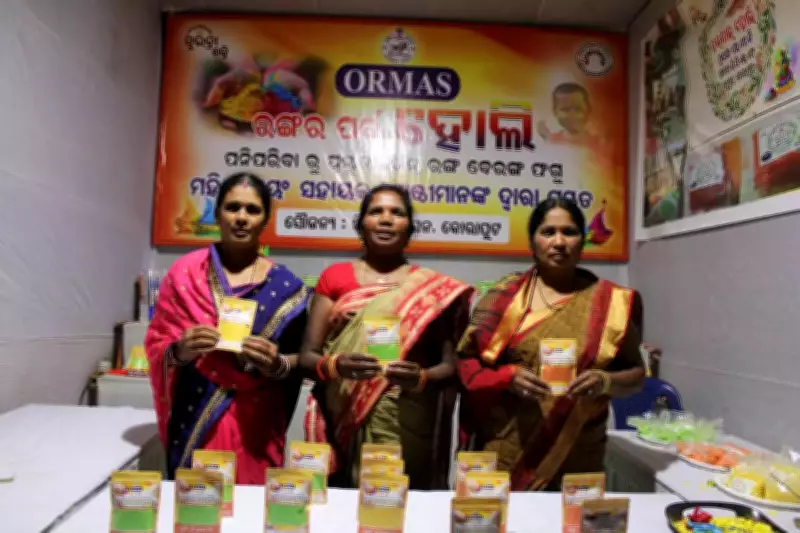
Koraput Tribal Women Pioneer Natural Holi Colors from Kitchen Gardens
In the scenic district of Koraput, a remarkable initiative led by tribal women is transforming the festival of Holi into a safer and more environmentally conscious celebration. Members of the Tulsi women's self-help group (SHG) in Dumuriput village, under Koraput block, are crafting vibrant, chemical-free colors using ingredients harvested directly from their own kitchen gardens.
From Garden to Festival: The Natural Color Production Process
Instead of relying on synthetic chemical dyes that can cause skin irritation and environmental harm, these innovative women utilize locally grown vegetables and flowers to create their eco-friendly powders. Key ingredients include carrots for orange hues, beetroot for deep reds, spinach for greens, and vibrant yellow blossoms for sunny yellows. The process, while straightforward, demands significant manual effort and dedication.
The production involves several meticulous steps:

- Fresh produce is carefully sourced from community and kitchen gardens.
- The vegetables and flowers are crushed to extract their natural juices.
- These juices are then blended with rice powder and maida (refined wheat flour) to form richly colored mixtures.
- The mixtures are spread out under the sun to dry naturally, preserving brightness and texture without any artificial additives.
Sipra Raut, president of the Tulsi SHG, emphasized their commitment to quality: "We ensure the ingredients are mixed properly and then dry the powder outside so that its natural quality remains intact. Our focus is on providing safe, pure colors for everyone to enjoy."
Skill Development to Sustainable Enterprise
The initiative traces its origins to nearly two years ago when two members received specialized training in Bhubaneswar under the Odisha Livelihoods Mission. What began as a skill development effort has blossomed into a sustainable micro-enterprise deeply rooted in environmental awareness and community welfare. Unlike many seasonal businesses driven solely by profit, the Tulsi SHG prioritizes public well-being.
Raut explained their philosophy: "We have not focused on profit or loss. Our happiness lies in giving people safe colors to celebrate Holi. It's about health and happiness, not just commerce."
Growing Demand and Market Expansion
With awareness about the dangers of chemical colors increasing, demand for these natural alternatives has been steadily rising. The Odisha Rural Development and Marketing Society (ORMAS) has provided crucial marketing support, enabling the group to access urban markets across Koraput district. This season, the women have prepared nearly one quintal (100 kilograms) of natural colors and are prepared to scale up production if orders surge.
Jasmin Benya, one of the trained members, noted the shift in consumer preferences: "People now understand that chemically treated powders can harm the skin. They prefer natural colors because they are safer for children, adults, and the environment alike."
Government Support and Broader Impact
Koraput collector Manoj Satyawan Mahajan highlighted efforts to boost sales: "To enhance visibility and accessibility, a temporary outlet has been opened in front of the zilla parishad office in Koraput town. This initiative aims to enhance the livelihood of rural women by generating sustainable income opportunities while promoting eco-friendly practices."
Uma Mahesh, joint CEO of ORMAS in Koraput, revealed that the movement is expanding beyond the Tulsi SHG. Women's groups from Kotpad and Pottangi blocks are also now involved in production and marketing, creating a collaborative network. "This effort not only empowers women economically but also encourages the entire community to celebrate a safer and greener Holi. It's a win-win for health, environment, and rural development," he added.
The initiative stands as a testament to how traditional knowledge, combined with modern training and support, can foster sustainable entrepreneurship that benefits both people and the planet.






