

Tesu Flowers Revolutionize Holi Celebrations in Prayagraj with Natural Colors
In a significant shift towards eco-friendly traditions, the Tesu flower, also referred to as Palas or the 'Flame of the Forest', is steadily gaining popularity as a natural alternative to synthetic Holi colors in Prayagraj. This initiative is not only transforming the festival of colors but also creating sustainable livelihood opportunities for rural women in the region.
From Forest to Festival: The Journey of Tesu Flowers
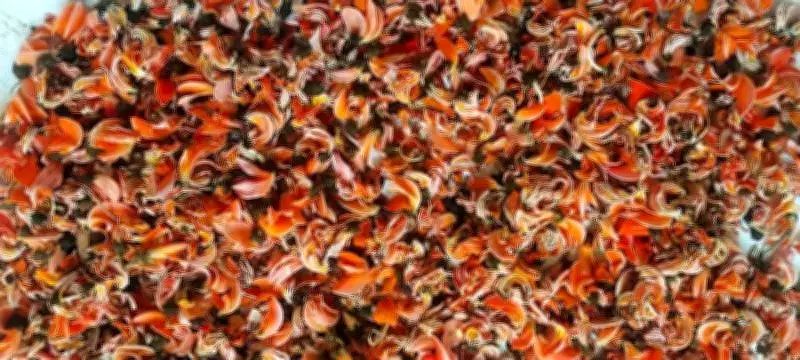
The Tesu flowers are primarily collected from trans-Yamuna areas during their flowering season, which spans from January to March. These vibrant blossoms are then carefully dried in sunlight and stored under controlled conditions to preserve their natural properties. The entire processing operation is managed by rural women associated with the Bioved Research Institute of Agriculture & Technology in Prayagraj.
These dedicated women, including individuals like Lalita (35), Reeta (40), Shyam Kali (50), and Anushika (22), have found that Holi brings them additional smiles as it provides an occasion for extra earnings. For many, this initiative represents a crucial source of income in water-scarce villages, effectively linking traditional forest produce with sustainable economic generation.

Health Benefits and Environmental Advantages
The herbal gulal produced from Tesu flowers offers significant advantages over synthetic alternatives. These natural colors are completely skin-friendly and eco-friendly, providing protection from the allergies and irritations commonly caused by artificial dyes. The powder made from dried Tesu flowers has developed a substantial market both nationally and internationally due to its multiple cosmetic and medicinal properties.
BK Dwivedi, director of the Bioved Research Institute, explained the broader impact: "The powder created from these dried flowers has found remarkable demand across markets. It not only generates additional income for women in Prayagraj but also benefits the entire Bundelkhand region, thanks to the dense forests of Palas trees growing there."
International Applications and Technological Innovation
The versatility of Tesu flower powder extends far beyond traditional Holi celebrations. According to Dwivedi, numerous companies in Germany and Japan are utilizing this natural substance in various products including bio-lipstick, bio-paint, and bio-nail polish. This international interest highlights the global potential of traditional Indian forest produce.
The research institute has also pioneered innovative cultivation methods. "We initiated Rangini Lac cultivation on Palas trees, which has shown promising results for lac production," Dwivedi elaborated. "We're farming clusters of 50 hectares in each block while promoting technology for preparing herbal gulal and abeer by blending natural colors from various flowers including rose, marigold, Har Singar, and Palas."
Production Challenges and Extraction Methods
Despite growing demand for these natural colors, production faces limitations. Dwivedi acknowledged that due to small-scale operations and existing resource constraints, increasing production capacity remains challenging. "The demand for this natural color is definitely increasing, but with our current unit size and resources, we're unable to significantly expand production," he stated.
The NGO has conducted extensive research into extraction methods, discovering that steeping methods of solvent extraction at ambient conditions yield optimal results. Their experiments revealed that a 50% methanol-water solution performs particularly well with solvent extraction steeping techniques, ensuring maximum preservation of the flowers' natural properties.
Sustainable Development and Cultural Preservation
This initiative represents a perfect convergence of environmental consciousness, women's empowerment, and cultural preservation. By transforming Tesu flowers into herbal gulal, the project addresses multiple sustainable development goals simultaneously. It provides economic opportunities for rural women, promotes eco-friendly festival practices, and preserves traditional knowledge about forest produce utilization.

The success of this program demonstrates how traditional practices can be revitalized through scientific intervention and community participation, creating a model that could potentially be replicated in other regions with similar natural resources.





