

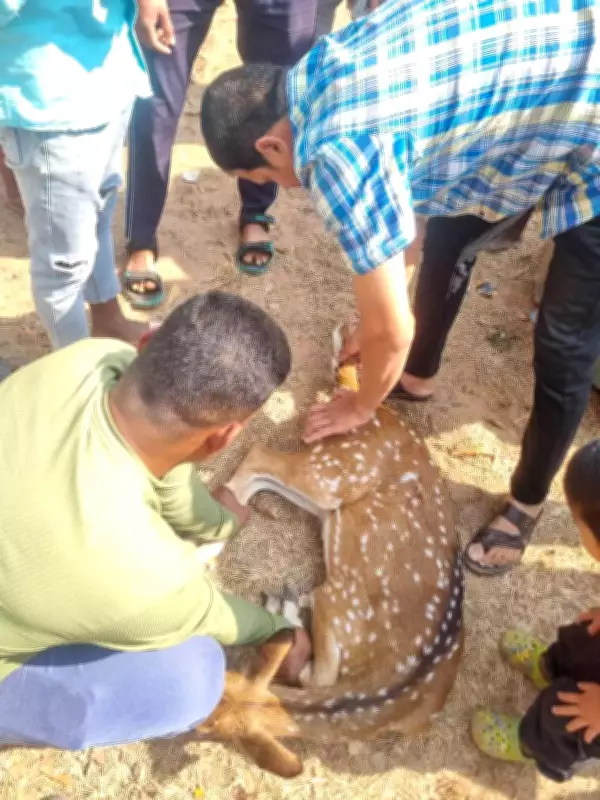
Forest Personnel Rescue Spotted Deer Trapped in College Fence in Gajapati District
In a heartening wildlife rescue operation, forest personnel successfully saved a spotted deer that had become entangled in an iron fence on a college campus near Mohana in Gajapati district. The incident occurred on Sunday, prompting immediate action from local authorities to ensure the animal's safety and well-being.
Deer Receives Veterinary Care and Observation
The one-and-a-half-year-old deer was carefully extricated from the fence and promptly transported to a local veterinary hospital for necessary medical treatment. According to Laxmi Prasad Bisoi, the range officer of Mohana, the condition of the deer is currently good. The animal will remain under close observation by veterinary doctors for the next two days to monitor its recovery and ensure no complications arise from the ordeal.
Sources within the forest department indicated that once the deer has fully recuperated, it will be released back into its natural habitat in the nearby forest. This step is crucial for reintegrating the animal into the wild where it can thrive without human interference.

Possible Cause of the Incident and Local Wildlife Patterns
It is suspected that the deer ventured onto the college campus in search of water from a nearby nullah, inadvertently getting trapped in the wire fencing during its quest. Bisoi noted that approximately 10 spotted deer frequently roam this area, often visiting local water bodies to quench their thirst, especially during drier periods.
Wildlife Activists Call for Improved Water Facilities in Forests
In response to this incident, wildlife activists have urged the forest department to enhance facilities within forest areas to provide accessible water sources for animals, particularly during the summer months. They emphasize that wild animals, including deer, are often compelled to leave their natural habitats in search of water, which exposes them to significant risks.
These risks include potential attacks from predators and increased vulnerability to poachers, highlighting the urgent need for proactive conservation measures. By creating reliable water sources inside forests, authorities can help mitigate such dangers and support the well-being of local wildlife populations.
This rescue operation underscores the ongoing challenges faced by wildlife in human-dominated landscapes and the importance of collaborative efforts between forest personnel and communities to protect vulnerable species. The successful outcome serves as a reminder of the critical role that timely intervention and veterinary care play in wildlife conservation.






