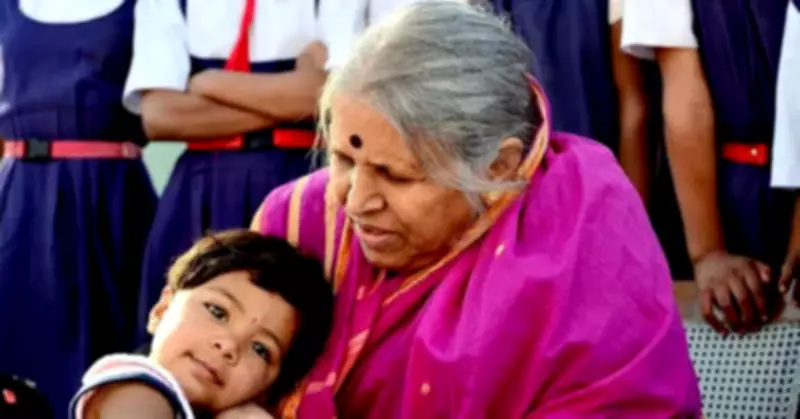
The Unforgettable Journey of Sindhutai Sapkal: From Despair to Motherhood
Some lives unfold in comfort, gradually finding purpose, while others are sculpted entirely through adversity. The narrative of Sindhutai Sapkal falls into the latter category, a tale molded by rejection, hunger, and solitude, yet celebrated for its infinite compassion. Across Maharashtra and beyond, she earned the simple yet profound title of Mai, meaning mother, not through biological ties, but by consciously choosing to become a parent for those without one.
Early Struggles and a Premature Adulthood
Born in 1948 into a impoverished family in Maharashtra's Wardha district, Sindhutai's childhood was steeped in hardship. In an era where education for girls was often neglected, her love for learning was cut short, allowing her to study only up to the fourth standard. Her transition to adulthood arrived abruptly when she was married off at the tender age of 12, thrusting her into responsibilities she barely comprehended.
Abandonment at Her Most Vulnerable Moment
Marriage failed to offer stability, instead bringing violence and turmoil. When Sindhutai courageously spoke out against local exploitation affecting villagers, false accusations were leveled against her. Influenced by malicious rumors, her husband abandoned her during her pregnancy, leaving her with no money, shelter, or familial support. She gave birth to her daughter in a cowshed, a poignant symbol of both despair and survival. For many, such abandonment might have signaled an end, but for Sindhutai, it marked an unexpected turning point.

Life on Railway Platforms and the Birth of Compassion
To survive, she resorted to begging on railway platforms and outside temples, scavenging for food scraps to sustain herself and her newborn. Hunger became a constant companion, and dignity seemed an unattainable luxury. Yet, amidst her own suffering, she observed children enduring even harsher conditions—orphans sleeping on pavements, abandoned infants, and runaway youths with nowhere to turn. Gradually, she began sharing her meager food with them, an act of instinctive kindness that blossomed into a lifelong mission. She realized that while she had lost a home, she could still create one for others.
Choosing to Become 'Mai' to the Unwanted
Sindhutai made a defining decision: she would dedicate her life to raising abandoned children. In a deeply symbolic gesture, she placed her biological daughter in a trust to ensure she could treat every child equally, free from bias or attachment. She started adopting orphaned children informally, caring for them through resources gathered from singing, storytelling, and public speaking. Her speeches, raw, honest, and often laced with humor despite her pain, deeply moved audiences, prompting people to offer assistance. Over time, these efforts evolved into multiple orphanages and support homes across Maharashtra.
Building Families from Broken Beginnings
What set Sindhutai's work apart was not merely the number of children she cared for, but the emotional sanctuary she fostered. She did not operate institutions; she built families. Children affectionately called her Mai, and she encouraged them to view each other as siblings rather than orphanage residents. Emphasizing education and self-reliance, she believed dignity stemmed from independence. Many of the children she nurtured grew up to become doctors, lawyers, teachers, and entrepreneurs, individuals who later returned to support her mission and help others rebuild their lives. By her later years, she had cared for over a thousand children, earning widespread recognition in India and numerous awards for her humanitarian contributions.
Transforming Pain into Purpose
Sindhutai often spoke openly about her past, not with bitterness but with acceptance. She viewed suffering as a source of empathy, enabling her to instantly recognize loneliness in others. Rather than letting abandonment define her, she transformed it into a conduit for connection. Her life challenged conventional notions of motherhood, demonstrating that it is not confined to biology but is an act of choice, patience, and unconditional care.

A Legacy That Endures Beyond Her Lifetime
When Sindhutai Sapkal passed away in 2022, thousands mourned not just a social worker, but a mother. Her legacy persists through the institutions she established and the countless lives she transformed—children who once faced bleak futures but found belonging under her guidance. Her story serves as a powerful reminder that compassion can emerge from the harshest circumstances. In a world often fixated on wealth and status, Sindhutai redefined greatness through kindness. She began life abandoned and unheard, but departed surrounded by thousands who called her Mai, proving that motherhood, at its core, is not something received, but something one actively becomes.