From Sacred Offerings to Environmental Crisis: A Priest's Revolutionary Solution
What becomes of your Mata ki Chunri, Kanha ji's clothes, old pooja photographs, torn religious texts, leftover prasad, or wilted flowers? Do you seal them in a polythene bag and discard them in a river? Perhaps you place them beneath a tree? These sacred objects, once central to holy ceremonies, frequently end up scattered by animals, washed into drainage systems, or polluting our precious water bodies.
The reality is profoundly distressing—our planet has finite capacity, much like our homes, and these items are not mere trash but objects imbued with deep spiritual significance. Pandit Jeevraj Shrimali from Jodhpur, Rajasthan, has dedicated his life to serving Mother Earth through an innovative environmental mission.
The Birth of a Cleanliness Crusade at Guron ka Talab
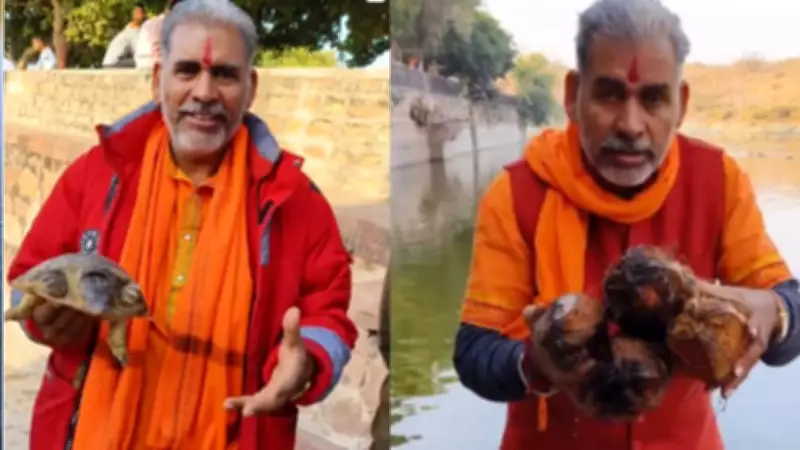
Now serving as a brand ambassador for the Jodhpur Municipal Corporation, Panditji's journey began in 2016 at Guron ka Talab, an ancient pond adjacent to the revered Rokadiya Balaji Temple. At that time, the pond had become a dumping ground for pooja waste, religious idols, sacred books, and devotional pictures. Devotees would immerse these items there, creating unsightly piles that contradicted the very essence of faith.

Panditji decided transformative action was necessary. He initiated public education campaigns, collaborated with municipal authorities on systematic clean-up drives, and installed CCTV surveillance around the pond. When he observes someone discarding waste improperly, he approaches them politely and requests they clean the area themselves.
Systematic Segregation and Creative Repurposing
His most significant innovation involves establishing separate collection bins for different categories of pooja materials—flowers in one container, cloth in another, and plastics elsewhere. This systematic segregation has yielded remarkable results: the pond's ecosystem has experienced a dramatic revival, with waters now sparkling clean.
However, Panditji's work extends far beyond mere collection. He creatively transforms discarded religious items into useful products. Old pooja chunris, garments featuring divine images, and similar fabrics become small bags that he sells for just ₹5 each. The proceeds directly fund his ongoing environmental initiatives, creating a sustainable cycle of conservation.
A Spiritual Call for Environmental Responsibility
"During Shivratri, I witness hundreds of Shiva idols accumulating near the pond—the same occurs during Navratri," Panditji explains. "I encourage devotees to instead offer prayers to the photographs of deities already present in their homes. These mass-produced idols contain harmful chemicals and present significant disposal challenges. Discarding them on roadsides demonstrates profound disrespect."
He advocates strongly against commercial products featuring divine imagery—including curtains, bags, keychains, and even agarbattis. "Companies that print sacred images on disposable items show disregard for divinity, leaving worshippers with waste they cannot honor appropriately," he emphasizes.
Beyond Waste Management: Holistic Environmental Stewardship
Residents frequently spot Panditji traversing Jodhpur's streets, encouraging proper waste disposal, segregation practices, and urban cleanliness. His compassion extends to wildlife as well—he rescues marine animals like tortoises, provides necessary care, and releases them back into their natural habitats.
This remarkable individual demonstrates that authentic religion transcends empty rituals, competitive piety, or ostentatious displays. True faith manifests as profound respect for all creation and eliminating waste that dishonors the divine. Every Hindu should contemplate this message, remembering that faith flourishes when we protect prakriti (nature) as an essential aspect of dharma.
In Hindu philosophy, all natural elements—Earth, Water, Air—deserve reverence, and harming any constitutes a violation of dharma. Panditji's quiet revolution accomplishes more than cleansing ponds; it purifies our collective conscience through respectful, consistent action.