

Prayagraj Women's Group Pioneers Natural Holi Color Production from Temple Flowers
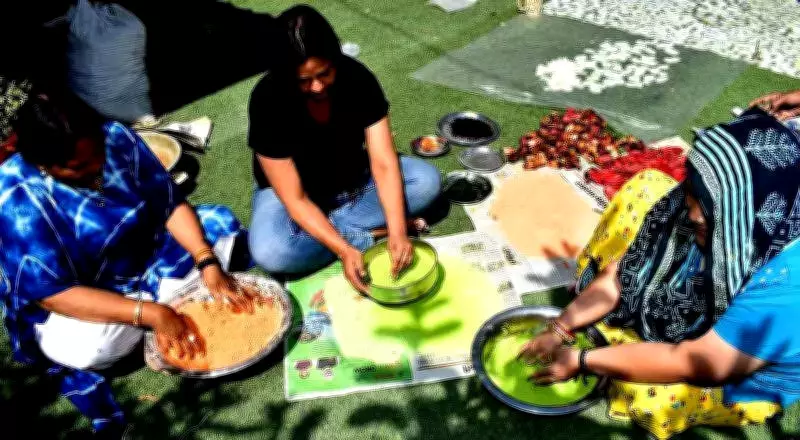
In a remarkable initiative blending tradition with entrepreneurship, a women's self-help group (SHG) from Prayagraj, often called Sangam city, is crafting entirely natural Holi colors. The Asharani Foundation, led by Abha Singh, is transforming dried flowers collected from temples, gardens, and marriage halls into vibrant, skin-friendly abeer, gulal, and other festive hues.
Innovative Process for Organic Color Creation
The foundation's unique method involves drying roses, marigolds, palash flowers, and even cow dung ash. Abha Singh explained, "We employ a three-layer grinding technique to create a fine-quality paste. This is then blended with arrowroot and sandalwood powder to infuse a natural fragrance, ensuring the colors are both appealing and safe." Raw turmeric powder, palash, roses, marigold flowers, sandalwood, and arrowroot powder serve as the primary ingredients, avoiding any synthetic additives.
Expanding the Palette with Vegetable-Based Colors
Building on their success, the group has innovated further by incorporating vegetables into their color-making process. After recognizing the benefits of cow dung ash, they now produce green-colored abeer using spinach juice. The juice undergoes drying and a multi-layer filtration process before being mixed with sandalwood powder and high-quality cow dung ash. This expansion showcases their commitment to utilizing natural resources creatively.

Women associated with SHGs in trans Ganga and trans Yamuna areas are dedicating significant time to prepare these organic Holi colors. They process dried flower petals into powder form, smoothing rough gulal with cornflour and using turmeric for yellow shades and other natural elements for varied colors.
Addressing Health Concerns with Chemical-Free Alternatives
The motivation behind this initiative stems from the harmful effects of conventional Holi colors. Market-sold colors often contain dangerous chemicals that can irritate the skin and, when airborne, potentially damage the lungs. By providing organic alternatives, the SHG aims to protect public health while promoting eco-friendly celebrations.
In trans Yamuna, a collective of 15 women from two district SHGs has prepared 100 kg of gulal using ingredients like palak bhaji (spinach), laal bhaji, beetroot, turmeric, and palash flowers. They shared, "Beetroot gives a pink hue, spinach creates green, turmeric yields yellow, and palash flowers produce orange. We dry these and mix them with water to form a paste, resulting in gulal with a natural fragrance." These women received training through the National Rural Livelihood Mission, enhancing their skills in sustainable production.
Empowering Women and Meeting Growing Demand
Abha Singh launched this pioneering mission this Holi season with a dual goal: to offer safe colors and to empower women economically. As demand for their natural Holi products increases, with orders pouring in, the group is actively involving more women to scale production. Singh emphasized her vision to train additional women, fostering self-reliance and expanding this eco-conscious enterprise.
This initiative not only revitalizes the festival of Holi with traditional, health-conscious practices but also strengthens community livelihoods, setting a inspiring example of sustainable innovation in Prayagraj.






