New Ayurvedic 'Gugal' Plant Species Discovered in Gujarat's Osam Hills
In a significant botanical breakthrough, researchers have identified a new species of the 'gugal' plant, named Commiphora shankarsinhiana, from the Osam Hills in Rajkot, Gujarat. This discovery emerged during a study mapping the traditional grazing routes of Maldhari pastoralists in the Saurashtra region, shedding light on the rich biodiversity of the area.
Discovery and Identification Process
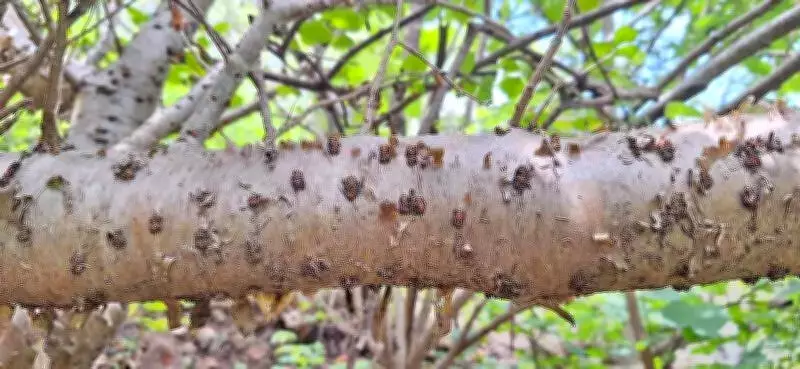
The find dates back to 2021 when researchers Khyaati Thakkar and Pankaj Joshi first encountered a dry tree with yellowish bark on rocky slopes near Patanvav village. At that time, the plant had no leaves, making immediate identification challenging. Thakkar recalled, "It looked like a dry tree with yellowish bark, and we could not identify it immediately." Further analysis revealed that this new specimen is a small dioecious tree, up to 3 meters tall, distinguishing it from most Indian gugal varieties like Commiphora wightii and Commiphora stocksiana, which are typically monoecious shrubs.
In botanical terms, dioecious means that male and female flowers grow on separate trees, a key characteristic that sets this species apart. The plant has been named in honor of the late Shankarsinh N Rajput (1927-2005), a traditional herbal practitioner from Maharashtra, recognizing his contributions to herbal medicine.

Traditional Uses and Significance in Ayurveda
For most Gujaratis, 'gugal' is an Ayurvedic staple, widely used in medicines for purposes such as burning fat and alleviating joint pain. Professor Ekta Joshi explained that traditionally, 'kharo gugal' and 'mitho gugal' are distinguished by their physical features. She added, "Gugal resin is widely used in medicines for fat burning and joint pain, and was historically mixed into construction materials to bind stones." This highlights the plant's dual role in both health and historical practices.
Conservation Efforts and Future Implications
Dr. Joshi emphasized the need for long-term conservation, stating that it "will require collaboration among communities and the forest department regulating grazing, raising awareness, and conducting regular ecological monitoring." This approach aims to protect the newly discovered species and its habitat from potential threats.
The research team includes Khyaati Thakkar, A M Vasava, and K S Rajput from the Department of Botany at Maharaja Sayajirao University of Baroda (MSU), along with Ekta Joshi from Shree RR Lalan College in Bhuj, and independent researcher Pankaj Joshi based in Bhuj. Their findings have been published in the December 2025 edition of the Journal of the Indian Association for Angiosperm Taxonomy, marking a formal recognition of this botanical discovery.
This discovery not only enriches the botanical knowledge of Gujarat but also underscores the importance of preserving traditional ecological practices and biodiversity for future generations.