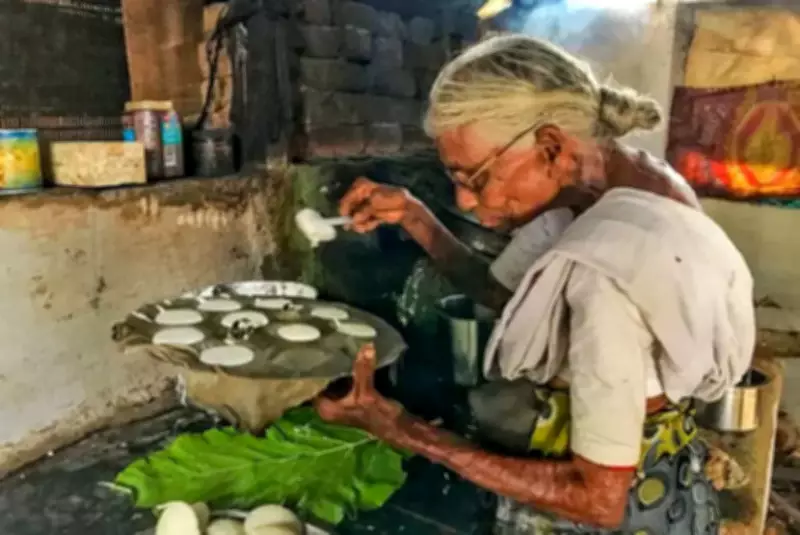
The Dawn Ritual That Made Idli Amma a National Icon
In the quiet village of Vadivelampalayam on the outskirts of Coimbatore, mornings begin not with the usual urban cacophony but with the comforting aroma of steaming idli batter from a wood-fired stove. For decades, this has been the daily reality created by K. Kamalathal, an elderly woman who has become affectionately known across Tamil Nadu and beyond as "Idli Amma."
The Woman Behind the ₹1 Idli Legacy
Kamalathal has spent years selling idlis from her home at an almost unbelievable price: just ₹1 per idli. Reports indicate she started at even lower prices long ago and has steadfastly refused to increase her rates, despite rising costs. Her philosophy is simple yet profound—she views food not as a commercial commodity but as an essential daily necessity for hardworking people who often struggle to afford proper meals.
During the challenging lockdown periods when inflation affected everyone, Kamalathal maintained her ₹1 price point. This unwavering commitment to affordability transformed her from a local figure into a national symbol of generosity. In a country where breakfast budgets can be dramatically affected by economic fluctuations, her consistent pricing represented a radical act of compassion.

How Social Media Amplified Her Mission
Kamalathal first captured wider public attention in 2019 when industrialist Anand Mahindra tweeted about her remarkable work and expressed his desire to support her mission. This wasn't merely social media admiration—it evolved into concrete action.
Mahindra Group's Mahindra Living Spaces division took on the project of acquiring land and constructing a proper home-workspace for Idli Amma. By April 2021, land had been registered in her name with plans for a combined living and working space adjacent to her existing shop. Kamalathal expressed genuine happiness about this development, recognizing how the new facility would significantly improve her working conditions.
The promise materialized on Mother's Day 2022 when she received keys to her new home featuring a specially designed kitchen optimized for her idli-making operations.
Continuing Service at 89 Years Young
Recent coverage confirms that Kamalathal, now 89 years old, continues her daily routine unchanged. A January 2025 profile described her still selling idlis for ₹1 from Vadivelampalayam, while various brands have offered assistance to support her work. A July 2025 report similarly highlighted her ongoing commitment to service-oriented work.
What makes Kamalathal's story particularly meaningful is its continuity. Unlike many viral stories that conclude with ceremonial photo opportunities, her narrative persists through daily action. Her later life, according to the most recent available reporting, remains centered on the same humble routine: preparing idlis, serving them at accessible prices, and maintaining trust with the community that depends on her. The primary difference now is that she operates from a safer, better-equipped home specifically designed around her work requirements.
The Enduring Resonance of Idli Amma's Story
What makes Idli Amma truly unforgettable extends beyond the remarkable price point of her food. It's the moral clarity underlying her actions—a recognition that hunger demands immediate response and human dignity requires protection. Her idlis represent something far deeper than conventional charity; they embody routine kindness practiced consistently until compassion becomes identity.
This explains why her story continues to resurface years after initial attention. It contains all the elements that instinctively resonate with people: advanced age, personal sacrifice, economic scarcity, and unadvertised goodness that expects nothing in return. Yet the most enduring image remains the simplest—an elderly woman serving hot breakfast at a price so symbolic it seems to make a statement about the fundamental value of both nourishment and human life.

A Humble Meal Creating an Immense Legacy
Kamalathal's life reminds us that the most influential public figures aren't necessarily the loudest voices. Sometimes they're the individuals who consistently appear before sunrise, ladle in hand, believing fundamentally that nobody should begin their day hungry. This constitutes Idli Amma's true legacy—not merely a viral story but a living embodiment of compassion paired with unwavering work ethic.
Her story continues to inspire because it demonstrates how individual commitment can create ripples of positive impact, how corporate social responsibility can manifest in practical housing solutions, and how traditional values of community service remain relevant in modern India.