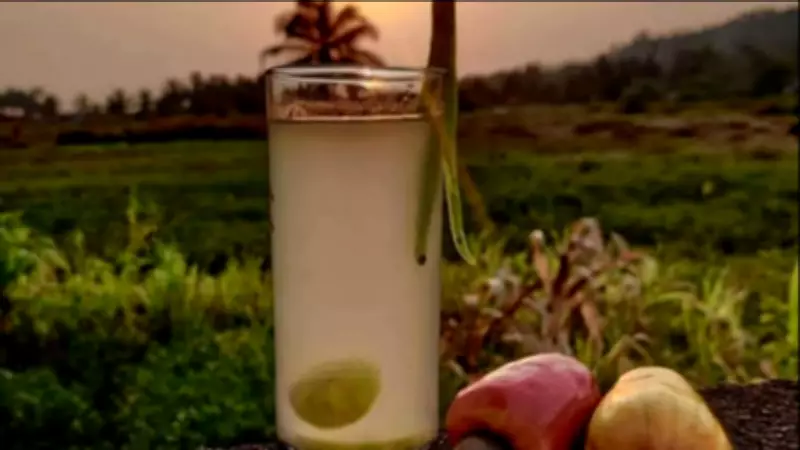
Panaji: Geologist and feni distiller Hansel Vaz has traced the linguistic and cultural evolution of urrak across five centuries. In a presentation at the Museum of Christian Art in Old Goa on Sunday, Vaz mapped the transformation of terms such as neero, sur, and urrak from the 16th century to the present day.
All over India, and even in the 16th century when the Portuguese came to Goa, neero actually meant coconut toddy—the first unfermented sap, Vaz said. According to Vaz, who is conducting a study on the history of feni, early accounts by travellers ranging from sailors and bureaucrats to writers consistently describe neero as unfermented coconut sap, sur as fermented coconut toddy, and urrak as the first distillate derived from coconut.
These are not historians, said Vaz. But they repeatedly recorded the same observations in their writings. The research points to a major linguistic and cultural shift in the 18th century, when cashew-based distillation began to dominate Goa's drinking culture.

Suddenly, caju comes into local parlance and there's a semantic transition from coconut to cashew. In this transition, the word urak, originally used for coconut distillate, was adopted for cashew, and in doing so, reshaped the lexicon, he said. Shedding light on the matter, historian Dale Luis Menezes said that words cannot be assigned fixed meanings without tracing their evolution over time. Understanding how terms are used in specific periods and how those meanings shift across contexts is key to interpreting history, he said.
Vaz asserted that urrak is a distinctly Goan word that travelled far and wide. Though urrak is a Goan word recorded by the Portuguese when they first came here, the word travels to Sri Lanka, the Philippines and beyond, transforming into a whole genre of spirits. This positions Goa as a central node in the global history of distilled spirits, not just as a peripheral player, he told TOI.
He said rigorous research will be crucial for preserving the integrity of feni. The Goa feni got its GI tag in 2009, while application for GI for urrak is in process. Drawing extensively from archival material in Goa, this study connects the dots from the 16th century to the 21st century, and will bring new academic seriousness to feni. It's important that we back our claims with historical facts, not just colloquial understanding, said Vaz.