Gujarat's Great Indian Bustard Chick Receives Z+ Level Security in Kutch
In an unprecedented move for wildlife conservation, a newborn Great Indian Bustard (GIB) chick in Gujarat's Kutch region is being guarded with security measures typically reserved for the nation's highest-profile VVIPs. Hatched on March 26, this chick marks the first wild birth of the species in Gujarat in nearly a decade, sparking a massive protection effort by forest authorities.
Elite Protection for a Critically Endangered Species
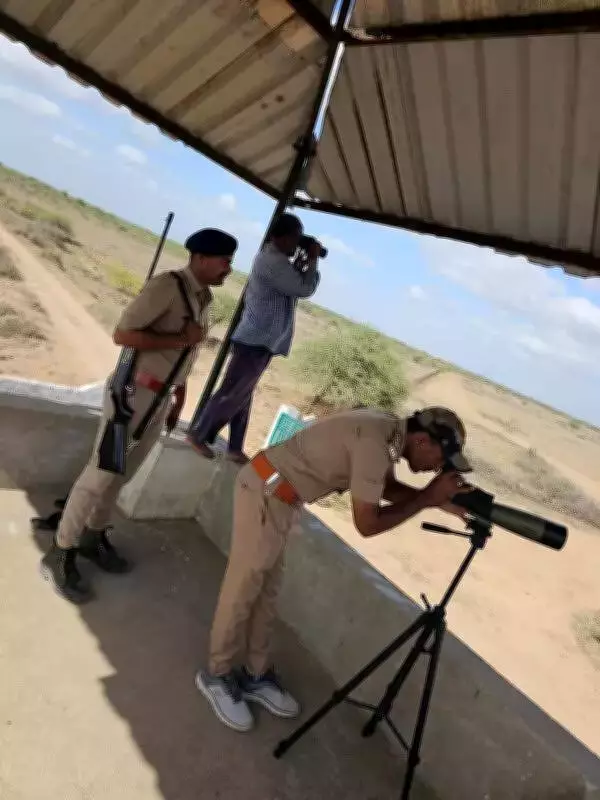
The chick, weighing a mere 150 grams, has been dubbed a Very Very Important Chick (VVIC) by officials. It is under the constant watch of a dedicated team of 50 forest guards operating in three rotating shifts from specially constructed watchtowers. These towers are equipped with advanced surveillance tools, including tripods, spotting scopes, and binoculars, enabling minute-by-minute monitoring.
All updates are relayed in real-time to senior officers in Gandhinagar, ensuring a coordinated response to any potential threats. The security detail mirrors India's Z+ security cover, which involves 55 personnel for individuals of national importance, highlighting the chick's significance in conservation efforts.

Comprehensive Measures to Ensure Survival
The forest department has implemented a multi-faceted strategy to safeguard the chick and its mother. Key actions include:
- Keeping feral dogs and cattle at a safe distance from the nesting area.
- Quietly closing village roads to minimize human disturbance.
- Repairing damaged fencing on a war footing to prevent intrusions.
- Deliberately leaving artificial waterholes dry to avoid attracting predators.
Jaipal Singh, Principal Chief Conservator of Forests (Wildlife), emphasized the department's commitment, stating, "The forest department is leaving nothing to chance to ensure the survival of this newborn. Several teams have been constituted, and round-the-clock surveillance is in place."
Expert Supervision and Community Involvement
The entire operation is being supervised by a team of experts from the Wildlife Institute of India, based in Jaisalmer and Kutch. The mother bird, fitted with a tracking tag since last October, is monitored closely as she moves within a 3 sq km grassland area chosen for its cover and food supply. Her behavior is analyzed for signs of distress, with rapid movements triggering immediate responses from forest staff.
Dheeraj Mittal, Conservator of Forest, Kutch, noted that apart from the field staff, assistant and deputy conservators are also on-site. "We have also recalled former staff who served here in the past and know this terrain well. A team of 50 field staff members is keeping a close eye from the watchtowers," he said.
Local communities have been engaged to support the conservation efforts. Officials held meetings with villagers, requesting them to avoid grazing cattle in the sanctuary and informing them of temporary restrictions on movement through the area. A senior officer in Gandhinagar described the collective effort, saying, "At this moment, almost the entire staff is involved in caring for this chick the way they would care for a baby in their own home."
A Landmark Birth with Ongoing Challenges
The birth of this GIB chick is a landmark event for one of the world's most critically endangered bird species. However, officials caution that the hard part has only just begun. While hatching the egg required technical expertise, ensuring the chick survives through its first month until it can take its maiden flight demands immense vigilance and resources.
This operation underscores the critical importance of conservation initiatives in protecting biodiversity. With the species on the brink of extinction, every successful birth represents a beacon of hope for future recovery efforts.