

Innovative Elephant Treatment in Karnataka Marks Wildlife Medicine Breakthrough
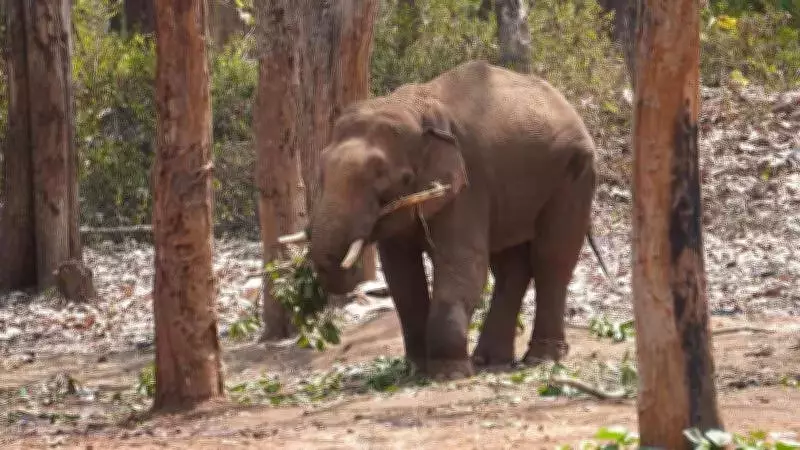
In a significant advancement for wildlife veterinary care, the recovery of a 35-year-old tusker named Adkabadka at the Sakrebailu Elephant Camp near Shivamogga provides a hopeful counterpoint to the recent tragic death of another elephant in the region. This case demonstrates how cutting-edge medical techniques can be adapted for megafauna, offering new possibilities for animal conservation efforts.
Adkabadka's Critical Injury and Experimental Treatment Plan
The 4,200-kilogram elephant, described as a "dwarf" elephant due to his smaller stature, faced a life-threatening situation after slipping in a kraal enclosure last September. The accident caused severe injuries to his front left leg along with open wounds on his other limbs, leaving him completely immobile and vulnerable to infection.
Facing criticism from environmentalists regarding camp conditions, forest department officials led by DCF (Wildlife) Prasanna Krishna Patgar and veterinarian Dr. Murali Manohar initiated an experimental treatment protocol in December. Their approach combined multiple innovative techniques never before attempted on elephants in India.

Groundbreaking Medical Techniques Applied
The veterinary team employed fibreglass casting, a method commonly used in human and livestock orthopaedics but believed to be unprecedented for elephant treatment in the country. To properly apply the cast, they utilized a heavy-duty crane to carefully hoist the massive animal, allowing them to stretch the injured limb for precise bandaging application.
Drawing inspiration from specialized practices developed by an Agra-based non-governmental organization, the team created custom-made leather "shoes" for Adkabadka's other legs. These specially designed boots serve multiple critical functions:
- Distributing weight evenly to prevent secondary stress injuries
- Protecting sensitive foot soles from potential infections
- Providing a stable foundation to support the recovery process
- Incorporating medication to promote healing of existing wounds
Successful Recovery and Expert Collaboration
After thirty days of intensive monitoring and specialized care, the elephant has shown remarkable improvement. "The elephant is demonstrating excellent stability and progress in his recovery," Dr. Murali Manohar told media sources. The forest department consulted extensively with wildlife experts from Kerala and Uttar Pradesh before implementing this locally developed intervention strategy.
DCF Prasanna Krishna Patgar emphasized that this collaborative approach was essential to the treatment's success. The elephant has now begun putting weight on his injured leg, with camp staff expressing optimism that Adkabadka will achieve full recovery within several weeks.
Tragic Contrast: The Death of Elephant Abhimanyu
This successful treatment stands in stark contrast to the unfortunate death of a 23-year-old elephant named Abhimanyu at the Thithimathi Kantapura Elephant Camp in Kodagu on Sunday. Originally born in the Mysuru zoo, Abhimanyu was transferred to the elephant camp after displaying problematic behavior.
The elephant had been undergoing training at the camp for three years and was recently released into forest areas with a mahout to help him acclimate to natural surroundings. During one such forest excursion, Abhimanyu's foot became trapped in a hole, causing significant injury.
Despite receiving nine months of treatment and showing signs of recovery, the elephant ultimately succumbed to his injuries. Forest officials including Nagarahole Tiger Reserve director A. Seema, ACF Lakshmikanth, RFO Devaraju, and Veterinary Officer Dr. Bhavishit Kumar oversaw the burial at the elephant camp on Monday.
Captured Elephant's Background and Future Implications
Adkabadka was captured last year in Sakleshpur, Hassan district, before being brought to the Sakrebailu camp. His successful treatment represents a potential paradigm shift in how wildlife authorities approach complex injuries in large animals.

This case proves that sophisticated megafauna injuries can be effectively managed through a strategic combination of engineering solutions and medical innovation. The forest department's willingness to experiment with unconventional treatment methods while consulting with experts across state lines demonstrates a new approach to wildlife conservation challenges.
The contrasting outcomes between Adkabadka's recovery and Abhimanyu's death highlight both the progress being made in wildlife medicine and the ongoing challenges facing elephant conservation efforts in India. As techniques continue to evolve, such innovative approaches may become more commonplace in treating injured wildlife across the country.





