The Bengal model for managing diabetes in children, currently deployed across 15 districts in the state, is set to be replicated in other parts of the country. The health ministry has incorporated diabetes mellitus in children into the national health policy through the Rashtriya Bal Swasthya Karyakram (RBSK) version 2.0.
The guideline document for this initiative, released last Thursday, draws heavily from the Bengal model. Type 1 diabetes (T1D), often referred to as juvenile diabetes, affects children and adolescents. Although there is no cure, timely treatment involving insulin, dietary modifications, and lifestyle changes can prevent complications and enhance the quality of life for affected individuals.
Dr. Sujoy Ghosh, professor of endocrinology at IPGMER and SSKM Hospital, who served on the technical expert group that drafted the document, expressed his delight. He stated, "I am delighted to share that the Government of India, as part of RBSK version 2.0, has included diabetes mellitus in children in the national health policy and released a guideline document. This is based predominantly on the West Bengal model, which will lead to the creation of one T1D clinic in each district of India in the near future." He thanked the RBSK team, the Non-Communicable Diseases (NCD) team, and all others involved for releasing the document, which he believes will improve the lives of those living with T1D.

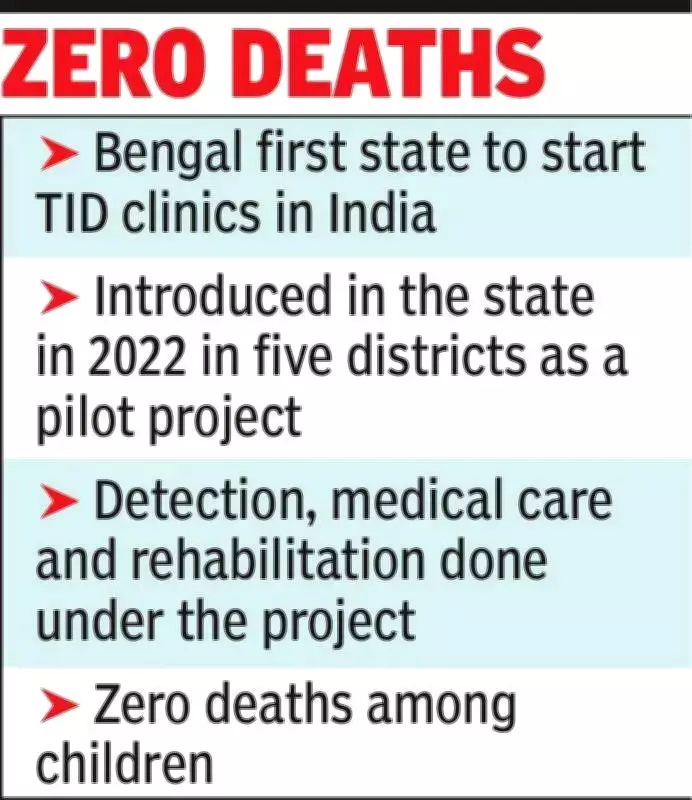
The Bengal model was designed for early detection and timely intervention. T1D clinics in Bengal began as a pilot project in 2022 across five districts and now operate in 15 districts. The project has earned the acronym 'Bengal Model' and enjoys support from various organizations, including UNICEF.
Dr. Ghosh was one of the technical experts for the national policy on T1D, alongside doctors from across the country such as Tushar Nale, Bindu Kulshreshtha, Anju Seth, Smita Joshi, Vivek V Singh, and Malvika Sharma. The endocrinology professor is the driving force behind the Bengal project. He and his SSKM team have continuously upgraded the project by introducing new features for improvement.
The model operates through NCD clinics across 15 districts, focusing on detection, management through free insulin distribution, referral, and rehabilitation. It has touched the lives of nearly 2,000 children, narrowing the healthcare access gap for children with T1D in the state.