

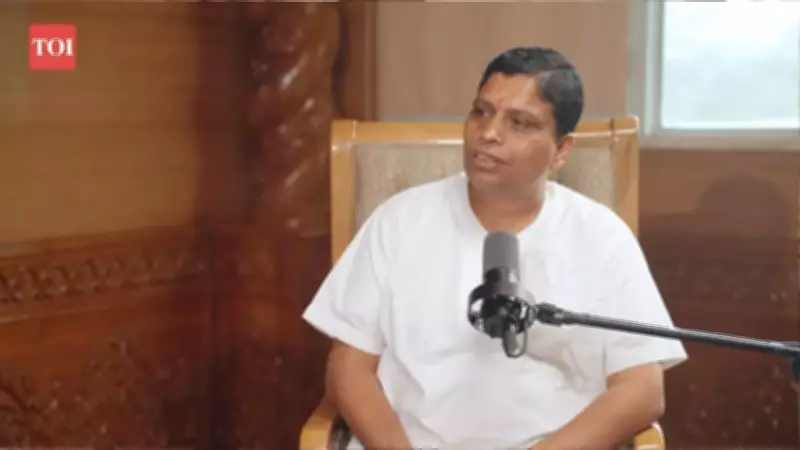
In an era where health information spreads rapidly but genuine trust remains elusive, the discourse surrounding Ayurveda has become more pointed and critical than ever before. The Times of India recently conducted a rare and introspective interview with Acharya Balkrishna, the esteemed scholar who leads Patanjali's research division, in conversation with Akshat Gupta. This dialogue moves beyond fleeting promotional claims to tackle a profound and challenging inquiry: Can an ancient health system withstand the rigorous examination of modern science without compromising its foundational principles and essence?
Who is Acharya Balkrishna and Why His Perspective Holds Significance
Acharya Balkrishna is not merely a Sanskrit scholar and Ayurveda researcher; he is also the co-founder of Patanjali and the driving intellectual force behind its research institutions. His extensive work revolves around studying classical texts, medicinal plants, and therapeutic methodologies that have historically shaped traditional Indian medicine. Over the years, he has consistently advocated for Ayurveda to undergo rigorous testing, systematic documentation, and explanation in terms that contemporary scientific communities can comprehend and validate. This stance has positioned him at the intersection of both admiration and critique within health circles.
The Timeliness of The Times of India Interview in Today's Context
This interview emerges during a particularly delicate period for Ayurveda. While it encounters skepticism from certain quarters of modern medicine, there is simultaneously a surge in public interest toward natural and holistic health approaches. Rather than focusing on product promotion, the conversation delves into procedural aspects: how research is conducted, why establishing standards is crucial, and where tradition must exercise caution to avoid making unrealistic promises. This approach provides readers with valuable context and insight instead of mere reassurance.

Moving Beyond the Ayurveda Versus Modern Medicine Debate
Acharya Balkrishna emphasizes a recurring theme: Ayurveda was never intended to be antagonistic toward modern science. According to him, the real endeavor lies in translation rather than confrontation. Ancient texts describe therapeutic outcomes, while modern laboratories must elucidate the underlying mechanisms. This is where reverse pharmacology becomes relevant—a method where researchers observe established traditional uses and subsequently investigate their cellular and biochemical workings. Although this process is gradual, it honors both traditional wisdom and scientific inquiry.
Prioritizing Research Over Reassurance and Addressing Fear-Based Healthcare
A notable segment of the discussion involves his critique of fear-driven healthcare practices. He argues that patients are often inundated with warnings rather than being guided toward practical solutions. Ayurveda, as he portrays it, emphasizes balance, lifestyle modifications, and preventive care. Concurrently, he acknowledges that all health claims must be substantiated through verification. He references laboratories, animal models, clinical collaborations, and thorough documentation, maintaining that evidence should take precedence over anecdotes, even when discussing time-honored remedies.
Safeguarding Knowledge Without Rendering It Static
The interview also explores the often-overlooked domain of documentation. Many ancient manuscripts were manually transcribed, leading to inaccuracies, misidentified plants, and shifts in interpretation. Patanjali's research teams are engaged in rectifying these discrepancies by cross-referencing texts, mapping herbal species, and aligning them with modern taxonomic classifications. This work is not glamorous; it is painstaking and frequently goes unrecognized. Yet, without such meticulous efforts, Ayurveda risks degenerating into folklore rather than remaining a credible body of knowledge.

Where Belief Should Yield to Scientific Leadership
Acharya Balkrishna does not shy away from admitting that exaggerated assertions and misuse exist within Ayurvedic circles. He recognizes instances of shortcuts, confusion, and misapplication. His contention is that faith alone cannot safeguard a health system; only transparent and rigorous research can. He discusses the integration of emergency medical care, advanced diagnostic tools, and modern hospital facilities alongside yoga and Ayurvedic practices. The underlying message is prudent yet unequivocal: tradition garners respect only when it welcomes scrutiny and questioning.
About the Author
TOI Lifestyle Desk
The TOI Lifestyle Desk comprises a dynamic and dedicated team of journalists who, with relentless passion and commitment, monitor the nation's pulse to curate a vibrant tapestry of lifestyle news for The Times of India readership. At the TOI Lifestyle Desk, we strive to look beyond the superficial, exploring the extraordinary. Consider us your lifestyle ally, offering daily inspiration and information. Whether you seek the latest fashion trends, travel adventures, culinary experiences, or wellness advice, the TOI Lifestyle Desk serves as your comprehensive destination for an enriching lifestyle journey.





