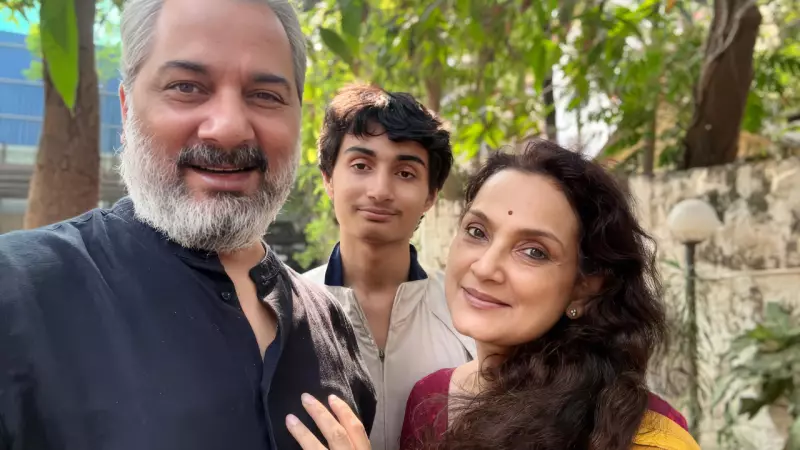
TV Power Couple Opens Up About Parenting Journey with Teen Son
He earned the nickname 'TV's Aamir Khan' for his dedicated approach to acting, while she secured a national award at just 22 years of age. Television and theatre veterans Varun Badola and Rajeshwari Sachdev first crossed paths on the sets of the popular show 'Antakshari' back in 2004, leading to marriage shortly thereafter. Today, as parents to a teenage son named Devagya, the couple recently portrayed on-screen parents in a web series, drawing from their real-life experiences. In an exclusive conversation with Neha Bhayana, they delve into the contrasts between traditional and contemporary parenting methods, along with their personal disciplining philosophy.
Parenting Challenges Evolve with Teenage Years
Varun reflects on the shifting dynamics of parenting as children grow older. 'The level of difficulty changes every few months,' he observes. 'When we were young, we often caused our parents distress. By the time I acknowledged my father's wisdom, I had a son who believed his father was mistaken.' He emphasizes that parenting does not become simpler over time. 'Children progress from being unable to express their emotions to communicating with peers while concealing feelings from parents. These evolving scenarios demand constant attention; you cannot afford to be complacent.'
Navigating Communication Barriers with Teenagers
When asked about strategies to encourage their son to listen, Rajeshwari shares a lighthearted approach: 'Make friends with his friends to gather insights from their perspective.' She acknowledges the complexities of modern parenting, noting that societal changes have intensified scrutiny on children's actions. 'In the past, children had more room to make mistakes, but today, every misstep is captured and potentially viral online, leaving lasting impacts.' She stresses the importance of fostering open dialogue, despite teenagers' tendency to withhold information due to peer pressure and stress.

Old-School vs. New-Age Parenting Styles
Varun highlights the difficulty in comparing parenting methods across generations due to technological advancements. 'If platforms like Instagram and YouTube existed in our youth, we could draw parallels. Previously, children played outdoors until late; now, they are immersed in screens indoors.' He points out a significant shift: 'Physical discipline, common in our childhood, has diminished today.'
Addressing the trend of gentle parenting, Rajeshwari candidly admits, 'We are not gentle. Occasionally, I resort to mild physical correction, and my child is fine.' She argues that certain situations warrant firmness, though she acknowledges societal disapproval of such methods. Varun adds an analogy from the animal kingdom, noting how creatures like dogs and wolves establish boundaries with their offspring, suggesting that discipline is a natural aspect of upbringing.
Grandparents' Contrasting Perspectives on Discipline
The couple humorously discusses how their parents' attitudes have transformed with grandparenthood. Rajeshwari reveals, 'My mother-in-law, who disciplined her son strictly, now disapproves if I raise my voice at my child. Similarly, my father, who freely corrected us, excuses our son's explorations.' Varun quips, 'We were exploring too, but received no such leniency.'
Hormonal Changes and Teen Behavior
On whether hormonal shifts serve as an excuse for teenage behavior, Rajeshwari disagrees. 'It's not merely an excuse. The accelerated pace of information consumption today likely amplifies hormonal effects. Encouraging sensitivity in children can help maintain balance.' She expresses gratitude that their son's busy schedule minimizes tantrums, though the future remains uncertain.

Real-Life Reflections in On-Screen Roles
In their recent web series 'Co-Ed', the duo portrays parents of teenagers, a role they find highly relatable. Varun notes, 'The series addresses numerous issues faced by adolescents, such as navigating relationships and fitting in, which resonates deeply with our experiences.'
Academic Pressure and Balancing Expectations
With their son in grade 10, the couple confronts the prevalent pressure for perfect board exam scores. Rajeshwari recalls, 'In our era, 65% was celebrated, but today's emphasis on high grades is challenging.' They advocate for a balanced approach, encouraging physical activity alongside studies and recognizing alternative talents beyond academics.
Son's Perspective on Their Careers
Varun shares that their son Devagya discusses their performances but remains neutral—neither a fervent fan nor a harsh critic. 'He is still comprehending the intricacies of acting,' Varun explains, drawing from his own delayed appreciation of his father's talents. They permit him to watch select adult content, acknowledging that exposure to profanity often begins in school environments.
Parental Unity and Decision-Making
Rajeshwari underscores the importance of mutual respect and collaborative decision-making in their household. 'We communicate openly and reach consensus, ensuring it's never just one parent's dictate.' This unity helps navigate differing opinions effectively.
Managing Instant Gratification in Digital Era
The proliferation of instant delivery apps has cultivated a culture of immediate fulfillment among children. Rajeshwari admits the difficulty in countering this trend but implements strategies to teach patience. 'For significant requests, we enforce waiting periods or require special occasions.' She recalls her father's method of delaying purchases to assess genuine desire, a practice she now applies with her son to instill patience and discernment.