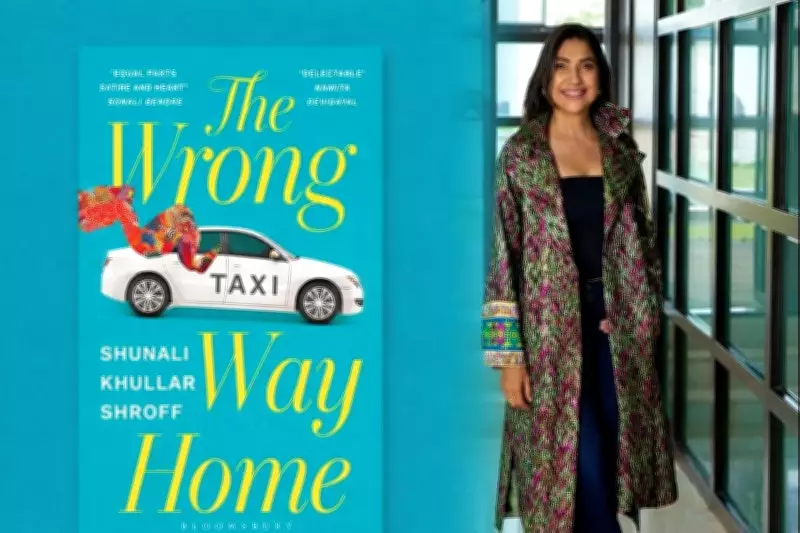
Shunali Khullar Shroff's 'The Wrong Way Home': A Masterful Dissection of Mumbai's Glittering Facade
In her latest novel, The Wrong Way Home, Shunali Khullar Shroff moves beyond the typical "glitzy" and "sparkling" descriptors often attached to stories about affluent Indian lives. Instead, she delivers a relentless audit of social currency, fading beauty, and the daunting prospect of starting anew when life's ledger hits zero. With the precision of a social dermatologist, Shroff biopsies the shimmering surface of Mumbai's haut monde, revealing the raw truths beneath.
Meet Nayantara: A Flawed and Magnificent Protagonist
Our guide through this exquisitely crafted narrative is Nayantara, a recently divorced PR professional whose husband, filmmaker Jay, has moved on to a younger, Instagram-ready partner. Nayantara is magnificently flawed—vain, petty, and consumed with stalking her replacement online. In an era where fictional women are often polished into inspirational figures, her unvarnished humanity serves as a refreshing tonic. She defies the "graceful ex-wife" trope, embodying a messy, real struggle that resonates deeply.
The PR Metaphor: Crafting Perception Amid Personal Ruin
Shroff's choice to make Nayantara a PR expert is no accident; it forms the novel's central metaphor. While Nayantara expertly manages the reputations of Bollywood stars and politicians, her own life's PR campaign lies in tatters, scrutinized by gossip blogs and former friends. This career insight stems from Shroff's personal experience in journalism and PR, lending authenticity to the narrative. As she explains, "write what you know", and this organic integration enriches the story's depth.

Satire of Elite Culture and Systemic Loneliness
The novel excels as a peerless anthropological satire of India's elite soirées. Shroff captures the clatter of ambition masquerading as small talk and the silent calculations of social standing. Her dissection of influencer culture, performative wellness, and the emptiness behind hashtags like #Blessed is both exact and lethal. More profoundly, she highlights a piercing social observation: "couples only plan their life with couples". Nayantara's loneliness is not merely romantic but systemic, a form of social insolvency that ostracizes single women in a world built for pairs.
Contrasting Landscapes: Mumbai's Frenzy vs. Landour's Clarity
The Wrong Way Home oscillates between the frenetic heat of Mumbai and the austere moral clarity of Landour, where Nayantara's environmentalist mother, Kalpana, resides. This dynamic provides emotional ballast and sharp critique. In Landour, amidst real rhododendrons and meaningful work, Nayantara's Mumbai preoccupations—like social validation and grand weddings—are exposed in their triviality. Shroff's prose shifts accordingly, from witty and fleet in the city to lyrical and grave in the mountains, reflecting her personal connection to these Indian landscapes.
Evolution of Voice and Nuanced Themes
Shroff's authorial voice has evolved from effervescent satire to something sharper and more acidic, akin to champagne left open overnight. This change stems from lived experiences, including Covid, parenting, and aging. The novel wisely addresses the economics of divorce, both financial and emotional, without becoming a manifesto. In a nuanced take on alimony, Shroff notes her protagonist's decency, emphasizing that each case is unique. The book balances humor with the real pain of dismantling a life, offering profound empathy rather than simple skewering.

A Revolutionary Happy Ending
The Wrong Way Home is a genuinely smart novel about self-performance in the social media age and a deeply moving exploration of identity. It refuses fairy-tale rescues, instead granting Nayantara a small, professional victory that is entirely her own. Shroff argues that for a woman learning to stand alone in a paired world, genuine possibility is the most revolutionary happy ending. This work not only critiques Mumbai's elite but also celebrates the resilience of women starting over in midlife, making it a must-read for its insightful commentary and emotional depth.