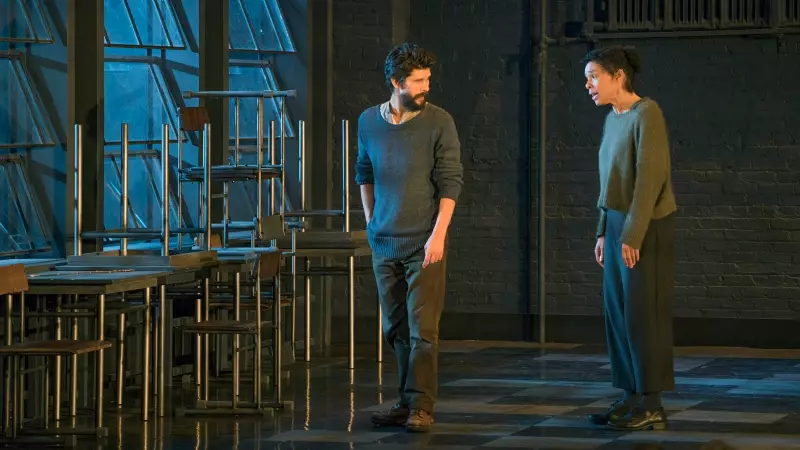
The main theatre at the National School of Drama (NSD) in Delhi's Mandi House is set for a powerful and dark transformation. From November 19 to November 23, third-year students will present Arthur Miller's seminal work, The Crucible, marking the first time an Arthur Miller text has been staged at the prestigious institution.
A Timeless Tale of Fear and Accusation
Written in 1953, Arthur Miller's The Crucible uses the historical backdrop of the Salem witch trials of the late 17th century as a parable. The plot revolves around a community in Salem, Massachusetts, where a group of young girls, caught dancing in the forest, spark a wave of hysteria. To save themselves, they begin accusing their neighbours and acquaintances of witchcraft. These baseless allegations, fueled by rumour and fear, lead to the execution of 20 people after more than 200 were accused of practising devil's magic during the prosecutions of 1692-93.
Miller himself described the play as "an act of desperation," and it was directly aimed at Senator Joseph McCarthy's infamous communist witch-hunts in the 1950s United States. The play is witnessing a global resurgence this year, with productions at venues like the Globe Theatre, as a form of protest against rising authoritarianism.

Echoes in a Hyperconnected World
Director Amitesh Grover, a faculty member at NSD, explains the play's stark relevance today. He was motivated to direct this production because of the modern-day witch-hunts he observes in the media.
"We have seen the media going after innocent people and accusing them falsely," Grover says. "Then, years later, we find out that there was actually no truth and no evidence against the people who were the victims of these media witch hunts."
In his Director's Note, Grover powerfully states that the village square has now turned into a digital feed, the gallows into a trending hashtag, and confessions into public spectacles of shame. He poses critical questions through this production: "What happens to a people when fear becomes faith? When private desires and guilt disguise themselves as moral righteousness? When the act of speaking the truth becomes the most dangerous rebellion of all?"
An Oppressive and Overpowering Stage
The visual design of the NSD production intensifies the play's themes of oppression and fear. The set at Abhimanch theatre features black, towering walls that are 16-17 feet tall, significantly higher than the standard 10 feet mentioned in the script. Similarly, doors are a massive 12 feet high, creating an overwhelming and stifling atmosphere.
"The set is quite overpowering," Grover confirms. "It gets infected by lies, witchcraft, accusations, and fear..." This deliberate design choice immerses the audience in the claustrophobic world where truth is the first casualty and moral certainty becomes a tool for control.
At its heart, The Crucible is a story about the nature of justice and the power of an individual's conscience, as embodied by the central character, farmer John Proctor, who finds the courage to speak truth to power. For contemporary audiences in Delhi and beyond, the NSD's production serves as a stark reminder of the dangers that arise when society allows fear to override reason and evidence.