Freedom at Midnight Reinterprets Gandhi's Assassination as a Catalyst for National Unity
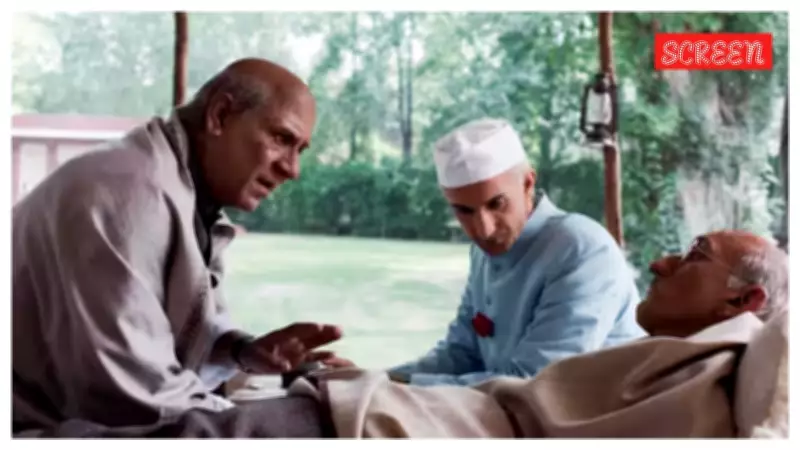
On Martyrs Day, Nikkhil Advani's period drama Freedom at Midnight offers a profound reinterpretation of Mahatma Gandhi's assassination, transforming it from a mere historical tragedy into a powerful narrative of national unity. Season 2 of the series, which culminates with the events of January 30, 1948, depicts Gandhi's death not as a polarizing event but as a sacrifice that underscores his lifelong belief: the nation transcends the individual, even the Father of the Nation.
From Angry Nation to Unifying Sacrifice
The first season of Freedom at Midnight concluded with an ominous foreshadowing, as an angry nation demanded, "Gandhi must pay." Season 2, however, reframes this sentiment, presenting the assassination not as retribution but as a smaller sacrifice Gandhi willingly made for the greater good of a divided India. In the aftermath of Independence and Partition, the country grappled with extreme emotions—the elation of freedom from colonial rule juxtaposed with the heartbreak of religious division and widespread riots.
Advani's portrayal emphasizes that the violent act against a symbol of non-violence is less a victory of hatred and more a poignant plea for peace. This approach echoes Salman Rushdie's depiction in Midnight's Children, where Gandhi's death is framed as part of a larger narrative of national resilience, a "snake bite" followed by a gradual ascent toward unity.

Gandhi's Moral Stand Amidst Communal Chaos
In the series, Gandhi's actions in his final months highlight his unwavering commitment to a moral code above religious or political affiliations. Through fasting unto death, he urged rioters to lay down their weapons and ensured fair treatment in Partition terms for both India and Pakistan. His allegiance was not to any religion or faction but to a higher ethical standard governing a land torn by politics.
Gandhi's advice to a rioter in Calcutta—"Don't discriminate pain as ours and theirs. Shed as many tears on others' pain and loss as you do on yours"—encapsulates his philosophy. He viewed peace in Pakistan as integral to harmony in India, a mission cut short by his assassination. This raises poignant questions: Was his killing an attempt to prevent him from spreading peace in Pakistan, or an act of revenge for his stance on Partition?
Exploring the Assassin's Existential Crisis
Freedom at Midnight delves into the psychological underpinnings of Gandhi's assassination, focusing on Madan Lal Pahwa, a Partition refugee from Pakistan. The series suggests that Pahwa's motive stemmed not from religious hatred but from existential despair—specifically, "Daddy issues." Having been disowned by his own father, Pahwa sought identity and purpose, viewing Gandhi as the "father of all fathers." His failed attempt underscores a broader theme: the killer's religious or national identity is less significant than their state of mind.
When Gandhi's actual killer appears, only his silhouette is shown, symbolizing that his face or religion matters less than his existential turmoil. He represents a lost soul in a traumatized nation, grappling with a painful past and an uncertain future.
A Cinematic Departure from Traditional Portrayals
Advani's direction offers a stark contrast to Richard Attenborough's 1982 biopic Gandhi, which ends abruptly with Gandhi's last words, "Hey Ram." In Freedom at Midnight, the assassination is depicted in slow motion, forcing viewers to confront the violence fully. This approach reflects an Indian perspective that understands Gandhi's message: death, even of the nation's father, does not signify the nation's demise.
The final episode, titled "Hey Ram," visualizes Gandhi's invocation without audio, emphasizing it as a prayer for peace rather than a religious statement. Gandhi, a practicing Hindu, used religion as a means to a higher end—unity and harmony.

Legacy of Sacrifice and National Identity
The series concludes by highlighting Gandhi's posthumous impact. His death bridged divides not only between religions and countries but also between political ideologies like Nehru's socialism and Patel's pragmatism. This mirrors contemporary India's crossroads: whether to celebrate unity in diversity or consolidate identity on religious grounds.
Gandhi's assassination, commemorated as Martyrs Day, served as a catalyst for Nehru and Patel to set aside differences and unite for a nation that could afford no further divisions. Freedom at Midnight reminds us that Gandhi's life and sacrifice continue to shape India's identity, offering a timeless lesson in unity amidst diversity.