The Viral Conspiracy That Blurred Fiction and Reality
In today's digital landscape, where streaming platforms and social media dominate our entertainment consumption, conspiracy theories can spread with unprecedented speed and intensity. These modern myths cleverly blend elements of entertainment, psychological manipulation, and even our own memories, drawing audiences into heated debates that challenge our perception of reality. The phenomenon has reached new heights with interactive storytelling that deliberately confuses viewers about what they've actually witnessed.
Black Mirror's Reality-Bending Season 7 Phenomenon
One of the most fascinating recent cases emerged from the dystopian anthology series Black Mirror, which has built its reputation on presenting disturbingly plausible technological nightmares. When the seventh season premiered in 2025, titled Black Mirror Season 7, it sparked immediate controversy among global fans who began dissecting minute details that evolved into a full-scale cultural mystery. This obsessive scrutiny created a frenzy of speculation that kept audiences thoroughly engaged with the show's complex narratives.
The entire Barnie's versus Bernie's controversy represents just one example within a broader universe of strange theories that deliberately left viewers confused yet completely captivated. Let's explore this peculiar Black Mirror moment and unravel the mystery that plunged nearly every viewer into confusion—particularly those dedicated fans who remained committed to solving the puzzle.

The Barnie's or Bernie's Streaming Mystery Explained
Black Mirror, the series renowned for amplifying our technological anxieties to maximum intensity, returned with its seventh season last year to widespread critical acclaim. Most viewers and critics agreed this represented the show's strongest season in recent memory, featuring several notable achievements:
- The series' first-ever sequel episode
- Three episodes scoring above 8.0 on IMDb—a milestone not reached since 2017
- Superior performance compared to seasons five and six
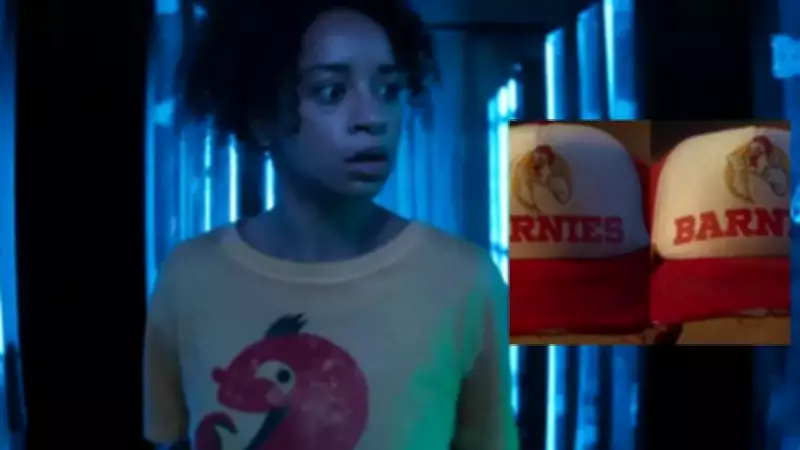
However, the season's second episode, Bête Noire, created unprecedented confusion among viewers. The controversy centers on a scene where character Maria argues with coworkers about a fast-food chicken restaurant's name—is it Barnie's or Bernie's? Initially appearing as a quirky narrative detail, the situation grew increasingly bizarre when audiences discovered Netflix was streaming two distinct versions of the identical scene.
Different viewers reported seeing different names:
- Some observed Barnie's displayed on a character's hat and mentioned in dialogue
- Others saw Bernie's in the same positions
- These variations occurred even when friends watched simultaneously
The episode deliberately amplifies this confusion through Maria's growing realization that her reality doesn't align with others'. She becomes convinced the restaurant bears one name, only to discover everyone else remembers it differently. The ultimate truth depends entirely on which version Netflix's streaming algorithm serves to each individual viewer.
Social Media Frenzy and Fan Investigations
The mystery escalated when a fan posted on X (formerly Twitter) about how the streaming platform was manipulating perceptions. This viewer and a friend watched together but noticed significant discrepancies at the 16:40 timestamp. The fan provided compelling evidence through screenshots showing:
- One version where Maria searches for Barnie's and receives thousands of results
- Another version where she searches for Bernie's with identical search outcomes
- Corresponding dialogue changes depending on the version viewed
Online reactions ranged from bewildered to accusatory:
One comment declared: "Mine started as Barnie's and everything switched to Bernie's... Are y'all seeing the opposite?"
Another viewer confirmed: experiencing the opposite version, while someone else described Netflix's approach as "diabolical."

A particularly alarmed user noted: "oh my god both my devices have diff netflix accs and it ACTUALLY shows different words??? gaslighting pro max."
This real-world confusion perfectly mirrored the show's themes of reality manipulation and psychological gaslighting. Fans exchanged screenshots, debated vigorously online, and discovered that rewinding scenes or switching devices sometimes altered the restaurant name, transforming the situation into a genuine internet mystery.
Creator Charlie Brooker's Playful Response
The controversy grew so substantial that series creator Charlie Brooker directly addressed the chaos. He posted an online video holding the infamous cap from the episode, joking: "If you've seen the Black Mirror episode Bête Noire, you'll recognize this. It's a Barnie's cap. Or is it a Bernie's cap? That's actually a key plot point in the episode. Depending on which version you saw, you might have a different take. Did we change anything? Well, I couldn't possibly comment. You'll have to go back, watch it again, and argue about it."
Through this clever marketing strategy, Black Mirror once again successfully blurred the boundaries between fictional narrative and actual viewer experience, demonstrating the series' unique ability to extend its themes beyond the screen.
Understanding the Black Mirror Phenomenon
Black Mirror stands as a groundbreaking British dystopian anthology series that critically examines how technology and media distort human existence. Each episode functions as a standalone narrative, requiring no continuity between stories, though eagle-eyed viewers often discover subtle connections and Easter eggs. The series presents diverse tones across its episodes:
- Chilling dystopian scenarios
- Dark satirical commentaries
- Unsettling psychological explorations
Every story probes the same fundamental concern: how technological innovations disrupt human cognition, emotion, and social connection. Some episodes feel terrifyingly imminent, while others venture into surreal territory, but all compel audiences to confront uncomfortable questions about reality, morality, and humanity's trajectory.
Originally airing on Channel 4 in the United Kingdom, Netflix acquired global distribution rights, significantly expanding the show's international reach. The series currently comprises:
- 7 complete seasons
- 33 standard episodes (excluding the interactive film Bandersnatch)
- Episode lengths varying from 40 to 90 minutes
- Flexible viewing order, though chronological watching reveals thematic evolution
Black Mirror continues to challenge audiences by transforming speculative fiction into participatory experiences that linger long after viewing concludes.