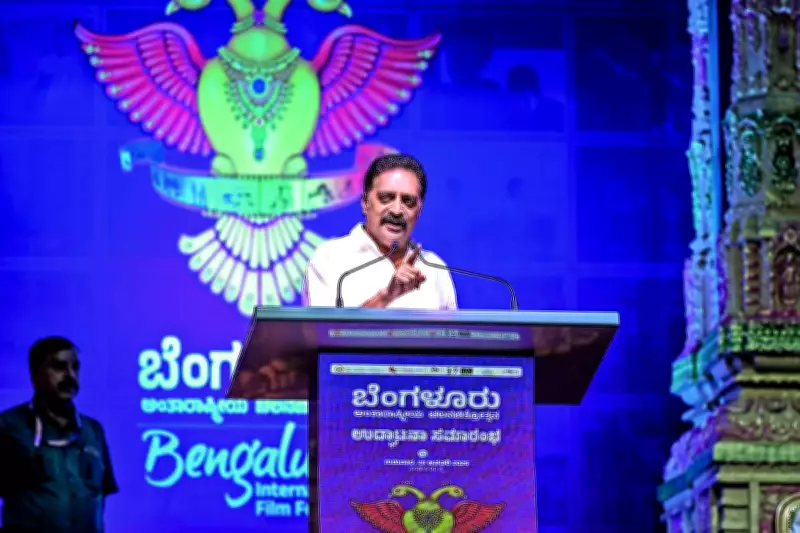
Prakash Raj Ignites Artistic Freedom Debate at Bengaluru International Film Festival Opening
The 17th edition of the Bengaluru International Film Festival (BIFFes) commenced with great fanfare at the iconic Vidhana Soudha on Thursday, but the celebrations were quickly overshadowed by a heated discussion on artistic expression and political intervention. Veteran actor Prakash Raj, a long-time associate of the festival, raised pointed questions about the decision to stall the screening of Palestinian films, urging the Karnataka government to reconsider its position and allow these cinematic works to be showcased.
A Call for Cultural Solidarity and Government Action
Reflecting on his sixteen-year association with BIFFes, Prakash Raj expressed concern over increasing political interference in film festivals. "I came here 16 years ago. Today, I see far greater political intervention in film festivals, and Palestinian films are now being stalled," he stated emphatically. Drawing a parallel to a recent incident at the Kerala Literature Festival, where Palestinian films were initially barred but later screened following government intervention, Prakash called for similar decisive action from the Karnataka administration.
"The government ensured the films were screened. I want the Karnataka government to do the same. I request, and also demand, that the state government protest against such bans and take a strong stand in support of screening these films," he asserted during the festival's opening ceremony.

Art as a Universal Bridge Beyond Political Boundaries
Prakash Raj eloquently framed international film festivals as crucial spaces for shared human experiences and cross-cultural understanding. "International festivals are meant to build bonds through stories," he explained. To illustrate his argument, he referenced the global acceptance of Indian stories like Edeya Hanathe (Heart Lamp by Banu Mushtaq), which receive international recognition and celebration.
"But if we cannot bring stories of others' pain to our own soil, how can that be justified?" he questioned, highlighting what he perceives as a contradiction in cultural exchange. To further emphasize his point, Prakash recited The War Will End by renowned Palestinian poet Mahmoud Darwish, presenting art as a vital bridge between cultures rather than a casualty of political divisions.
Official Responses and Ongoing Challenges
While Chief Minister Siddaramaiah, in his inaugural address, spoke broadly about cinema's role in reflecting society and fostering cultural dialogue, he notably avoided directly addressing the specific issue of Palestinian film screenings. This omission left the question of artistic freedom hanging in the air as the festival progressed.
Murali P B, the artistic director of BIFFes, provided clarification on the practical challenges facing the festival organizers. Speaking to media representatives on Friday morning, he explained, "We have been trying our best to screen Palestinian films at the festival for a long time. However, we require permission from the Ministry of External Affairs to screen films from Palestine, which we are yet to receive. We will continue to reach out to the Ministry and seek permission."
This bureaucratic hurdle presents a significant obstacle, as festival organizers must navigate diplomatic protocols and governmental approvals before proceeding with the screenings. The artistic director's statement underscores the complex interplay between cultural programming and international relations that often characterizes such events.
The Broader Implications for Cultural Exchange
The controversy at BIFFes raises important questions about:

- The role of government in artistic curation and cultural diplomacy
- The balance between political sensitivities and artistic freedom
- The mechanisms for international cultural exchange in increasingly polarized times
- The responsibility of cultural institutions to represent diverse global narratives
As the festival continues, the debate initiated by Prakash Raj has brought these issues to the forefront of cultural discourse in Karnataka. The outcome of this discussion may set important precedents for how Indian cultural institutions engage with politically sensitive international content while maintaining their commitment to artistic expression and global dialogue.
The 17th BIFFes, which promises to showcase a diverse array of cinematic works from around the world, now finds itself at the center of a conversation that extends far beyond its screening rooms—a conversation about empathy, politics, and the universal language of storytelling that knows no borders.