Dhurandhar's OTT Debut: Visual Changes and Runtime Cuts Spark Viewer Debate
When Dhurandhar premiered in cinemas, its cinematic grandeur was immediately apparent. Designed specifically for the big screen experience, the film leveraged its massive scale and star-studded ensemble cast—featuring Ranveer Singh, Akshaye Khanna, R Madhavan, Arjun Rampal, and Sanjay Dutt—to create an immersive visual spectacle. Director Aditya Dhar employed striking visual techniques, including strong contrasts, deep shadows, and a meticulously calibrated color palette, to heighten tension and emphasize emotional stakes throughout the narrative.
Noticeable Visual Softening in Streaming Version
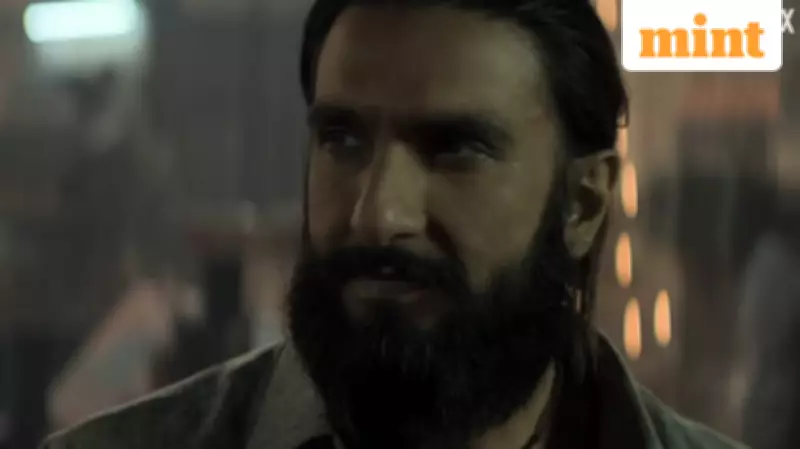
However, the version now available on streaming platforms presents a noticeably different visual experience. Viewers who have revisited Dhurandhar on OTT have observed that the color grading appears more muted compared to the theatrical release. The once-rich contrasts that gave several sequences their dramatic impact have been replaced with flatter, greyer tones. While these changes might seem minor on smaller screens, they cumulatively affect how the film resonates with audiences.
Scenes that originally conveyed menace or moral ambiguity now feel less immersive, as if their sharp edges have been gently filed down. Color grading, though rarely discussed outside film circles, plays a crucial role in storytelling. In Dhurandhar, the heightened tones were instrumental in defining character arcs and shifts in power dynamics. While a more neutral presentation might standardize the film across various devices, it also smooths over the distinctive visual texture that made the theatrical experience so memorable.

Runtime Reduction and Editorial Adjustments
The visual alterations are accompanied by a slightly shorter runtime. Originally running for 3 hours and 34 minutes in cinemas, the film now clocks in at approximately 3 hours and 25 minutes on OTT platforms. For a narrative packed with multiple story arcs and extended action set pieces, even a nine-minute reduction is noticeable. Some viewers have pointed to missing beats and tightened transitions, while others note that the overall pacing feels marginally brisker.
Additionally, there has been discussion around how dialogue is presented in the streaming version. Certain abuses appear softened, with a few cuss words muted or beeped out. This has been an unexpected adjustment for audiences accustomed to streaming platforms often offering versions freer than theatrical cuts.
Industry Insights and Conflicting Reports
Industry chatter suggests that the streaming version aligns broadly with the CBFC-approved cut, incorporating only minor tweaks such as streamlined end credits and small editorial refinements. Despite this, the cumulative effect of these changes has left some viewers feeling that the OTT version carries a more sanitised tone.
Reports about how these alterations came about have varied. Bollywood Hungama cited a source claiming that edits were made at the platform level without explicit approval from Aditya Dhar, while Pinkvilla quoted a source stating that the makers had submitted an unaltered version complying with all streaming requirements. These differing accounts highlight the often-opaque nature of the transition from theatrical to digital release.
Significance for a Blockbuster Film
This discussion holds particular weight because Dhurandhar is not a small or niche title. The film achieved remarkable box office success, crossing ₹800 crore domestically and earning over ₹1200 crore worldwide, making it one of the biggest Indian releases of its time. A film of this scale arrives on streaming with significant expectations, especially from viewers who missed it in theatres and awaited experiencing it in its intended form.

Mixed Viewer Reactions and Broader Implications
Interestingly, while some viewers have criticized the toned-down visuals and editorial choices, others have praised aspects of the streaming version. The dubbed tracks and large-scale action sequences continue to draw appreciation, and the film's central performances remain effective regardless of format. For these viewers, the changes are noticeable but not deal-breaking.
Nevertheless, the broader conversation points to growing audience expectations. When a film of this magnitude moves to streaming, viewers increasingly demand fidelity to the original presentation. Minor alterations—whether in color grading, runtime, or dialogue treatment—become more visible precisely because the theatrical version set a strong benchmark.
A Telling Case Study for Streaming Era
As streaming platforms play an ever-larger role in how films are consumed and revisited, Dhurandhar serves as a telling case study. The film's buzz has not faded; if anything, speculation about Part 2 is already gathering pace. However, its OTT version highlights how subtle technical and editorial decisions can reshape audience perception.
Preserving a film's visual and tonal identity is not merely about nostalgia; it is about respecting the elements that helped it connect so powerfully with audiences in the first place. The Dhurandhar OTT experience underscores the importance of maintaining artistic integrity across distribution platforms, ensuring that viewers receive the authentic cinematic experience they anticipate.