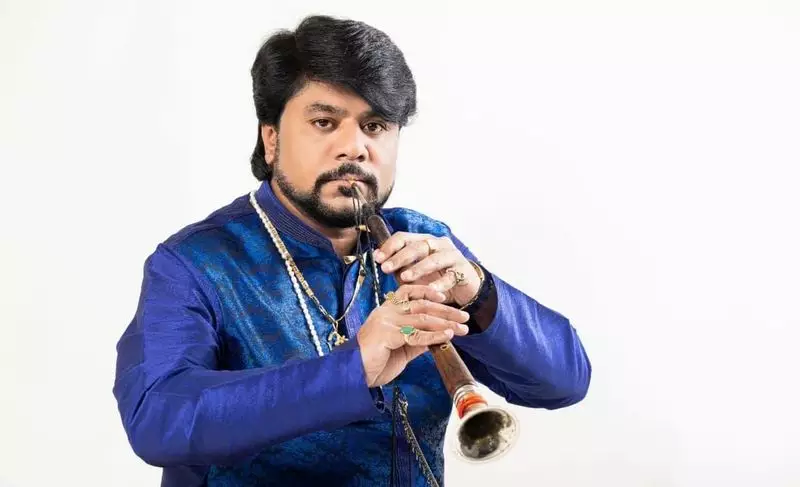
The world of Indian classical music is witnessing a beautiful renaissance, where tradition meets contemporary expression. At the heart of this movement is Pt Lokesh Anand, a virtuoso shehnai player whose soulful artistry is breathing new life into the compositions of the legendary vocalist, Pt D.V. Paluskar, popularly known as Dhurandhar. Anand's journey is not just about playing an instrument; it's a mission to translate the profound emotional depth of vocal music through the hauntingly beautiful timbre of the shehnai.
From Disciple of a Legend to a Musical Innovator
Pt Lokesh Anand's musical foundation is rooted in the most prestigious of lineages. He is a direct disciple of the shehnai's greatest icon, Bharat Ratna Ustad Bismillah Khan. This training instilled in him not just technical mastery but a deep philosophical understanding of the instrument's spiritual and cultural role. For years, Anand has been dedicated to a unique project: adapting and performing the extensive body of work left behind by Pt D.V. Paluskar.
Paluskar, a stalwart of the Gwalior gharana, was renowned for his powerful voice and emotive renditions of khayal, tarana, and bhajans. His style, known as the 'Dhurandhar' style, is characterized by its grandeur and robust presentation. Anand's challenge and triumph lie in transposing this intensely vocal-centric style onto the shehnai, an instrument traditionally associated with auspicious occasions and folk melodies. He meticulously studies Paluskar's recordings, capturing the nuances of his taans, meends, and emotional delivery to recreate the same impact with his wind instrument.

The Art of Translating Voice to Shehnai
The process undertaken by Pt Lokesh Anand is akin to a delicate act of musical translation. The shehnai, with its continuous breath requirement and distinct tonal quality, cannot simply mimic a human voice. Instead, Anand focuses on embodying the essence and soul (rasa) of Dhurandhar's renditions. He interprets the vocal gamakas (ornaments) and intricate phraseology into techniques suitable for the shehnai, such as controlled breath modulation, precise fingering for microtones, and dynamic volume control.
His performances are not mere imitations but heartfelt reinterpretations. When he plays a famous Dhurandhar composition like a drut khayal in Raga Yaman or a soul-stirring bhajan, the audience experiences the same devotional fervor and technical brilliance, now filtered through the reed of his shehnai. This effort requires immense research, practice, and a deep intellectual engagement with the original material, making Anand both a performer and a scholar of this tradition.
Preserving Heritage and Inspiring Future Generations
Pt Lokesh Anand's work carries significant cultural weight. In an era where classical arts often struggle for mainstream attention, his project serves a dual purpose. Firstly, it preserves and promotes the legacy of two giants—Ustad Bismillah Khan's instrumental tradition and Pt D.V. Paluskar's vocal heritage. By fusing them, he creates a new, accessible gateway for modern listeners to appreciate the depth of Hindustani classical music.
Secondly, he is inspiring a new generation of wind instrument players to look beyond the conventional repertoire. He demonstrates that the shehnai is a profoundly versatile instrument capable of expressing the complete emotional and technical range of classical ragas. His concerts and recordings are a testament to this belief, often leaving audiences mesmerized by the instrument's newfound vocal-like quality.
Based in the cultural heartland of India, his contributions are a beacon for the enduring and evolving nature of Indian classical music. Pt Lokesh Anand stands as a vital bridge between a glorious past and a dynamic future, ensuring that the melodies of Dhurandhar continue to resonate, not just from human voices, but through the timeless, poignant sound of the shehnai.