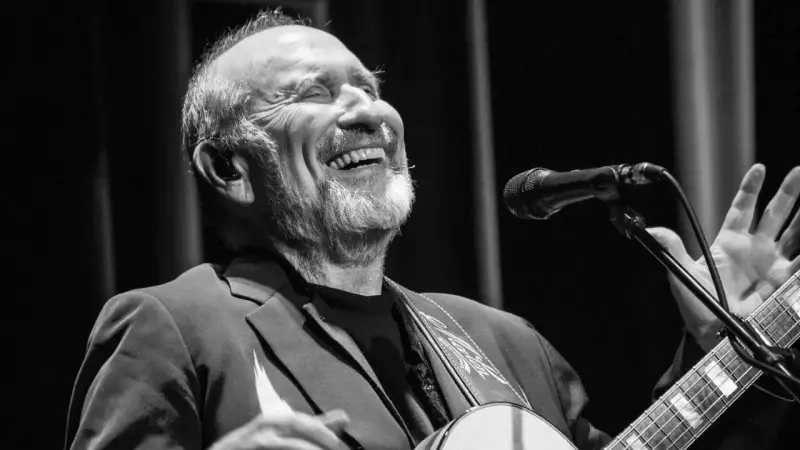
Former Men at Work frontman Colin Hay has issued a powerful condemnation of the use of the band's iconic 1981 hit Down Under at anti-immigration rallies organized by the group March for Australia. Hay asserts that the song has been completely misrepresented and its message distorted by those seeking to promote xenophobia.
A Strong Statement Against Misuse
In a statement shared on social media, Hay expressed his most strenuous opposition to any unauthorized or unlicensed use of Down Under at the group's events. These rallies have been organized around the slogan Our national identity will not be erased, a theme Hay vehemently rejects in connection with his music.
Down Under, a song I co-wrote, does not belong to those who attempt to sow xenophobia within the fabric of our great land and our great people, Hay wrote. It is ultimately a song of celebration. It's for pluralism, and inclusion; unity, not division. Go write your own song. Leave mine alone.

Personal Connection and Irony
Hay, who was born in Scotland and moved to Australia as a teenager in the late 1960s, signed off his statement pointedly as Colin Hay (immigrant). This signature underscores the personal irony and deep offense he takes at the appropriation of his work for anti-immigration purposes, given his own immigrant background.
The Legacy of Down Under
The song, co-written with bandmate Ron Strykert, became a defining Australian anthem of the 1980s. It topped charts not only in Australia but across New Zealand, the UK, Europe, and North America. Over the years, it has reached more than one billion streams worldwide and is often embraced as an unofficial national anthem, particularly at sporting events.
Its lyrics center on an Australian traveling abroad and reflecting on home, portraying Australia as a place of humor, warmth, and shared culture. Hay emphasizes that these themes are fundamentally at odds with the message of the rallies where the song has been played, highlighting a stark contrast between the song's intent and its misuse.
Broader Musical Backlash
Hay is not alone in his stance. He joins several other prominent Australian musicians who have publicly distanced themselves from March for Australia. Country music legend John Williamson previously objected to his song True Blue being used at one of the group's protests, stating it was written for all Australians and should never be used to promote division.
Similarly, representatives for Cold Chisel and Icehouse confirmed last year that no permission had been sought or granted for their songs Flame Trees and Great Southern Land to be played at rallies. Punk rock band The Living End also issued a blunt statement denouncing the use of their music.
To be absolutely clear, the goals and philosophies of these marches are abhorrent to us, the band said. Our songs are written to bring people together, not to divide them.
Cultural and Social Implications
This controversy highlights a broader issue in Australian society regarding the use of cultural symbols and music in political movements. The backlash from artists like Hay underscores a commitment to preserving the original messages of their work against misinterpretation and exploitation.
As debates around immigration and national identity continue, the voices of musicians serve as a reminder of the power of art to unite rather than divide. Hay's firm stance reinforces the idea that songs like Down Under are meant to celebrate diversity and inclusivity, core values that he believes should define the Australian spirit.