Shatak Movie Review: A Technically Superlative Historical Documentary
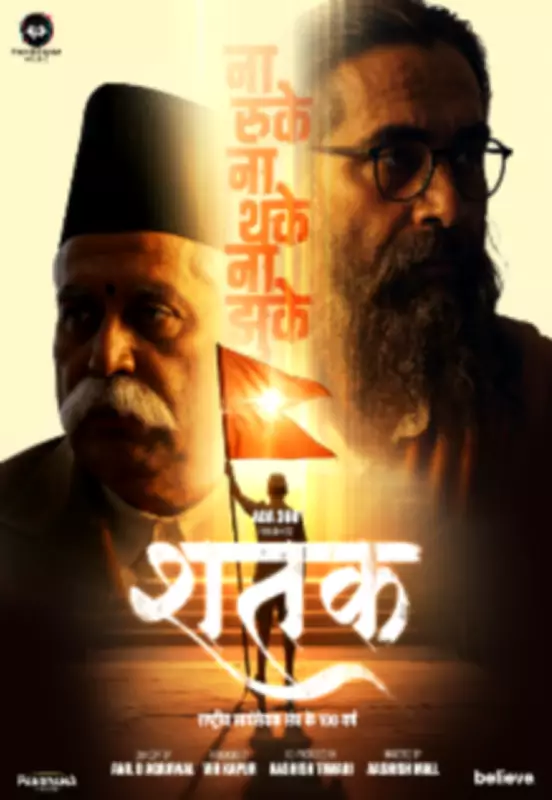
Shatak, released on February 20, 2026, is a Hindi documentary-drama that chronicles a century of the Rashtriya Swayamsevak Sangh (RSS) through a visually ambitious lens. Directed by Aashish Mall and narrated by Bollywood star Ajay Devgn, this 1-hour 52-minute film blends historical recreation with cutting-edge technology to tell a story that has rarely been explored in mainstream cinema.
Story and Narrative Approach
The documentary focuses on the founding figures of the RSS: Dr. Keshav Baliram Hedgewar (Doctorji) and Guruji Madhav Sadasiva Golwalkar. Beginning in the early 1900s during British rule, the film traces their ideological journey and the organization's growth against considerable opposition. The narrative, written by Anil Agarwal, Utsav Dan, and Rohit Gehlot, adopts a chronological structure that documents the RSS's claimed role in India's freedom struggle and post-independence era.
Structurally, Shatak employs a hybrid format that combines dramatized recreations with advanced AI-generated imagery and high-end computer graphics. This technological approach brings numerous historical personalities to life, including Veer Savarkar, Mahatma Gandhi, Sardar Vallabhbhai Patel, Jawaharlal Nehru, Lal Bahadur Shastri, Netaji Subhas Chandra Bose, Shyama Prasad Mukherjee, Indira Gandhi, Atal Bihari Vajpayee, and L.K. Advani.

Technical Excellence and Visual Finesse
The film's visual presentation is undoubtedly its strongest asset. The use of AI and CGI creates a polished spectacle that recreates historical eras with remarkable detail. However, this technical superiority sometimes comes at the expense of emotional resonance, with recreated performances appearing convincing in form but lacking deeper human connection.
Monty Sharma's musical score emerges as a standout element, delivering stirring patriotic compositions that amplify the film's thematic intent and emotional undercurrents. The music effectively complements the visual narrative, adding layers to the documentary's presentation.
Pacing and Narrative Challenges
While technically impressive, Shatak faces challenges in narrative pacing. The first half feels compressed and montage-like, overwhelming viewers with dense information. The latter half settles into a steadier rhythm, offering more anchored moments of ideological positioning and key historical developments.
The documentary adopts a sharper tone in its portrayal of the Congress party, framing the RSS's journey as one marked by resistance and adversity. This approach highlights the film's perspective as it documents what it presents as an under-represented narrative in mainstream historical discourse.
Production and Cast
Produced by Vir Kapur and featuring Ajay Devgn as both narrator and producer, Shatak represents a significant production effort. The film's technical team has clearly invested substantial resources in creating its visual landscape, resulting in a documentary that pushes the boundaries of historical filmmaking technology.
Critical Perspective and Viewer Reception
With both critics and users rating the film at 3.0, Shatak presents itself as a technically superlative documentary that attempts to spotlight an organization and its leaders through a distinctly reverential lens. Given the layered and contested nature of India's historical memory, whether the film registers as a patriotic chronicle or ideological advocacy will depend largely on the viewer's own perspective.
The documentary's primary objective remains clear: to document the role the RSS claims to have played during crucial periods of Indian history. By blending historical recreation with advanced technology, Shatak creates a visually slick presentation that blurs the line between chronicle and advocacy, offering viewers a technologically advanced interpretation of a century-long organizational journey.