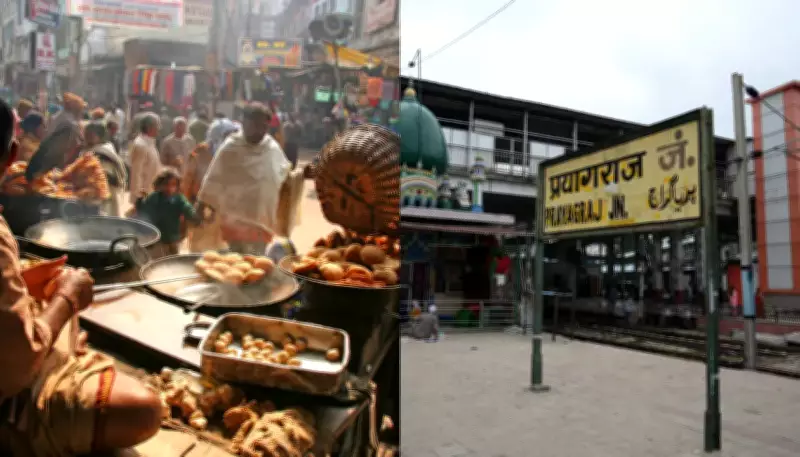
Prayagraj, formerly known as Allahabad, is widely recognized for its religious significance and the grand Kumbh Mela. However, the city is also celebrated for its culinary heritage. In a recent development, one of India's most beloved street foods has been officially designated as the district's signature dish. Here are the details.
Which Street Food Became the Official Signature Dish?
According to an official report, Prayagraj's iconic samosas have been declared the district's official signature dish under the Uttar Pradesh government's ambitious 'One District–One Cuisine' (ODOC) initiative. Launched in January 2026, the program is inspired by the successful One District-One Product (ODOP) scheme and aims to identify and promote a signature dish from each of the state's 75 districts. The initiative seeks to encourage food entrepreneurship, improve hygiene standards, and build global branding for local cuisines.
How Was the Samosa Selected and What Is the Scheme's Motive?
Deputy Commissioner of Industries Sharad Tandon stated that the selection process involved extensive consultations with culinary experts, historians, and stakeholders familiar with local traditions and food culture. Inputs were gathered from divisional-level expert committees and individuals engaged in the food trade. Based on this broad consultation and survey, the samosa emerged as Prayagraj's representative dish. The scheme was announced in the UP Budget 2025–26 and is expected to benefit over 1,000 families associated with the samosa trade across the district, including approximately 600 manufacturers, 200 street vendors, 200 restaurants, and nearly a dozen self-help groups. The administration has also identified 30 major samosa-producing establishments to scale up production, standardize quality, and provide financial assistance and training under the ODOC framework.

The Origin of Samosa
The samosa traces its origins to the 10th century in the Middle East. The first official mention appears in Iranian historian Abolfazl Beyhaqi's work Tarikh-e Beyhaghi, where it is referred to as 'Sambosa'. These early samosas were small, making them a convenient snack for travelers who could pack them in saddle bags and eat on the go.
Arrival of Samosa in India
The samosa made its way to India through trade routes and cultural exchanges during the 13th and 14th centuries. Heritage activist and author Vikramjit Singh Rooprai notes that travelers and traders introduced the dish to the Indian subcontinent. The first mention in the royal era comes from Hazrat Amir Khusrow, the noted poet and scholar of the Delhi Sultanate, who described samosas made from meat, ghee, and onion that nobles relished. Later, 14th-century traveler Ibn Battuta mentioned sambusak (samosa) filled with minced meat, walnuts, pistachios, almonds, and spices served at the court of Muhammad bin Tughluq. During the Mughal dynasty, the Ain-i-Akbari recorded a recipe for samosa called 'Sanbúsah'. Interestingly, the most popular filling today—potato—is not native to India; it originated in Peru between 8000 and 5000 BC.