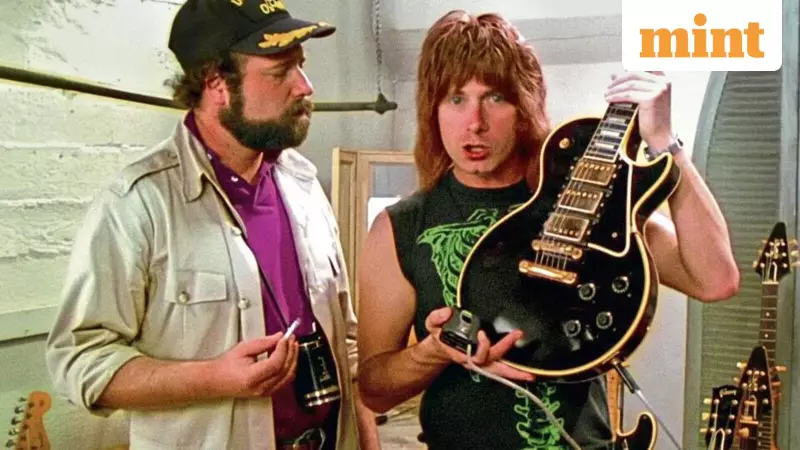
The recent passing of legendary filmmaker Rob Reiner has sent waves of grief through the entertainment world. In this moment of reflection, there is no better tribute to his genius than revisiting his directorial debut, the 1984 rock mockumentary masterpiece This Is Spinal Tap. Available for streaming on platforms like Apple TV and Amazon Prime Video, the film is not just a comedy but a profound, loving dissection of rock and roll's glorious absurdity.
The Accidental Philosophy of a Fading Rock Star
At the heart of the film's charm is its casual, poignant existentialism. In one iconic scene, the fictional band's frontman, David St Hubbins, played brilliantly by Michael McKean, is asked what he would like engraved on his tombstone. After a grand, thoughtful pause, he delivers the line: "Here lies David St Hubbins... and why not?" This simple phrase, from an exhausted rocker, captures the film's elegant soul—a blend of wit, weariness, and a shrug at life's grand narrative. It's a sentiment that feels particularly resonant now.
Birth of a Genre: Improvising a Classic
This Is Spinal Tap is far more than a movie; it is a cultural artefact that birthed an entire genre. Its pioneering mockumentary format, where characters directly address the camera, paved the way for iconic television series like The Office and Modern Family. Reiner, an Emmy-winning actor and son of comedy great Carl Reiner, embarked on this project without a complete script. He relied on improvisation with a stellar cast, crafting a timeless classic from spontaneous genius.

Reiner inserted himself into the film as Marty DiBergi, a documentary filmmaker trying to capture the magic of Spinal Tap, a British hair-metal band on a steep decline. The band, comprised of David St Hubbins, lead guitarist Nigel Tufnel (Christopher Guest), and bassist Derek Smalls (Harry Shearer), hilariously embodies the wounded pride and bickering endemic to the rock world. Notably, all three actors performed their own instruments, adding a layer of authentic musicality to the parody.
Puncturing the Pomposity of Rock Gods
The film excels at incisively, yet lovingly, puncturing the self-seriousness of rock mythology. It explores the eternal conflict between the god-like persona musicians project and their desperate need for validation. Christopher Guest's Nigel Tufnel is a holy portrait of guitar obsession—vain, childish, and oddly brilliant. His naming of a melancholy piano piece "Lick My Love Pump" is legendary.
The songs themselves, with silly titles like Big Bottom, Sex Farm, and (Listen to the) Flower People, are not mere jokes. They are crafted with genuine musical skill, solid enough to be played on classic rock radio between "real" tracks. Big Bottom, performed with an absurd lineup of multiple bassists, is both idiotic and compelling—a perfect metaphor for the film's success. The parody works because the craft is real.
The film's quotable dialogue has entered the lexicon. From Nigel pondering how an album cover could be "none more black" to David claiming his gullibility makes him "more of a selective human," the lines are hilarious, ridiculous, and heartbreakingly earnest. They truthfully mirror the self-mythologising world of rock, where musicians can get lost on the way to the stage.
Rob Reiner's Unmatched Legacy
While we celebrate This Is Spinal Tap, Reiner's passing reminds us of his astonishingly diverse and impactful career. He followed his debut with an unparalleled string of iconic films: the coming-of-age classic Stand by Me, the timeless adventure The Princess Bride, the quintessential rom-com When Harry Met Sally, the chilling thriller Misery, and the powerful courtroom drama A Few Good Men. His production company, Castle Rock Entertainment, was behind monumental works like The Shawshank Redemption, The Green Mile, and the sitcom Seinfeld.

This is a legacy that feels almost too vast for one person. Rob Reiner's films made us laugh, cry, dream, and believe in storytelling. His career stands as an inspiration to creators everywhere to follow their hearts without being constrained by genre. Much like the rockers he so brilliantly satirised in his first film, Rob Reiner played on and on. And why not?