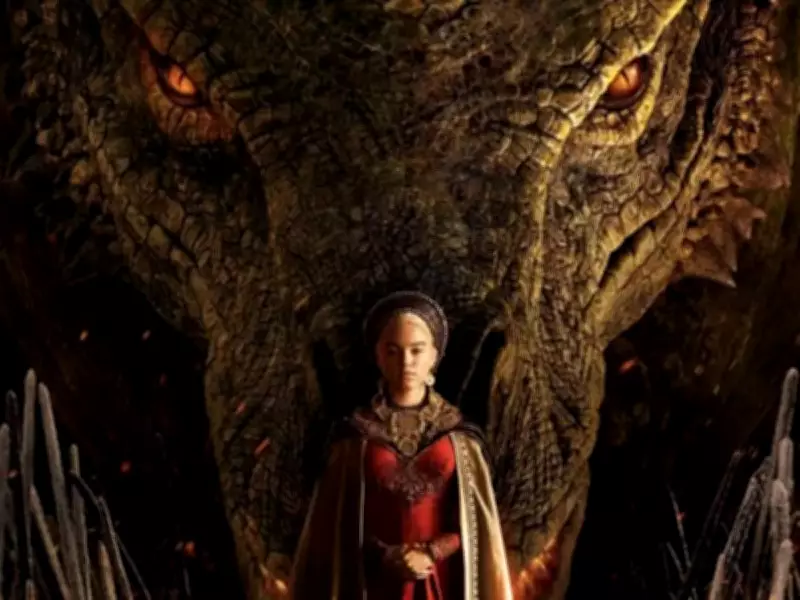
In a world mapped by satellites, explained by science, and mediated by algorithms, there is little room for giant winged reptiles that breathe fire, hoard treasure, or soar above kingdoms. But there they are. Dragons. As fantastic and fantastical as they are, they remain stubbornly and triumphantly alive in the human imagination for centuries. Dragons emerge as much from ancient myths as they find new homes in bestselling novels, blockbuster films, video games, television series, children's books, and online fandoms. As the House of the Dragon Season 3 premieres this Sunday (June 21), and the whole world again gets lost in the game of thrones in Westeros, let’s ask ourselves why dragons fascinate us well into the 21st century.
Dragons Through the Ages
Almost every generation inherits dragons from the one before it and then proceeds to reinvent them. Sometimes, they are feared and loved, sometimes hunted and ridden, and at others, slain or even worshipped. But whether dragons are monsters, gods, companions, weapons, symbols of empire, embodiments of nature, or reflections of the self, very few imaginary creatures have demonstrated such extraordinary staying power. Cultural upheavals over centuries have rendered a lot of fantastical beliefs and creatures obsolete. But not dragons.
As Much Nature as It’s Supernatural
Part of the answer may lie in the fact that dragons are among the oldest stories humanity has ever told itself. Long before fantasy became a literary genre and centuries before dragons acquired the cinematic grandeur audiences know today, societies across continents imagined enormous serpentine creatures that existed at the boundary between nature and the supernatural.

The dragons of Europe, the lung dragons of China, the nāgas of South Asia, the dragon-like beings of Mesopotamian mythology, and countless serpent-monsters from Indigenous traditions emerged independently across civilizations. Their forms and meanings differed dramatically, but dragons they were.
Dragoun. Draconem. Drakon.
To trace the lineage of this immortal beast, one must begin with the word itself. The English word “dragon” comes from the Old French dragoun, which derived from the Latin draconem, meaning a huge serpent, and ultimately from the Greek drakon. The Greek term is linked to derkesthai, meaning “to see clearly.” From its very origins, then, the dragon was defined by watchfulness. It was a presence that demanded that humanity look back at it and confront the unknown.
Evolutionary Roots of Dragon Myths
The existence of dragons has fascinated scholars for decades. In his book An Instinct for Dragons, anthropologist David E. Jones says that dragons may represent a deeply rooted evolutionary memory. According to his theory, our distant primate ancestors faced three major predators on the African savanna: large snakes such as pythons, birds of prey such as eagles, and big cats such as leopards. Jones argued that these ancient fears became so deeply embedded through natural selection that the human mind eventually fused them into a single composite creature: the classic dragon. This creature combines the coiling scales of a serpent, the wings and aerial menace of a raptor, and the claws, teeth, and predatory power of a big cat.
In this regard, the dragon is not one particular fear, but many fears woven together. Sort of a masterpiece of evolutionary dread that embodies the most persistent threats our ancestors faced. We may never have encountered an actual dragon, yet the mental blueprint for one has existed for centuries. Even science has explored this question: why are we so fascinated with dragons? And as scientists do, they have looked for more tangible origins, like the discovery of enormous fossil bones, dinosaur remains, or the skeletons of giant snakes—all proof of similar gigantic creatures that once roamed the earth.

But mythology rarely follows a single blueprint. Also, human imagination is a never-ending cosmos. Early civilizations possibly projected their deepest anxieties and grandest aspirations all through this fantastical beast. But the dragon survives into a quarter of the 21st century because it lives comfortably in both worlds: part memory and part imagination; forever suspended between what humanity fears and what it longs to understand.
The Dragon Is the Sublime Made Flesh
George R.R. Martin wrote in his series A Song of Ice and Fire (more popularly known as Game of Thrones): “Dragons are fire made flesh.” But there’s something more sublime at work here. Standing before a dragon in a story is not merely confronting a threat; it is confronting something grander than oneself. Dragons represent the allure of power as much as they represent the fear of it. This duality is why dragons have evolved from enemies into companions in many modern narratives. Contemporary audiences do not merely want to slay dragons. They want to understand them, bond with them, and even become them.
Literary Transformations
Literature has played a crucial role in transforming the dragon from a simple monster into one of the most complex figures in storytelling. Medieval tales often presented dragons as embodiments of evil, creatures that heroes were destined to defeat. As literature evolved, dragons became far more than obstacles though. They acquired personalities, motives, wisdom, flaws, and even moral ambiguity, allowing each generation of writers to reshape them according to the anxieties and aspirations of their age.
G.K. Chesterton, known as the best writer of the 20th century, understood that the dragon’s power doesn't lie in its terror but in what it teaches us about overcoming fear. In The Red Angel, he argued that fairy tales do not introduce children to darkness because children already know fear exists. What fairy tales offer is hope.
No modern writer loved dragons more openly than the father of modern fantasy, J.R.R. Tolkien. In his essay On Fairy-Stories, Tolkien recalled that as a child he never regarded dragons as belonging to the same order as ordinary animals. “The dragon had the trade-mark of Faërie written plain upon him,” he wrote. “I desired dragons with a profound desire.” For Tolkien, dragons represented the enchantment of the Other World, the realm where imagination could transcend ordinary reality. He even celebrated humanity’s role as a “sub-creator,” capable of building worlds, myths, and legends, and of “sowing the seed of dragons.”
Smaug is a villain, but he is much more than a beast guarding treasure in The Hobbit. He is witty, manipulative, and dangerous. That love found its fullest expression in The Hobbit through Smaug, one of literature’s greatest dragons. Smaug is certainly a villain, but he is much more than a beast guarding treasure. He is intelligent, manipulative, vain, witty, and dangerously perceptive.
Tolkien’s close friend C.S. Lewis approached dragons from a different angle. In The Voyage of the Dawn Treader, the dragon becomes a metaphor for the ways selfishness can distort the human soul. The unpleasant and self-centred Eustace Scrubb stumbles upon a dragon’s hoard and falls asleep dreaming greedy thoughts. When he wakes, he discovers that he has become a dragon himself. Lewis’s insight is simple and devastating: greed does not merely attract dragons; it turns people into them. Eustace’s transformation leaves him isolated and miserable. His redemption arrives only when Aslan painfully strips away the layers of dragon skin that Eustace cannot remove on his own. This episode remains one of fantasy literature’s most powerful explorations of self-deception, pride, and personal transformation, telling us that sometimes the dragon we must confront is the one that lives in us.
If Tolkien and Lewis saw dragons as reflections of human morality, Ursula K. Le Guin viewed them as embodiments of freedom and imagination. In her celebrated essay Why Are Americans Afraid of Dragons?, she argued that fantasy is not an escape from reality but a way of engaging with deeper truths that cannot be measured or quantified. “They are afraid of dragons,” she wrote, “because they are afraid of freedom.” For Le Guin, adulthood did not mean abandoning wonder but preserving it. Her dragons in the Earthsea novels are ancient, wise beings for whom magic is not a tool but an essential part of existence. Her warning remains one of the most memorable observations ever made about fantasy: “People who deny the existence of dragons are often eaten by dragons. From within.”
Martin Turned Dragons into Instruments of Political Power
Martin turned dragons into instruments of political power. In Game of Thrones and House of the Dragon, dragons are devastating weapons. In the world of A Song of Ice and Fire and the television adaptation House of the Dragon, dragons are not wise mentors or moral symbols. They are devastating weapons. Martin deliberately designed them to feel biologically plausible, giving them two legs and two wings rather than the traditional six-limbed form. More importantly, he treated them as the medieval equivalent of nuclear weapons. The Targaryen dynasty rules because it possesses dragons, yet that advantage ultimately becomes its weakness.
The illusion of absolute power discourages diplomacy, compromise, and statecraft. As King Viserys warns, “The idea that we control the dragons is an illusion.” When the Targaryens turn their dragons against one another during the Dance of the Dragons, they destroy themselves. In Martin’s hands, the dragon becomes a cautionary tale about unchecked power and humanity’s tendency to believe it can control forces far larger than itself.
Rather a Dragon Than a Dragon-Slayer
Other writers pushed dragons in entirely different directions. Anne McCaffrey imagined them not as enemies but as companions. In the Dragonriders of Pern series, dragons and humans share lifelong telepathic bonds. Robin Hobb, meanwhile, portrayed dragons as proud, ancient beings with vast egos and inherited memories; creatures that refuse to be reduced to pets or weapons.
Perhaps the most revealing development in modern storytelling is that audiences increasingly identify with dragons rather than dragon-slayers. The shift reflects a broader cultural desire to understand outsiders, challenge inherited prejudices, and replace conquest with empathy. Few stories illustrate this transformation better than the movie How to Train Your Dragon. Hiccup grows up in a society where dragons are feared and hated, yet when he finally encounters the legendary Toothless, he sees not a monster but another lonely creature struggling to survive. By choosing compassion instead of violence, he dismantles generations of misunderstanding. What we call monsters are often beings we have failed to understand. Maybe empathy can succeed where force fails? Who knows? Some day…
Why the Dragon Will Never Die
In Guards! Guards!, the legendary author Terry Pratchett wrote of the mysterious realm where the dragons of our legends reside: “This is where the dragons went. They lie. Not dead, not asleep. Not waiting, because waiting implies expectation. Possibly the word we're looking for here is... dormant.” This dormancy is the secret of their survival. The dragon should have gone extinct. But it refused to die. Because the human soul refuses to live in a world devoid of magic.
We may have mapped the earth, but we still long for a horizon that holds mysteries. As long as humans continue to look up at the sky and wonder what lies beyond the edges of the ordinary, the dragon will continue to soar through our stories, refusing to die, refusing to fade, and reminding us that even in the most modern of worlds, the fire of wonder still burns brighter than ever.