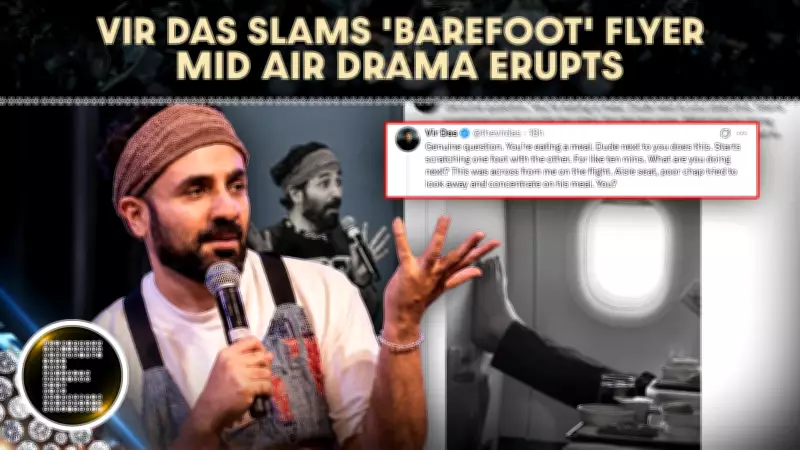
Actor-comedian Vir Das has ignited a massive internet debate after sharing a shocking in-flight moment involving a barefoot passenger who allegedly scratched his feet while others were eating nearby. The viral post quickly divided social media, with many backing Vir Das for calling out poor travel etiquette, while others accused him of publicly shaming a fellow flyer. The bizarre incident has now sparked a larger conversation online about civic sense, hygiene, and boundaries in shared public spaces.
The Incident That Divided the Internet
Vir Das, known for his sharp wit and social commentary, took to social media to describe the uncomfortable scene he witnessed during a flight. According to his post, a passenger removed their shoes and began scratching their bare feet in close proximity to other travelers who were eating. Das expressed his dismay at the lack of consideration for fellow passengers, highlighting the importance of maintaining basic hygiene and respect in confined public spaces like airplanes.
The post quickly went viral, amassing thousands of reactions and comments. Supporters of Das argued that calling out such behavior is necessary to uphold social norms and ensure a pleasant travel experience for everyone. They pointed out that flights are enclosed environments where hygiene and etiquette are paramount, and that passengers have a responsibility to be considerate of others.

However, critics countered that publicly naming and shaming the individual was an overreaction and could have been handled privately. They argued that the passenger might have had a medical reason or simply been unaware of their actions, and that a gentle reminder or a word to the flight crew would have been more appropriate. This side of the debate emphasized the potential harm of public shaming, which can escalate quickly and lead to undue harassment.
Broader Implications for Public Etiquette
The debate has since expanded beyond this single incident, touching on broader questions about how people should behave in shared spaces. Many netizens shared their own experiences with poor flight etiquette, from loud phone conversations to reclining seats without warning. Others discussed the fine line between calling out bad behavior and engaging in public shaming, noting that social media often amplifies minor infractions into major controversies.
Experts in etiquette and psychology weighed in as well, suggesting that while it is reasonable to expect basic courtesy, the method of addressing violations matters. A private approach, such as informing a flight attendant, is often more effective and less confrontational than a public post. Public shaming can lead to unintended consequences, including mental distress for the person being called out and a polarized online environment.
The Role of Social Media in Modern Etiquette
This incident highlights the growing role of social media in policing public behavior. Platforms like Twitter and Instagram have become arenas where people share grievances and seek validation, often turning minor annoyances into viral stories. While this can raise awareness about important issues, it also risks creating a culture of surveillance and judgment where every misstep is recorded and broadcast.
Vir Das has not commented further on the backlash, but the conversation he started continues to evolve. It serves as a reminder that in an increasingly connected world, how we address conflicts can be as important as the issues themselves. Whether you side with Das or his critics, the incident has undeniably sparked a necessary discussion about respect, empathy, and the boundaries of public behavior.