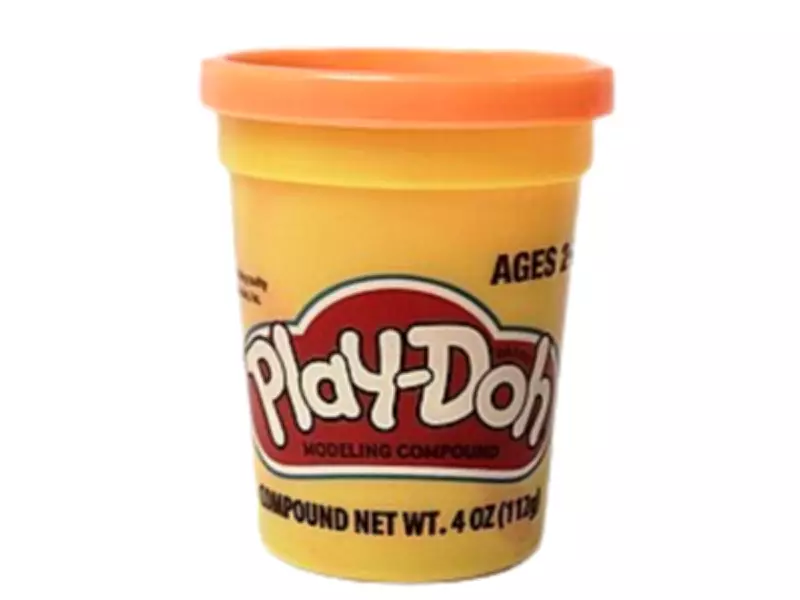
Think back to the unmistakable scent and soft feel of Play-Doh. Play-Doh is one of the most popular toys in children's playrooms, enjoyed by generations. However, the iconic brightly colored modeling clay did not originally come from a toy manufacturer; it was invented as a humble domestic aid for cleaning soiled wallpaper. Far from being just a children's toy, the product had its roots in household cleaning.
Why There Was Ever a Wall Cleaner
In the nineteenth and early twentieth centuries, wallpaper was commonly used for decoration inside numerous houses. Nonetheless, the task of its cleaning was a major hassle for the ordinary family. Indoor spaces were often polluted because coal and wood heating left soot, dirt, and grime on surfaces. Unlike contemporary wallpapers made of vinyl, this decorative material proved highly vulnerable to water and mechanical stress.
As described by the historic wallpaper conservation study cited in PubMed, these vulnerable walls required specialized cleaning techniques and processes for their preservation. That need created a market for the cleaning compound. Households were in need of a soft cleaning material, which would help them clean soot off without getting soaked with it or tearing off the paper. Those conditions led to an early predecessor of Play-Doh used for household cleaning.

Strange Texture That Worked Wonders
What made this cleaning compound distinctive was its odd texture. The cleaner had to adhere to walls, lift dust, and leave no residue, which required a special structure. The same characteristics that made it effective as a wall cleaner also helped make it a popular toy. According to a case report on the material properties of the compound found in PubMed, Play-Doh is a sticky and viscoelastic material. In simple terms, that means it has a consistency somewhere between a liquid and a solid, so it can be easily shaped. This helps explain why the product works the way it does. Those characteristics helped the cleaner work effectively and stay intact when handled.
A Maintenance Item Turned into a Fun Toy
For the product to become a toy, several changes had to happen. Over time, homes changed. As home heating advanced, coal gave way to oil and gas, and washable vinyl wallpaper appeared. All these factors significantly reduced the need for such a product. It might have faded into obscurity if someone had not seen it in a new way. The compound's squishy texture made it easy to shape and appealing to the senses. There was no need for instructions because they instantly understood what they could do with it just by looking at it. Once it reached children, it became a very different product. It did not need to be altered in a laboratory; its natural texture was enough to make it a plaything.
What the Story Tells Us About Inventiveness
The story suggests that inventions can emerge gradually and sometimes unexpectedly. Materials can be repurposed by using an existing feature in a new way. In this case, the line between a practical tool and a creative object was very thin. Play-Doh's overlooked ancestor shows that even simple household objects can have unexpected uses. By shifting from a domestic tool to a children's toy, the product became a major success. This suggests that practical items do not always need to be reinvented; sometimes they just need a new purpose.