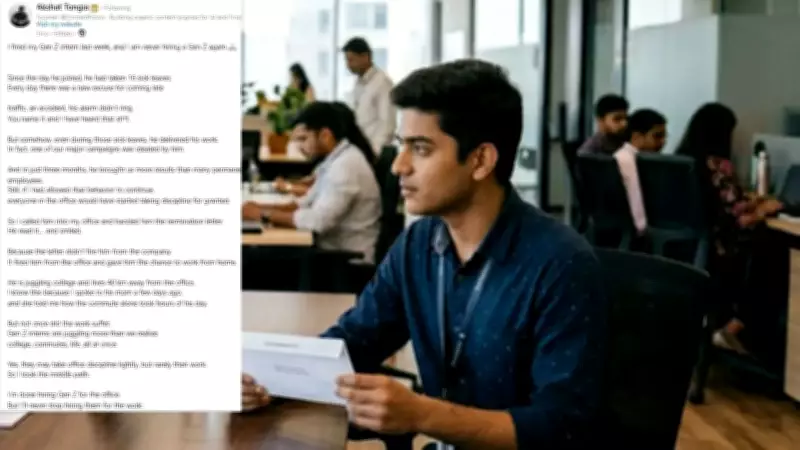
A LinkedIn post by Akshat Tongia, founder of ContentFloww, has sparked a debate on workplace flexibility and generational differences. Tongia began his post with a stark declaration: "I fired my Gen Z intern last week, and I am never hiring a Gen Z again." He detailed the intern's 16 sick leaves and frequent tardiness, citing excuses like traffic and alarm failures.
Performance Despite Attendance Issues
Despite the attendance record, Tongia acknowledged the intern's exceptional output. The intern ideated a major campaign and delivered more results in three months than many permanent employees. Tongia wrote, "But somehow, even during those sick leaves, he delivered his work. In fact, one of our major campaigns was ideated by him."
The Termination Twist
When Tongia handed the intern a termination letter, the intern smiled. The letter did not fire him from the company but from the office, offering a work-from-home arrangement. Tongia explained that the intern balanced college and work, commuting 40 kilometers daily. He said, "I know this because I spoke to his mom a few days ago, and she told me how the commute alone took hours of his day."

Tongia concluded, "Gen Z interns are juggling more than we realise — college, commutes, life, all at once. Yes, they may take office discipline lightly, but rarely their work. I'm done hiring Gen Z for the office. But I'll never stop hiring them for the work."
LinkedIn User Reactions
The post drew varied responses. One user commented, "Gen Z often gets judged for the surface stuff (leaves, lateness), but when the work delivers, that's what actually matters. You kept the talent and fixed the friction." Another user highlighted a systemic issue: "The real insight here isn't about Gen Z at all, it's that most offices are still measuring presence over performance, and that's a leadership blind spot."
A commenter noted the toll of long commutes, particularly in cities like Bengaluru: "Have never met one in reality who understands the situation that travel takes more toll than a whole work day. Half of the energy is lost stuck in the traffic itself." The user questioned whether jobs should prioritize control and visibility or actual output.