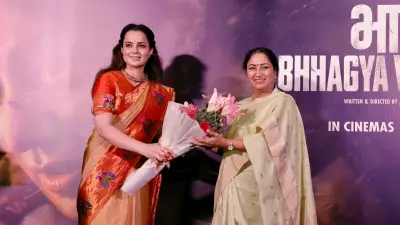
As All About Weddings (Biye Fiye Niye) heads to the London Indian Film Festival, composer and filmmaker Neel Dutt believes its exploration of modern relationships will resonate far beyond India – because, at its core, the film is built on lived experience.
Rooted in Real Stories
“My friends and I wrote All About Weddings from our own experiences,” Neel says. “Good cinema always transcends regional boundaries and connects with people everywhere.” That belief has already found validation. At a screening in Paris, he recalls, the response was unexpectedly deep. “The nuances, emotional layers, and visual moments were understood and appreciated in ways that surprised us.”
Universality Through Honesty
For Dutt, that universality lies in the film’s emotional honesty, even as it remains rooted in a distinctly Indian context. “The film celebrates diversity at a time when there is a growing tendency to view India through a more homogeneous lens – something that does not reflect the reality of our lived experience,” he says. “India has always been a multicultural nation, shaped by countless communities, languages, ethnicities, beliefs, and identities. Each of us is unique, and that plurality is one of the country’s greatest strengths.”

Love in a Changing World
That plurality plays out in the film’s portrayal of relationships – messy, evolving, and often imperfect. Rather than offering neat resolutions, All About Weddings attempts to open up conversations around what it means to love in a time of shifting expectations. “Let us learn to accept one another’s differences and engage with each other with civility and empathy,” Neel says. “I still believe that two very different people can fall in love and remain together for a lifetime.”
Embracing Imperfection
In a culture increasingly drawn to the idea of perfection, the film takes a more grounded view. “If we truly consider ourselves modern human beings, we must also learn to accept each other’s imperfections,” he says. “Human beings will always be flawed; that is part of what makes us human. Love, friendship, and companionship are not built on perfection, but on the willingness to embrace those flaws and continue choosing one another.”
The Value of Distance
There is also a quieter thread running through the narrative – the idea of distance and hindsight. “We often fail to recognize the value of something while we still have it,” Neel reflects. “It is only after we move away – physically, emotionally, or through time – that we begin to understand how extraordinary what we had truly was.”
As the film travels to London, Dutt is confident that these themes – of difference, acceptance, and the fragile endurance of relationships – will find resonance with global audiences. After all, the setting may change, but the questions remain the same.