Marvel Studios appears to be returning to its most emotionally resonant formula—the theme of fatherhood—as it builds towards the epic climax of Avengers: Doomsday. Following the studio's peak with 2019's Avengers: Endgame, where Robert Downey Jr.'s Tony Stark sacrificed himself after telling his daughter "Love you 3000," the narrative baton is now being passed to a new set of superhero fathers. Teasers and post-credit scenes suggest this paternal motif will be the emotional core of Marvel's next milestone movie.
The Endgame Legacy and the Return to Emotional Roots
Since the climactic finale of the Russo Brothers' Avengers: Endgame, Marvel has struggled to replicate that film's cultural and emotional impact. Tony Stark's death was not just the sacrifice of a superhero; it was a father leaving behind his young daughter, Morgan. The line "Love you 3000" became a fan-favorite symbol of that poignant goodbye. Industry analysts suggest that Marvel, after experimenting with a more diverse cinematic universe post-Endgame, is strategically circling back to the theme that delivered its greatest success: the white father complex. This is seen as an attempt to recapture the magic that defined Phase 3 of the Marvel Cinematic Universe (MCU).
Seeds Sown in The Fantastic Four: The First Steps
The foundation for this theme was laid earlier this year in Matt Shakman's The Fantastic Four: The First Steps. The film centered on Reed Richards (Pedro Pascal) and Sue Storm (Vanessa Kirby) grappling with their desire to become parents to baby Franklin against their duties as superheroes. Their conflict was uniquely human—weighing family against saving the world. The film's end-credits scene dramatically introduced Doctor Doom, the anticipated main antagonist of Avengers: Doomsday, holding the infant Franklin. This chilling moment, witnessed by a horrified Sue Storm, immediately established Doom's connection to the theme of family and parenthood, setting the stage for a deeply personal conflict.

Teasers Highlight a League of Fathers
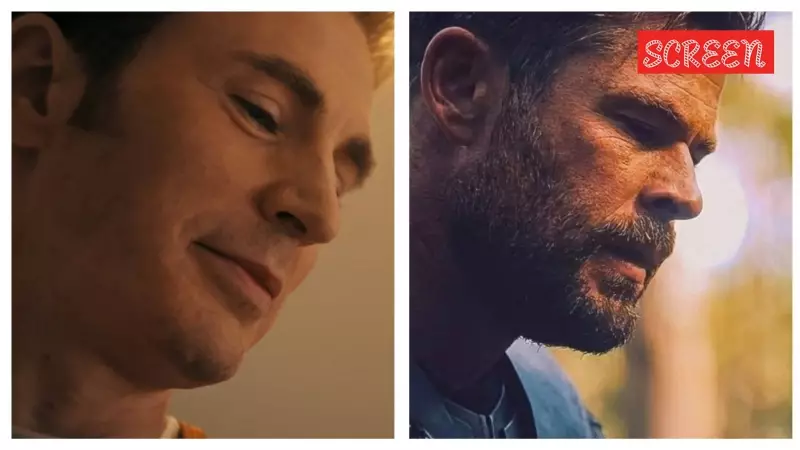
The promotional campaign for Avengers: Doomsday has consistently emphasized fatherhood. The first teaser hints at the return of Chris Evans as Steve Rogers/Captain America, last seen choosing a quiet family life over heroism. The teaser shows him holding a baby, confirming his journey into fatherhood. The second teaser features Chris Hemsworth's Thor praying to his late father, Odin (Anthony Hopkins). He vows to protect his daughter, Love (played by Hemsworth's real-life daughter, India), pleading for strength to return to her "not as a warrior, but as warmth."
Even a leaked third teaser, marking the arrival of the X-Men into the MCU, ties into this narrative. It focuses on James Marsden's Cyclops (Scott Summers), with online theories suggesting the plot involves the kidnapping of his and Jean Grey's son, Nathan, pushing the character to a destructive edge.
Converging on Secret Wars: Doom's Familial Motive
With the sequel already titled Avengers: Secret Wars, the narrative is likely building towards the iconic 2015 comic storyline. In that arc, Doctor Doom, traumatized by the loss of his own parents, becomes obsessed with the idea of family. He comes to believe that Reed and Sue's daughter, Valeria Richards, is his own. In his craving for a normal family life, he uses reality-altering powers—essentially pulling off a large-scale WandaVision—which creates dangerous incursions across the MCU's multiverse. This directly jeopardizes the future and the next generation of heroes, providing a powerful motivation for fathers like Captain America and Thor to reassemble and fight.

This strategic narrative pivot comes after Marvel's phase of diversification, which included introducing a Black Captain America (Sam Wilson), Asian superhero Shang-Chi, and passing the Black Panther mantle to Shuri. As noted by former X-Men '97 writer Beau DeMayo, the studio has seemingly sidelined its diversity push to return to a proven, emotionally charged formula. Whether this "love you 3000" strategy will help Marvel rediscover its peak remains to be seen, but it clearly aims to strike the same universal chord that made Endgame a historic blockbuster.