Avneesh Mishra's The Morning Show: Small-Town Childhoods Shape Big Conversations on Gender and Violence
Theatre writer-director-actor Avneesh Mishra has created a powerful theatrical piece that delves deep into the roots of gender-based violence in Indian society. His play, The Morning Show, recently staged at Rangshila Theatre in Mumbai, emerges from years of personal introspection and societal observation.
Childhood Rituals Reexamined
"We had a custom in my childhood of beating dolls with sticks," Mishra recounts, reflecting on his upbringing in a 1980s small town. At the time, this ritual seemed harmless, but through his journey to bigger cities for education and exposure to challenging literature and theatre, he began questioning these socio-cultural practices.
"Among many other rituals and customs that I looked at again from a different perspective, the one of beating dolls stood out as a symbol of much that was wrong in our upbringing," Mishra explains. "It occurred to me that what appeared like a harmless custom, in fact, started the process of desensitising boys and making them violent."

Parallels Between Dolls and Reality
The play draws a striking parallel between the beating of rag-doll gudiyas and the sexual violence inflicted on a flesh-and-blood teenage girl named Guddi, whose rape by schoolboys forms the core of the narrative. Mishra emphasizes that the rapists are misguided youth growing up in an atmosphere of suppression, confused about hormonal changes and lacking proper guidance from parents and teachers.
"With both, parents and school teachers, fighting shy of explaining biological issues to them, the befuddled youth get attracted to the wrong influences," Mishra reasons, clarifying that this understanding doesn't justify their condemnable acts but seeks to explore their origins.
Toxic Influences and Flawed Mentorship
One such negative influence in the play is Madan Chaacha, a peddler of porn portrayed convincingly by Naveen Rody. This despicable character lures vulnerable schoolboys to morning shows where explicit sexual scenes are inserted into regular Hindi films, then mentors the sexually-aroused youngsters with stereotypically flawed logic.
"Don't get dissuaded when girls say 'No'. Secretly, they too want what you want. Why would they be painting their lips if they didn't want to attract you?" represents his harmful advice that makes sense to young, impressionable minds.
Societal Taboos and Distorted Education
Mishra highlights how small-town environments often treat friendly interaction between girls and boys as taboo. "So much was left to the imagination about the opposite sex that it was easy for the Madan chaachas to fill in the blanks with distorted advice," he notes.
The play also critiques how popular Hindi films, from graphic rape scenes in 1960s-70s villain portrayals to 1990s star-actors propagating toxic masculinity, have adversely impacted immature minds.
Placing Responsibility on Society
The Morning Show places the onus of teenage sexual crime squarely on society at large and the blinkered upbringing of children. "If boys and girls were allowed to mix freely and be friends sharing common interests, they would understand and respect one another without looking at the opposite sex only through the physical lens," Mishra elaborates.
He advocates for open discussions about gender involving parents, teachers, counselors, and legal and religious bodies to broaden small-town mentalities and clear adolescent confusion.
Contrasting Relationships
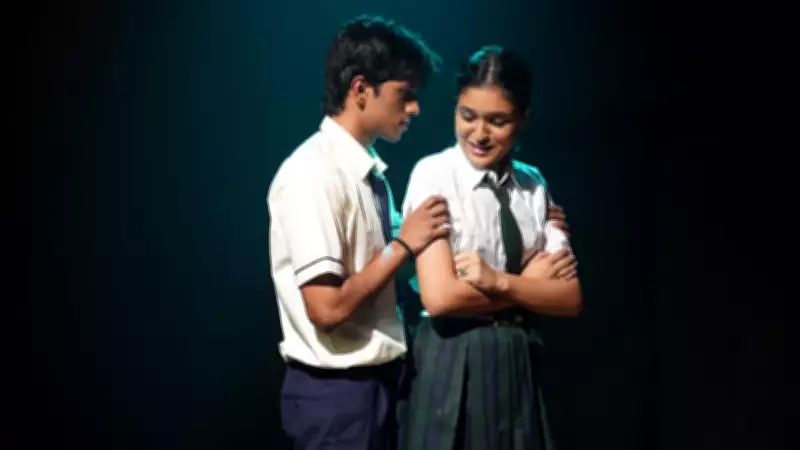
Illustrating this perspective, the play contrasts unhealthy relationships of repressed youngsters with the budding, equitable friendship between Ashok (from an ultra-conservative family) and Maya (from a liberal, educated background). Played candidly by Aditya Ghosh and Aashi Tripathi, these characters have animated conversations about painting and poetry.
When Ashok, prompted by wayward friends, makes an unwanted physical overture, Maya walks away, telling him, "Jism choone se pehle dil ko choona padta hai" (Before touching the body, one must touch the heart).

A Bold Theatrical Statement
Scheduled next at the Nita Mukesh Ambani Cultural Centre in Mumbai on February 15, The Morning Show discusses threadbare adolescent pangs, provincial gender equations, and patriarchy's harmful effects on young girls and boys. The work represents a significant contribution to conversations about gender, violence, and societal responsibility in contemporary India.