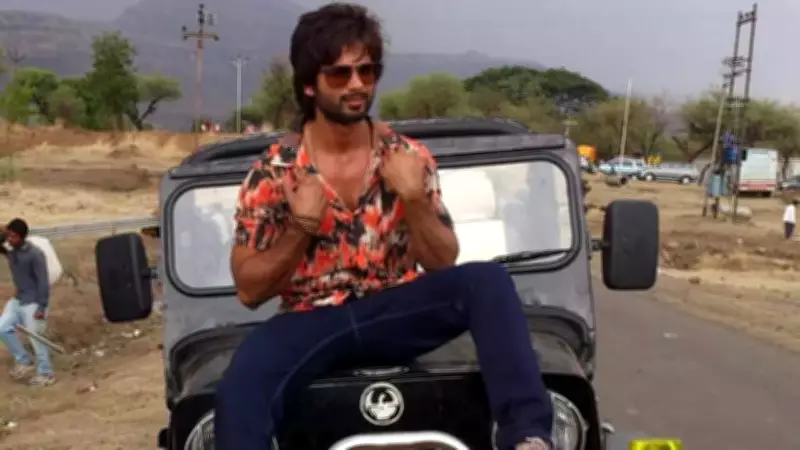
Shahid Kapoor's Style Evolution: From Ishq Vishk to O Romeo
As Shahid Kapoor celebrates his 45th birthday, his remarkable on-screen transformations stand as a powerful testament to his versatility and unwavering commitment to reinvention. From a youthful romantic hero to complex, brooding characters, his looks have evolved in perfect sync with his career trajectory. Each distinct phase has introduced a new dimension of his personality, revealing an actor who has moved far beyond his initial image to become one of Bollywood's most dynamic and respected performers. Over two decades, he has consistently pushed boundaries, and here we explore the iconic styles that have marked key milestones in his extraordinary journey.
Ishq Vishk (2003): The Debut of a Chocolate Boy
Shahid Kapoor made an unforgettable and charming debut in Ishq Vishk in 2003, instantly capturing hearts as the quintessential college heartthrob. With his tousled hair, boyish expressions, and slim physique, he perfectly embodied the dreamy romantic hero of the early 2000s. His easy, infectious smile and boundless youthful energy made him an instant favorite among teenage audiences nationwide. The film strategically positioned him as the fresh face of innocent first-love stories, firmly cementing his early reputation as Bollywood's beloved "chocolate boy." This foundational phase established the baseline from which he would dramatically evolve.
Jab We Met (2007): Embracing Maturity
In the beloved classic Jab We Met, Shahid surprised viewers and critics alike with a far more restrained and sophisticated persona. Playing Aditya Kashyap, he appeared in sharp formal attire, spectacles, and maintained a subdued emotional register that contrasted sharply with his earlier, more exuberant roles. The character's quiet vulnerability and internal conflict added remarkable depth to his screen presence. This pivotal look marked his successful transition into mature romantic leads capable of nuanced, internalized performances. It also demonstrated his refined ability to share screen space with a strong co-star while maintaining his own narrative gravitas and emotional weight.

Kaminey (2009): The Gritty Transformation
Shahid Kapoor truly stunned audiences with Kaminey, decisively shedding his clean-cut image for a gritty, unpredictable dual role. Sporting long, unkempt hair, a noticeably hardened and muscular physique, and a distinctive speech impediment, he fully embraced a raw, street-smart persona. This daring role revealed a darker, more intense edge that had never been seen before in his career. It boldly signalled his readiness to take significant creative risks and explore morally complex, challenging characters. This radical transformation dramatically broadened industry and audience perceptions of his acting range and fearlessness.
Haider (2014): A Daring Psychological Portrait
In Vishal Bhardwaj's adaptation Haider, Shahid delivered one of his most critically acclaimed and daring performances, undergoing a profound physical and emotional metamorphosis. His shaved head in the film's powerful climax, coupled with hollow, haunted eyes and somber winter clothing, viscerally reflected the deep psychological turmoil of his character. Set against the troubled, snowy landscape of Kashmir, this stark look powerfully amplified the narrative's tragic and oppressive tone. He masterfully portrayed a man utterly consumed by grief, anger, and existential confusion, with the role remaining a definitive benchmark for his total commitment to challenging, artistically ambitious material.
Udta Punjab (2016): Complete Character Immersion
Shahid Kapoor completely disappeared into the volatile role of Tommy Singh in Udta Punjab. With wild, untamed hair, flamboyant and chaotic costumes, prominent tattoos, and a gaunt yet muscular frame, he perfectly embodied a self-destructive rockstar spiraling into the depths of addiction. The character's erratic, high-energy madness demanded both extreme physical transformation and deep emotional extremity. His fearless transformation showcased a bold, uncompromising approach to character-driven cinema. It proved definitively that he was willing to sacrifice all vanity for the sake of raw, unsettling authenticity on screen, earning widespread critical praise.

Padmaavat (2018): Regal Dignity and Poise
Portraying Maharawal Ratan Singh in Sanjay Leela Bhansali's epic Padmaavat, Shahid adopted a stately, dignified, and majestic appearance. He significantly gained muscle mass, grew a full, majestic beard, and wore elaborate, heavy royal costumes and intricate jewellery that conveyed authentic Rajput grandeur and valour. Unlike his more volatile and intense previous roles, this performance relied heavily on composure, restrained authority, and silent power. His poised, commanding demeanour perfectly reflected the honour-bound warrior king he portrayed. This look demonstrated his impressive ability to command the vast screen through powerful stillness and regal intensity rather than overt action.
Kabir Singh (2019): A Cultural Phenomenon
With Kabir Singh, Shahid delivered a portrayal that became a major cultural talking point and box office juggernaut. His thick, unkempt beard, signature aviator sunglasses, and perpetually dishevelled clothing mirrored the character's profound emotional instability and inner chaos. The look captured a raw, volatile masculinity fiercely marked by obsession, genius, and self-destruction. Audiences witnessed him oscillate between medical brilliance and total emotional breakdown with unsettling, gripping realism. It remains one of his most commercially successful, widely discussed, and controversial roles, sparking endless debate about its portrayal of love and toxicity.
Deva (2025) and O Romeo (2026): The Seasoned Veteran
In his most recent projects like Deva and the upcoming O Romeo, Shahid has embraced a more mature, rugged, and world-weary aesthetic. A shorter, practical haircut, weathered facial features, and a hardened, functional physicality reflect a performer now utterly comfortable in his mid-forties, embracing his experience. These roles suggest a deliberate shift toward more layered, complex characters shaped by life experience and resilience rather than youthful impulsiveness. The understated, realistic styling highlights his natural evolution from a romantic lead to a seasoned, versatile actor. Even after two decades in the demanding industry, he continues to confidently reinvent his screen image, promising more intriguing transformations ahead.