Dhruv Sehgal and Bilal Siddiqi Explore the Essence of Writing at Bengaluru Art Weekend
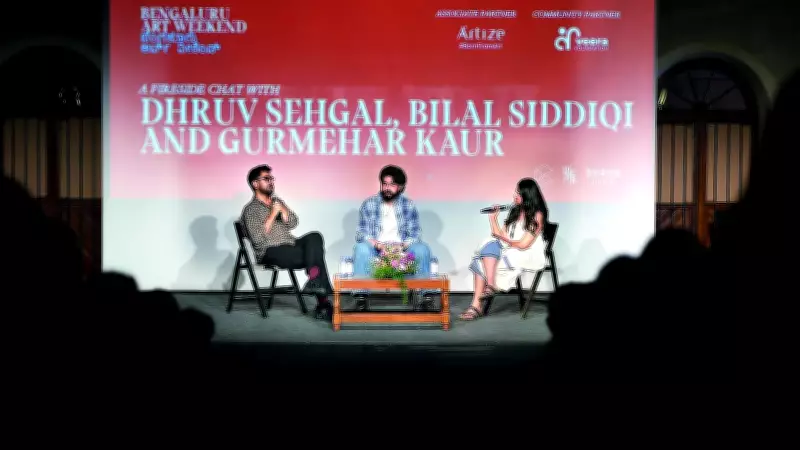
A captivating and insightful dialogue took center stage at the Bengaluru Art Weekend, featuring actor-writer Dhruv Sehgal and novelist-screenwriter Bilal Siddiqi. Moderated by Gurmehar Kaur, this fireside chat deliberately avoided flashy narratives and cinematic grandeur, instead delving into the profound and intimate aspects of the writing craft. The conversation focused on the unsaid elements, the subtle nuances between lines, and the elusive truths that writers dedicate years to capturing. What unfolded was a remarkably honest, frequently humorous, and deeply reflective examination of contemporary writing—from discovering one's unique voice and managing collaborative efforts to resisting easy shortcuts and adapting within a constantly changing industry landscape.
The Pursuit of Truth in Storytelling: Dhruv Sehgal's Perspective
For Dhruv Sehgal, whose acclaimed series Little Things became a defining portrayal of slice-of-life romance, writing has always centered on a fundamental question: truth. "The inner dialogue is pretty much the same for all my roles—writer, creator, actor. It's always: what is the truth of this moment? What is it really about?" he explained. He elaborated that while Little Things began as a conscious effort to embrace subtlety and subtext, it evolved significantly through collaboration and necessary compromise. "We were trying to convey that the everydayness of life constitutes real life. But you're constantly steering that ship against many currents. The beauty of storytelling lies in the small things—the quiet joys, the unspoken tensions, the seemingly insignificant moments that shape relationships," he added.
Sehgal also highlighted the challenging transition writers often face. "You're alone while writing, and then you have to become a shopkeeper—selling your work. Sometimes it's humiliating, sometimes exciting," he remarked, underscoring the dual nature of creative and commercial endeavors.

Medium-Specific Approaches: Bilal Siddiqi's Insights
Bilal Siddiqi, whose diverse portfolio includes novels like The Bard of Blood and screen projects such as Ba**ds of Bollywood, approaches storytelling through a genre-driven lens but arrives at a similar core truth. "In a book, you can write entire paragraphs about what a character is thinking without them saying anything. But in a film or show, you need interaction. You have to externalize that. Every genre comes with its own trappings. The only thing that makes it interesting is the characters," he stated.
He was candid about the stark contrasts between novel writing and screenwriting. "A book is solitary. It's your voice, your timeline. But a show or film? There are producers, directors, actors… everyone has something to say." Despite this complexity, Siddiqi admitted he finds screenwriting comparatively easier. "You're only writing what's necessary. With books, you're writing so much more," he noted. He also emphasized the importance of foundational work for aspiring writers. "If you want to write, you have to read a lot, watch a lot. You're only as good as your input. Even bad pages are fine—you can fix them later. But if you don't start, you're not a writer," he advised.
Clarifying Misconceptions and Thematic Exploration
Addressing a common assumption about Little Things, Dhruv Sehgal clarified that the series is not autobiographical. "It's not inspired by my life. It's inspired by the questions in my head. Each season explores a different aspect of love. If something doesn't fit that theme, it doesn't make the cut," he explained. His primary focus, he emphasized, is on creating a sense of recognition for the audience. "Even if it's alienating, the viewer should feel seen. That's very important to me," he said, highlighting his commitment to authentic emotional resonance.

Cautious Views on AI in Creative Writing
When the discussion turned to artificial intelligence, both writers expressed curiosity but maintained a cautious stance. "I used it as a research engine. But now I've mostly stopped," shared Dhruv. His concerns extend beyond mere usage. "I read scripts now with no mistakes, and I instantly know it's AI. But what worries me is—how much of it is AI?" He also questioned broader industry attitudes. "There's no shame in not using your mind anymore. That's a big problem," he asserted.
Bilal Siddiqi echoed these sentiments from a practical perspective. "The output is only as good as the input. If you don't know math, you can't use a calculator." For both writers, the primary fear is not competition from AI but the risk of homogenization in creative works. "It has a one-size-fits-all approach," Bilal stated. "No one wants to see robotic work in art."
Adapting to Evolving Audiences and Industry Demands
With shifting audience habits and decreasing attention spans, the conversation explored how writers adapt. "If the market is hot for something I don't have, I try to adapt. Reinventing yourself is part of the fun," said Dhruv, acknowledging the need for flexibility. Bilal, however, believes that while audience awareness is inevitable, it should not dominate the creative process. "If you're writing for an audience, it will come to mind. But your first draft should be the truest form of your story. I write what I would like to see. If your voice is unique, it will find an audience," he affirmed, stressing the importance of authenticity in storytelling.
This engaging session at the Bengaluru Art Weekend provided valuable insights into the realities of modern writing, blending personal experiences with practical advice for navigating the creative industry.