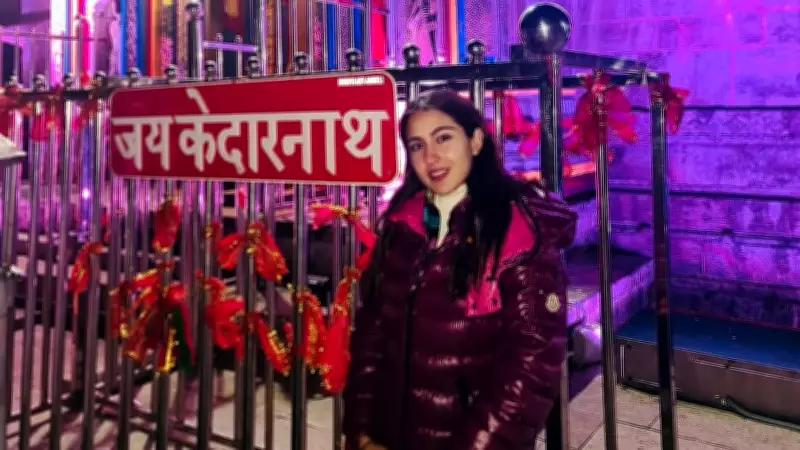
Sara Ali Khan Permitted Entry to Badrinath and Kedarnath Temples Upon Verification of Sanatan Faith
In a significant development, actress Sara Ali Khan has been granted permission to enter the revered Badrinath and Kedarnath temple complexes, following her submission of documented proof affirming her adherence to Sanatan faith. This decision comes after the Badrinath-Kedarnath Temple Committee (BKTC) recently implemented a stringent policy to regulate access to these sacred sites.
BKTC's Unanimous Decision to Restrict Temple Entry
The BKTC had, a few days prior, unanimously approved a proposal to ban the entry of individuals who do not identify as Sanatanis into the Badrinath and Kedarnath temple premises. This move aims to preserve the religious sanctity and traditional practices associated with these ancient Hindu pilgrimage destinations, which hold immense spiritual significance for millions of devotees across India and beyond.
The committee's resolution underscores a firm commitment to upholding the cultural and religious integrity of these temples, which are integral to the Char Dham Yatra in Uttarakhand. By enforcing this entry restriction, the BKTC seeks to ensure that only those who genuinely follow Sanatan Dharma can participate in the rituals and darshan, thereby maintaining the purity and devotion inherent in these holy spaces.

Sara Ali Khan's Compliance with the New Regulation
Sara Ali Khan, a prominent figure in Bollywood known for her roles in films such as Kedarnath, which is set against the backdrop of the temple town, has successfully navigated this new requirement. By providing the necessary evidence of her Sanatan faith, she has aligned herself with the BKTC's guidelines, allowing her to visit these temples without any hindrance.
This development highlights the broader implications of the BKTC's policy, which may affect other celebrities and public figures who wish to visit these sites. It sets a precedent for how individuals must demonstrate their religious affiliation to gain access, potentially influencing temple entry protocols at other major Hindu shrines in the future. The committee's stance reflects a growing trend towards stricter enforcement of religious norms in sacred spaces, balancing tradition with contemporary societal dynamics.
As this story unfolds, it raises important questions about the intersection of faith, celebrity culture, and religious governance in India. The BKTC's decision and Sara Ali Khan's compliance serve as a reminder of the deep-rooted spiritual values that continue to shape access and worship at these iconic temples, ensuring they remain bastions of Sanatan tradition for generations to come.