From Missed Opportunity to Bollywood Breakthrough: The Prasun Gupta Story
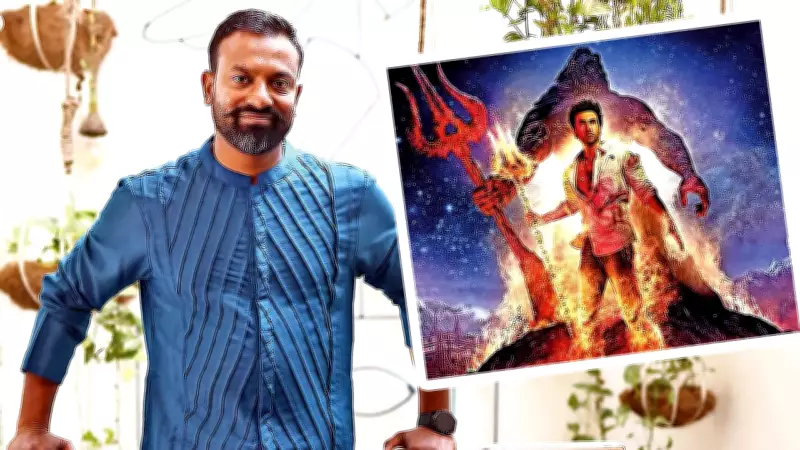
In the bustling world of mainstream Hindi cinema, where visual spectacle often takes center stage, a quiet revolution in language-driven storytelling is being shaped by Lucknow-based writer Prasun Gupta. Known for penning the Sanskrit dialogues used as shlokas in major films like the Ranbir Kapoor and Alia Bhatt starrer Brahmāstra and the upcoming Hrithik Roshan and Anil Kapoor film War 2, Gupta's journey into Bollywood is a testament to perseverance and linguistic passion.
The Unlikely Beginning: A Comedy Show Audition
Gupta's entry into the film industry did not begin with a script or a studio meeting. It started with what seemed like a missed opportunity on The Great Indian Laughter Challenge, then hosted by actor Akshay Kumar. "I had gone to Mumbai with a visually impaired comedian, Abhay Sharma. We auditioned together, but he got selected; I didn't," Gupta recalls. However, this apparent setback became his breakthrough. "He needed a mentor, so I went along."
For about fifteen days, Gupta prepared acts for Sharma while also trying his own material. "Nothing worked out for me at that time," he admits. Yet, being around the show connected him with key figures who would later influence his career. During a segment where Zakir Khan, Mallika Dua, and Hussain Dalal were guests, Dalal—a noted actor and screenwriter for films like Yeh Jawani Hai Diwani—mentored Sharma and noticed Gupta's scriptwriting work. This introduction proved pivotal.

The Sanskrit Connection: From Radio to Brahmāstra
At the time, Gupta had transitioned to radio, but the connection with Hussain Dalal remained. "Later, Hussain Dalal reached out and said they needed someone who could write a Sanskrit dialogue for the movie Brahmāstra and could assist him with the Sanskrit part in the film," Gupta explains. He responded confidently, "You see my work, and if you like it, we’ll take it ahead." Dalal sent him scenes, Gupta wrote them, and thus began his collaboration on one of Bollywood's most anticipated projects.
Directed by Ayan Mukerji, Brahmāstra required authentic Sanskrit dialogues and technical terminology rooted in mythology. Gupta's contributions extended beyond mere translation. "The film had a lot of technical and mythological elements, so they needed authentic, meaningful names. I ended up suggesting names for all the weapons and gave multiple options wherever needed," he shares. Dalal was so impressed that he asked Gupta to assist throughout the film wherever Sanskrit was required.
The Advantage of UP Roots: Language Authenticity in Cinema
Gupta attributes much of his success to his upbringing in Uttar Pradesh. "Being from UP helps a lot. You see, UP is such a place where Hindi is spoken the clearest. Rest, you will find a mixture, different tonality, different slang, but here, you will find the purest language," he asserts. He contrasts this with Mumbai's film industry, where English dominance often leads to scripts being written in English first and then translated. "UP se hone ka fayda milta hain mujhe. Har region ki apni khoobsurti hai, but another advantage of being from UP is that we have a command over the language better than many others," he adds, highlighting how his linguistic background provides an edge in creating authentic dialogues.
Expanding Horizons: From Brahmāstra to War 2 and Beyond
Gupta's work on Brahmāstra opened doors to larger projects, including War 2. "Director Ayan Mukerji recommended my name to music composer Pritam da, saying if you want someone who can write Sanskrit sentences, you can approach him," Gupta reveals. Mukerji emphasized Gupta's originality, noting, "if you just want to copy, you can take from the Geeta or Mahabharata, but if you want something original, then I could do it."

With Brahmāstra 2 already in the pipeline, Gupta expresses hopeful but measured enthusiasm. "I would like to be part of it," he says. Currently, he is venturing into new creative territories. "I am presently writing songs for a singing reality show which will have participants sing original creations than just Bollywood songs. The experience is really hat ke," he shares, indicating his commitment to innovative, language-focused projects.
Prasun Gupta's journey underscores a growing trend in Bollywood: a renewed appreciation for linguistic depth and cultural authenticity. From a missed comedy audition to shaping dialogues in blockbuster films, his story is a compelling narrative of how traditional language skills can find a vibrant space in modern cinema.