Revisiting Vishal Bhardwaj's Rangoon: An Epic Romance Unfolding Against the Fiercest Tides of Violence
In Rangoon, Vishal Bhardwaj masterfully upends the essence of Casablanca, weaving a love triangle that ignites the sparks of revolution. This film crafts an alternate past steeped in romance, set against a world torn apart by conflict.
A Fractured World in 1944
It is 1944. The war is tearing the world apart, with history split in two and both halves ablaze. Empires burn on one side, while India stands at the edge of its own becoming. Gandhi speaks of resistance without blood, while Subhash Chandra Bose gathers an army in Burma, preparing to answer with violence. Against this fractured geopolitical moment, Bhardwaj stages Rangoon as an epic romance, with its thesis arriving just before the interval, distinctly his own.
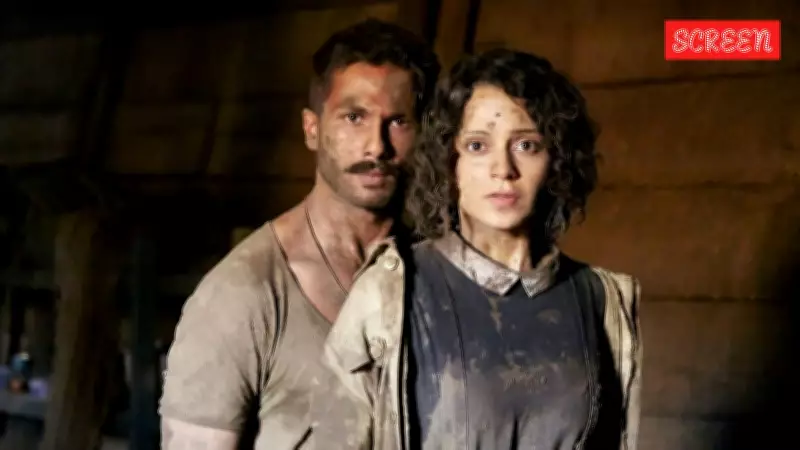
There is poetry, there is a song, there is mud, and there are two damaged souls taking refuge in what was once an army base. Tanks surround them like witnesses, the threat of death hangs in the air, and yet they make love for the first time in the dirt. They discover love on ground still scarred by war, their longing outliving the century's appetite for blood. In a world engineered for ruin, they choose romance.

The Heart of the Love Triangle
At its core, Rangoon is a love triangle that subverts Casablanca, thriving on irony as two romances cross at the same wound, revealing each other by contrast. With Nawab, played by Shahid Kapoor, Julia, portrayed by Kangana Ranaut, is seen and accepted. With Rusi, played by Saif Ali Khan, she is managed and controlled.
- Nawab sees her as a woman; Rusi calls her a "kiddo."
- Nawab traces the scar on her back as if it were scripture; Rusi dismisses it as something to be corrected.
- With Nawab, she falls into mud; with Rusi, she is rinsed in water.
Nawab draws out the self she has buried and accepts it without amendment, while Rusi drafts a neater version, shaping her towards an identity that suits him better. One relationship releases her; the other rehearses her. In this sense, Julia becomes the film's soul, not just a woman divided between two men, but a country divided between two futures, mirroring India's struggle between Bose's fire and Gandhi's restraint.
Julia's Journey of Awakening
Julia's introduction is staged like a musical, with her name chanted by the crew before she appears, building her myth. When we finally see her, it is in a mirror, performing a risky stunt as a film star modelled on Fearless Nadia. Rusi, the producer, asks for another take, and she hesitates, afraid. The mirror highlights that the woman promised is a construction—her image and commerce. In life, she is controlled and spoken for, making the film her coming of age.
Through Nawab, she encounters a form of love that serves as an awakening. By the climax, she performs a more dangerous stunt, but this time it is a lived risk, not a staged fantasy. The same song plays, the same invocation circles her, but the words feel unnecessary. She no longer needs to be described; she has become what they once had to sing.
Rusi's Reckoning and Transformation
If Julia's journey is one of awakening, Rusi's is one of reckoning. Once a star, an injury ends that life, leaving him to survive by serving power as a stooge of imperialists. Comfort edits conscience, as seen when Nawab tells Julia, "Are you even alive? If you were, you would have seen the tyranny of your masters, you would have heard the screams of the innocent." This line cuts through more than one character, indicting Rusi and reaching beyond the narrative to gesture toward present compromises in the film industry.
Transformation is the cornerstone of Rangoon, born from intimacy rather than rhetoric. Julia changes because she is loved without being diminished, Nawab changes by loving something larger than himself, and Rusi is granted that possibility. In the final frame, when Rusi chooses love over allegiance, the film brushes against something close to Faiz Ahmed Faiz, locating revolution within romance.
Vishal Bhardwaj's Rangoon remains a poignant exploration of love and identity amidst historical turmoil, offering a timeless reflection on personal and political awakening.