Remembering O.P. Nayyar: The King of Rhythm's Enduring Legacy
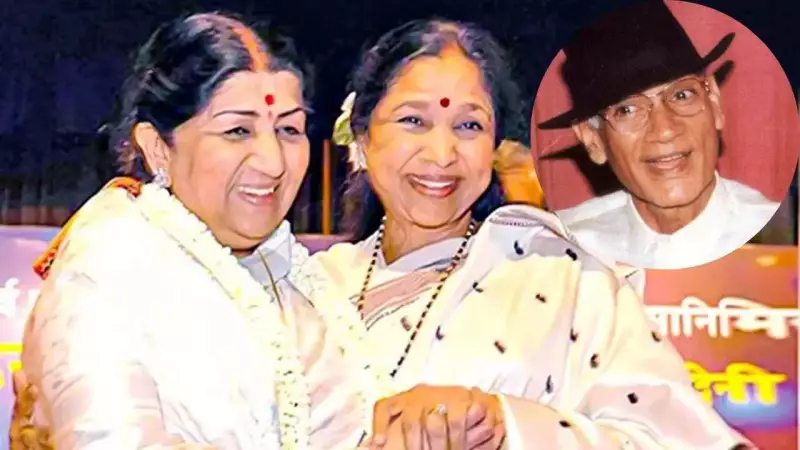
Today, January 28, 2026, marks a significant moment in Indian music history—the 19th death anniversary of the legendary composer Omkar Prasad Nayyar, affectionately known as O.P. Nayyar. Revered as the "King of Rhythm," Nayyar carved a unique niche in Bollywood's Golden Era, achieving monumental success without ever collaborating with the Nightingale of India, Lata Mangeshkar. This remarkable fact alone sets him apart from his contemporaries, making his career trajectory both fascinating and unparalleled.
The Unbreakable Bond with Asha Bhosle
Nayyar's most celebrated professional relationship was with the iconic playback singer Asha Bhosle. Their alliance, which spanned nearly two decades, was not just a musical partnership but a transformative force in Bollywood. Before Nayyar entered her life, Asha Bhosle was often relegated to singing for vamps or supporting characters, while Lata Mangeshkar dominated as the voice of the heroine.
Asha Bhosle herself acknowledges this pivotal shift, stating, "Before Nayyar Saab came into my life, I was not the heroine's voice. Lata Didi was. I used to sing for the vamp or the supporting actress. Nayyar Saab made me the heroine's voice in 'Tumsa Nahin Dekha' and 'Naya Daur' in the 1950s." This collaboration catapulted her into stardom, with the 1960s witnessing a string of chartbusters that solidified their status as one of Bollywood's most invincible duos.

A Distinctive Musical Style
Nayyar's compositions were characterized by a robust, Punjabi-inspired flair that distinguished him from other greats of his time, such as Shankar-Jaikishan, Sachin Dev Burman, and Madan Mohan. Asha Bhosle praises his unique approach, noting, "He had his own very distinct style of composition, very Punjabi very robust... Among the great composers of that era, Nayyar Saab stood out." His ability to blend traditional rhythms with contemporary melodies created timeless hits that continue to resonate with audiences today.
The Fallout and Its Aftermath
Despite their prolific success, Nayyar and Asha Bhosle parted ways in 1972, driven by the composer's temperamental and egoistic nature. Determined to prove he could thrive without her, Nayyar vowed to replace Asha Bhosle with other singers. However, his attempts to recreate the magic with voices like Krishna Kalle and Dilraj Kaur in the 1970s and 80s met with miserable failures, highlighting the irreplaceable chemistry they shared.
Nayyar's professional rifts extended beyond Asha Bhosle. He also stopped recording with Mohammed Rafi over a misunderstanding, opting for Mahendra Kapoor in several 1960s chartbusters. Moreover, his ego prevented any reconciliation with Lata Mangeshkar after she missed a recording for the film 'Aasman' in 1952, a slight he never forgave.
A Complex Personal Legacy
Interestingly, despite their professional distance, Lata Mangeshkar and Nayyar maintained a cordial personal relationship. She once revealed that he would call her unexpectedly, teasing her about rehearsing songs over the telephone. "If you want to sing for me you have to come to the studio for rehearsal," he would banter, showcasing their playful dynamic.
Sadly, O.P. Nayyar's later years were marked by bitterness and loneliness, as his unwavering pride overshadowed his immense talent. He passed away leaving behind a legacy that, while tinged with personal conflicts, remains a cornerstone of Indian film music. His story serves as a poignant reminder of the highs and lows that often accompany artistic genius.