Julia Roberts' Unexpected Path to Hinduism
For decades, India has held a distinctive position in global consciousness, serving not just as a geographical destination but as a profound source of spiritual meaning and philosophical exploration. Among the numerous international celebrities who have expressed admiration for Indian traditions, Academy Award-winning actress Julia Roberts represents one of the most compelling and authentic examples.
A Connection Forged Through a Simple Photograph
Julia Roberts' relationship with Hinduism did not originate from cinematic exposure or passing cultural fascination. Instead, it emerged from a deeply personal moment that gradually transformed her inner landscape. Unlike the dramatic spiritual conversions often sensationalized in media, Roberts' journey unfolded with quiet subtlety, beginning with something remarkably ordinary: a single photograph.
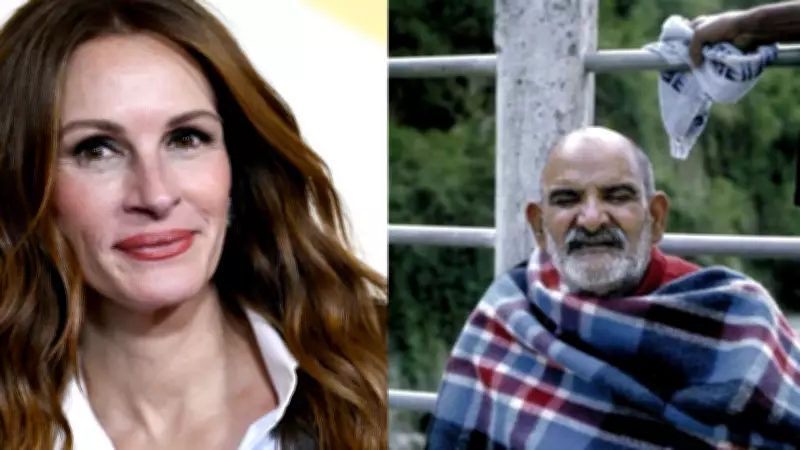
During a conversation with anchor George Stephanopoulos on ABC News' Good Morning America program, Roberts revealed the origin of her spiritual interest. She explained that her connection to Hinduism began when she encountered a photograph of Neem Karoli Baba, a revered Hindu saint who passed away in 1973. Despite having no prior knowledge about this spiritual figure or his teachings, Roberts experienced an immediate and powerful attraction that she described as both deep and inexplicable.

"No. He passed long before I saw his picture but you know just very intriguing, and that is the way things come in to our lives. They are not these big gate-crashing moments," Roberts responded when Stephanopoulos asked if she had ever met the saint personally.
Her words echo a philosophy central to Indian spiritual thought: that genuine transformation often arrives gently, revealing itself through intuition rather than dramatic intention. Neem Karoli Baba has influenced spiritual seekers across generations, including many who, like Roberts, never met him physically but describe feeling a profound connection through what can only be called spiritual resonance.
The Quiet Evolution of a Spiritual Path
In contrast to popular culture's portrayal of spiritual awakening as sudden and dramatic, Roberts' experience demonstrates a gradual, inward journey. Her initial curiosity evolved into deeper exploration, eventually leading her to India and specifically to Kainchi Dham, the ashram associated with Neem Karoli Baba.
Visitors to this ashram frequently describe it not as a place of elaborate rituals but as a sanctuary of stillness, where silence itself becomes a form of devotion. For Roberts, this visit reportedly strengthened her commitment to a spiritual path emphasizing reflection, humility, and inner awareness over external displays.
Subtle Expressions of a Deepening Connection
Roberts' engagement with Indian spirituality manifested not through grand announcements but through personal choices reflecting her evolving inner journey. When she established her production company, she named it Red Om Films, directly referencing "Om"—the sacred syllable in Hindu tradition considered the primordial sound of the universe, the vibration connecting creation, consciousness, and silence.
Reports have indicated that Roberts visited temples with her family to offer prayers, suggesting her engagement extended beyond philosophical interest into lived spiritual practice. These understated gestures revealed a relationship with Indian spirituality shaped by authentic experience rather than mere symbolism.
Why India Continues to Attract Spiritual Seekers
Roberts' narrative resonates because it reflects a broader pattern observed across generations: artists, writers, and public figures turning toward India not for externally imposed answers but for internally explored questions. Indian spiritual traditions typically emphasize self-inquiry over conversion, encouraging individuals to observe rather than adopt rigid identities.
This philosophical openness allows people from diverse backgrounds to engage with Indian spirituality without abandoning their cultural roots. Roberts' experience exemplifies this fluidity—her attraction to Hinduism was not framed as rejecting one belief system for another, but as an expansion, a curiosity that deepened into practice through personal resonance.

A Spiritual Narrative Beyond Celebrity Sensationalism
In an industry characterized by constant visibility and self-promotion, Roberts' approach stands out precisely because of its quiet authenticity. She has neither commercialized nor frequently publicized her spiritual beliefs. Instead, her reflections suggest a private relationship with faith, shaped by intuition, experience, and gradual understanding.
Today, her connection with India continues to captivate audiences because it feels genuinely sincere and deeply personal. It reminds us that spirituality doesn't always begin with dramatic pilgrimage or rigid doctrine. Sometimes, it begins with a feeling, a moment of stillness, a face in a photograph, or a quiet curiosity that grows steadily over time.
In a world that often values intensity and constant motion, Julia Roberts' spiritual journey offers an alternative perspective—one where meaning develops gradually, shaped not by spectacle but by a gentle, enduring inner pull toward something timeless and transcendent.