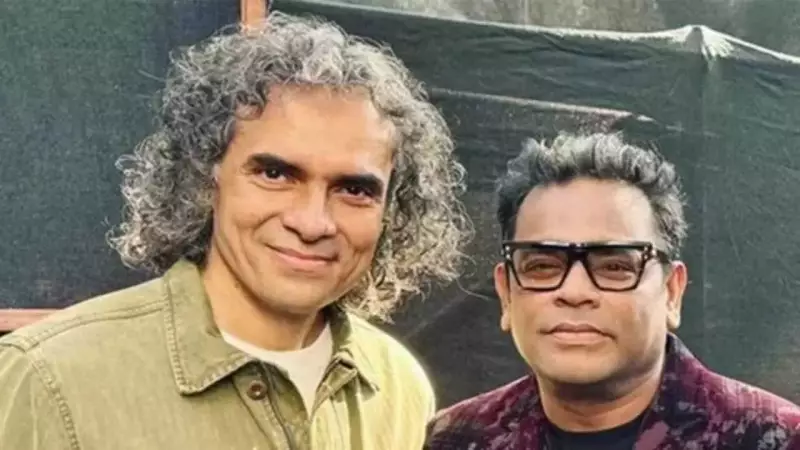
Director Imtiaz Ali has publicly voiced his support for Oscar-winning composer AR Rahman. This comes amid a heated controversy surrounding Rahman's recent comments about the Hindi film industry.
Imtiaz Ali Dismisses Communal Bias Claims
Imtiaz Ali, who has worked closely with Rahman on films like Rockstar, Tamasha, Highway, and Amar Singh Chamkila, spoke to India Today. He firmly rejected the idea of communal bias in Bollywood.
"No, I don't think there is a communal bias in the film industry," Imtiaz stated. "I've been here for a long time, and I've never seen it. AR Rahman is one of the brightest figures I've met."

He suggested Rahman's words might have been misunderstood or taken out of context. "I do not actually believe he made all the comments attributed to him. Maybe it's been misconstrued. I know he did not say exactly what is being perceived," Imtiaz added. He also emphasized he could not recall a single incident of communal animosity.
What Sparked the Debate
The controversy erupted after AR Rahman's interview with BBC Asian Network. In it, Rahman noted his work volume in Hindi cinema had declined over the past eight years. He hinted this could be linked to what he called a "communal thing" and discussed shifts in industry power dynamics, where creative control has moved away from artists.
His remarks triggered widespread debate on social media and in entertainment circles. Many critics questioned his observations. Following the backlash, Rahman issued a clarification. He said his comments were misunderstood and he never intended to "cause pain".
Family and Colleagues Rally Behind Rahman
Daughters Show Support
Amid the criticism, AR Rahman's daughters, Raheema and Khatija Rahman, publicly backed their father. They shared a social media post by music composer Kailas that defended Rahman.
Kailas's Strong Defense
Kailas's post strongly supported Rahman's right to express his personal experience. "Disagree, don't disgrace," Kailas wrote. "People blaming AR Rahman for speaking his mind are missing a basic point. He spoke about how he felt. That is his right. You may disagree, but you cannot deny him the freedom to express his experience."
He argued the reaction had gone beyond disagreement into abuse. "What followed has gone far beyond disagreement and entered the space of abuse and character assassination," Kailas pointed out.
Praising Rahman's global impact, Kailas noted the composer has carried Indian music worldwide with dignity and shaped generations. "Calling a globally respected artist a 'disgrace', questioning his faith, mocking his recent works, and reducing his lived experience to a 'victim card' is not criticism. It's hate speech presented as opinion," the post read.
Kailas concluded by emphasizing Rahman's legacy. "Decades of contribution to Tamil culture, Indian cinema, and global music do not disappear because an artist expresses a personal view. You may debate his opinion. You may disagree. That's fair. What is not fair is public humiliation or attacking his integrity to silence him."