Ian McKellen's Stage Fall Horror: A Legendary Actor's Terrifying Ordeal
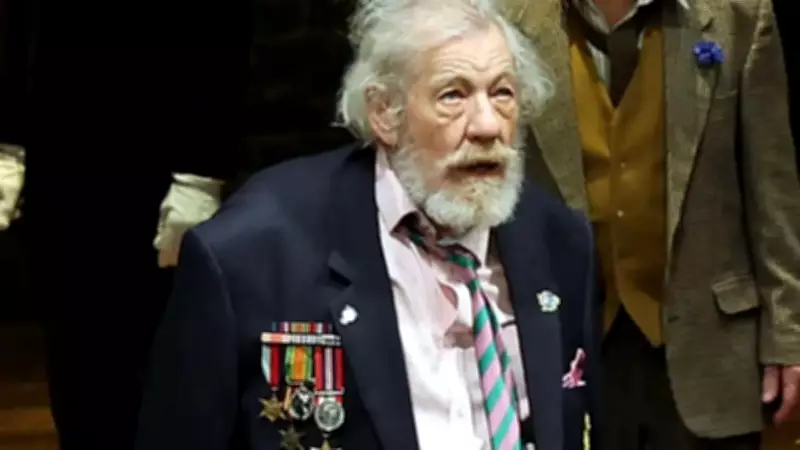
For over six decades, Sir Ian McKellen has commanded the stage with unparalleled presence, precision, and confidence, cementing his status as a theatrical legend. Yet, as the actor recently revealed, a single moment backstage during a live performance completely upended that mastery, leaving him physically injured and psychologically haunted by what he describes as a profound "feeling of horror."
The Fateful Performance: A Sudden Plunge Into Chaos
According to reports from People magazine, the incident occurred on June 17, 2024, during a performance of 'Player Kings' at London's prestigious West End. This stage adaptation of William Shakespeare's Henry IV plays featured McKellen, then 85 years old, in the iconic role of Sir John Falstaff. In the midst of a dramatic fight scene, the veteran actor moved forward and suddenly lost his footing, tumbling off the stage and crashing directly into an audience member's lap.
The theater atmosphere shifted from excitement to utter chaos within seconds. "As I fell off the stage into the lap of an unfortunate audience member, I said to the full house, 'I don't do this,'" McKellen, now 86, told the Los Angeles Times. "Meaning, I'm an actor who's in control of what he's doing." This time, however, control was impossible.

The Cause and Immediate Aftermath
The catalyst for the fall was deceptively simple: a piece of newspaper left on stage. This minor hazard proved catastrophic, sending McKellen over the edge. House lights immediately shot up, staff scrambled to respond, and the show was cancelled on the spot as the theater emptied. Medical examinations later revealed serious injuries, including a fractured wrist and a neck injury. McKellen spent three nights in the hospital and was forced to miss the remainder of the play's London run. On doctors' orders, he also withdrew from the subsequent tour.
In the immediate aftermath, the situation felt dire. Lying injured on the stage, McKellen admits he believed it was the end. "As they laid me out on the stage, I said, 'I'm dying.' And I thought I was. I was out of control. Things were happening, and I just... couldn't stop them," he recounted. "What's left now is this feeling of horror. I never want to feel that out of control again." Even discussing the event remains difficult for the actor, who stated, "I don't really like to talk about it because it was a very shocking business."
Recovery and Return: A Cautious Path Back to the Stage
McKellen's recovery process has been gradual. He found some solace in returning to film work, noting, "I was able to go back to X-Men land and destroy New Jersey, effortlessly. I was able to do all the filming. But the stage..." His voice trailed off, highlighting the psychological barrier the accident created.
The actor made a tentative return with two charity performances, where he cherished hearing audience laughter once more. "I loved being in front of the audience again. I got all my laughs. So I'm OK. But I haven't been in a play yet," he clarified. While the Los Angeles Times reported potential plans for a return to the stage in a London production, McKellen humorously quipped, "We're still trying to find it," indicating the search for the right project and timing.
Ian McKellen: A Legacy Beyond the Fall
For those unfamiliar with his monumental career, Ian McKellen is a towering figure in both theater and film. He is renowned globally for his portrayal of the wise Gandalf in 'The Lord of the Rings' and 'The Hobbit' franchises, as well as the powerful Magneto in the 'X-Men' series. His Shakespearean credentials are equally impressive, with acclaimed performances in roles from Macbeth to King Lear. His accolades include Tony Awards, Olivier Awards, and Oscar nominations.
Beyond his artistic achievements, McKellen has been a formidable advocate for LGBTQ+ rights, significantly influencing cultural discourse in Britain and internationally. This stage accident, while a harrowing personal episode, underscores the physical and emotional risks even legendary performers face, reminding us of the vulnerability behind the curtain.